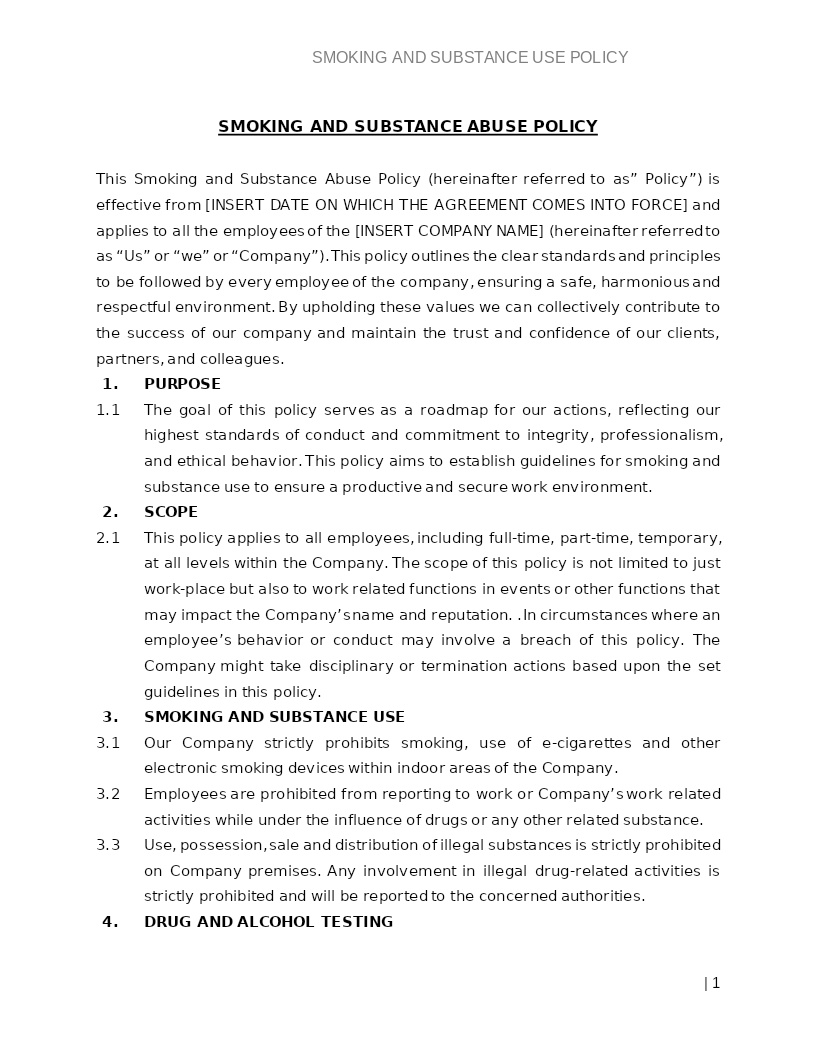
SMOKING AND SUBSTANCE ABUSE POLICY
How does it work?
1. Choose this template
Start by clicking on "Fill out the template"
2. Complete the document
Answer a few questions and your document is created automatically.
3. Save - Print
Your document is ready! You will receive it in Word and PDF formats. You will be able to modify it.
Understanding the Purpose and Use of a Smoking and Substance Abuse Policy
When an organization is committed to maintaining a safe, healthy, and productive work environment, it becomes essential to establish clear rules regarding the use of tobacco, alcohol, and controlled substances in the workplace. A Smoking and Substance Abuse Policy provides that structure. It defines prohibited behaviors, outlines restrictions on substance use, sets expectations for employee conduct, and explains the consequences for violations.
Having this policy in place helps protect employees’ well-being, supports compliance with federal and state regulations, strengthens workplace professionalism, and promotes a culture of safety. It also ensures that employers can respond consistently and legally to substance-related issues, while offering support options to employees who may be struggling.
Where Smoking and Substance Abuse Policies Are Commonly Used
Such policies are widely adopted in U.S. workplaces across:
- Corporate organizations with onsite facilities or shared office spaces
- Industries requiring strict safety controls, including manufacturing, construction, and logistics
- Healthcare, education, and government environments with regulatory requirements
- Hospitality, retail, and service-based industries interacting with customers
- Remote work environments where professional conduct still applies
- Companies providing Employee Assistance Programs (EAPs) for wellness support
Any workplace aiming to uphold safety, professionalism, and regulatory compliance benefits from a written substance-use policy.
Different Types of Smoking and Substance Use Regulations You May Encounter
- Smoke-Free Workplace Rules: Prohibits smoking in office spaces, company vehicles, and designated areas in accordance with state laws.
- Drug-Free Workplace Standards: Bans the possession, distribution, or use of illegal drugs or unauthorized controlled substances at work.
- Alcohol Use Restrictions: Regulates alcohol use during business hours or work-related events unless explicitly permitted.
- Reasonable Suspicion Testing Policies: Allows testing when an employee displays behaviors indicating impairment.
- Support and Assistance Programs: Provides resources or referrals for employees seeking help for substance abuse issues.
When Legal Guidance Becomes Helpful
Most organizations can implement basic substance-use rules independently, but legal counsel becomes important when:
- The workplace involves safety-sensitive positions regulated by federal laws (e.g., DOT, OSHA).
- State and federal smoking laws, cannabis regulations, or drug-testing rules impact policy creation.
- Employees handle hazardous equipment or work in industrial environments.
- The company offers support programs that may involve confidentiality or medical privacy laws (HIPAA).
- Multi-state operations require compliance with different state cannabis and smoking regulations.
- Disciplinary actions or termination decisions may involve legal risks.
Legal review ensures the policy is enforceable, consistent, and compliant with employment and safety laws.
How to Work with This Template
- Identify prohibited behaviors and define workplace expectations for substance use.
- Establish rules for designated smoking areas, drug testing, and reporting procedures.
- Outline disciplinary steps for violations and available support resources.
- Select governing state laws and ensure compliance with federal workplace regulations.
- Review the policy internally or with legal counsel (optional).
- Communicate the policy clearly to employees and obtain acknowledgment.
This policy aligns with recognized workplace safety and HR standards throughout the United States.
Frequently Asked Questions
Q1. Why is a Smoking and Substance Abuse Policy important for U.S. workplaces?
It helps create a safe and healthy work environment by reducing risks associated with smoking, alcohol use, and drug impairment. The policy ensures consistent enforcement and compliance with state and federal laws. It also supports productivity and protects the organization from legal liabilities.
Q2. Does this policy apply to remote or hybrid employees?
Yes. Even when employees work remotely, companies may enforce standards regarding professional conduct and substance use during working hours. The policy clarifies expectations for all work settings to ensure safety, professionalism, and compliance across the organization.
Q3. Can the policy include support resources for employees struggling with substance issues?
Absolutely. Many organizations incorporate Employee Assistance Programs (EAPs), counseling referrals, or rehabilitation options. Offering support encourages recovery, strengthens employee loyalty, and promotes a healthier workforce.
Q4. Are employers allowed to conduct drug testing under this policy?
Yes, but testing must comply with U.S. state-specific laws and federal regulations, especially in safety-sensitive roles. The policy can outline reasonable suspicion testing, pre-employment testing, or post-incident testing, depending on legal requirements.
Q5. How does this policy help prevent workplace accidents?
By prohibiting impairment and substance use during work hours, the policy reduces the likelihood of injuries, errors, and unsafe behaviors. This is especially crucial in environments involving machinery, vehicles, or public safety responsibilities.
Q6. Can employees face consequences for violating this policy?
Yes. Consequences can range from warnings to suspension or termination depending on the severity of the violation. The policy ensures disciplinary actions are fair, consistent, and legally defensible, reducing the risk of wrongful termination claims.
Q7. Does the policy address state laws on cannabis use?
Yes. Many U.S. states allow recreational or medical cannabis, but employers can still prohibit impairment during working hours. The policy clarifies expectations, ensuring compliance with varying state regulations while prioritizing workplace safety.
Q8. Does this policy help protect the company’s reputation?
Absolutely. A clear stance on substance use demonstrates commitment to safety, professionalism, and employee well-being. It builds trust with clients, partners, and stakeholders while promoting a positive and responsible corporate image.