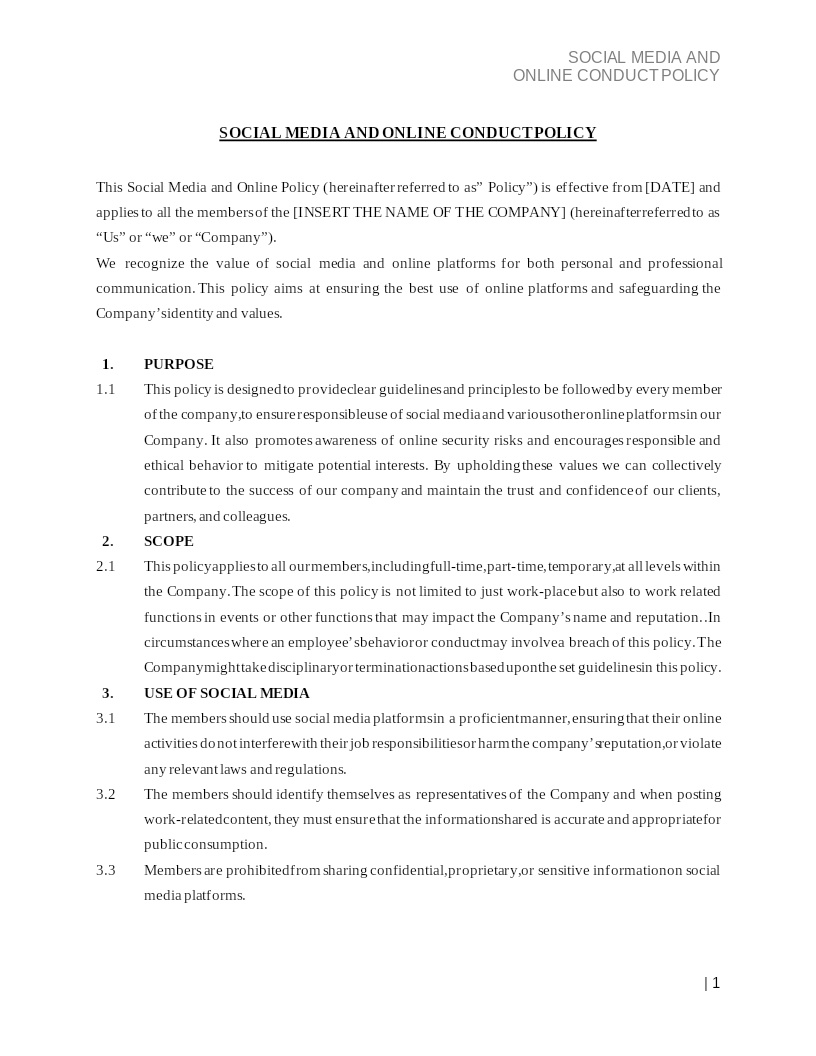
SOCIAL MEDIA AND ONLINE CONDUCT POLICY
How does it work?
1. Choose this template
Start by clicking on "Fill out the template"
2. Complete the document
Answer a few questions and your document is created automatically.
3. Save - Print
Your document is ready! You will receive it in Word and PDF formats. You will be able to modify it.
Guiding Responsible Online Conduct in Modern Workplaces
In today’s digital environment, online interactions can shape how an organization is perceived, often instantly and publicly. Whether employees are communicating through social media, participating in online discussions, or engaging on professional networking platforms, their conduct can influence brand reputation, reveal sensitive information, or create unintended risks.
A Social Media and Online Conduct Policy provides a clear framework that governs how individuals may communicate online when their actions could be associated with the organization. It outlines acceptable behavior, defines what must remain private, and sets standards that protect the company’s image, confidential information, and legal interests.
Having this policy in place helps establish trust, promotes responsible communication, and ensures that employees uphold organizational values across all online interactions.
Where This Policy Is Commonly Used
A Social Media and Online Conduct Policy is essential in environments where employees regularly interact online or may be perceived as representatives of the business. It is commonly used in:
- Corporate workplaces and customer-facing departments
- Companies with strong online branding or marketing presence
- Remote and hybrid teams using digital collaboration tools
- Regulated industries where disclosure risks are high
- Organizations concerned with reputation, data protection, or compliance
Anytime online behavior may affect the organization, this policy sets the boundaries and expectations needed for safe and responsible communication.
Different Types of Online Conduct Standards You May Encounter
- Professional Online Use Standards: These guidelines apply when employees post or communicate in an official capacity. They ensure accurate, respectful, and compliant engagement with customers, partners, and the general public.
- Personal Use Guidelines with Company Association: These guidelines apply when employees use personal accounts, but their role or connection to the organisation is identifiable. They aim to prevent reputational damage and clarify the limits of acceptable conduct.
- Confidentiality & Data Protection Rules: These standards restrict sharing internal information, including financial data, customer records, intellectual property, and strategic plans, on any online platform.
- Brand & Intellectual Property Usage Rules: These govern how employees may use logos, branded content, images, or other company-owned digital materials.
- Cybersecurity and Safe Online Practices: These protect against phishing, identity theft, and cyber threats, guiding employees to maintain secure digital habits.
- Incident Reporting & Crisis Escalation Procedures: These outline the steps employees must take when they encounter inappropriate posts, online threats, misinformation, or potential reputational risks.
When Legal Guidance Becomes Helpful
Most online communication is routine, but legal review is beneficial when:
- Online engagement involves regulated industries (healthcare, finance, education)
- Employees handle sensitive, confidential, or proprietary information
- The organization operates across multiple jurisdictions
- The policy intersects with harassment, discrimination, or employment regulations
- The business wants to limit misuse of IP, content, or brand assets
- The policy will be integrated into employment agreements or disciplinary actions
Legal advice ensures that the policy is enforceable, compliant, and reflective of real-world digital risks.
How to Work with This Template
- Identify all individuals covered by the policy
- Define the purpose and scope of online conduct expectations
- Clarify what content is protected or restricted from online sharing
- Establish procedures for reporting online issues or misuse
- Set rules for personal versus professional accounts
- Review governing state laws and update the policy regularly
- Provide training and require acknowledgment from employees
- Implement electronic or hard-copy signature options
The template aligns with commonly accepted workplace standards across the United States and supports rapid adoption and onboarding.
Frequently Asked Questions
Q1. Does this policy apply to employees’ personal social media accounts?
Yes, but only when personal posts can be linked to the organization or create risks for the company. The policy doesn’t limit personal opinions, but it clarifies that employees must avoid sharing confidential information, discriminatory content, or posts that damage the organization’s reputation. It helps employees maintain a responsible personal online presence that doesn’t conflict with company values.
Q2. Can employees be disciplined for inappropriate online behavior outside of work hours?
Yes, disciplinary action may be taken if off-duty online behavior violates applicable laws, breaches confidentiality, promotes harassment, or harms the company’s public image. U.S. courts recognize that employers have a legitimate interest in addressing conduct that affects workplace safety or brand reputation. The policy clearly outlines which types of off-duty conduct may trigger consequences while still respecting employee rights.
Q3. How does this policy protect confidential or sensitive information?
The policy prohibits posting or discussing client data, internal documents, proprietary content, or strategic business details online. It also outlines procedures for reporting accidental disclosures, helping the company respond quickly to minimize harm. This protection reduces risks of data breaches, legal liability, and reputational damage caused by unauthorized information sharing.
Q4. Are employees allowed to use company logos or branding online?
Employees may use logos or branding only with prior authorization from the company. Unauthorized usage can lead to misrepresentation, confusion among customers, and violations of intellectual property laws. The policy ensures brand consistency and protects against misuse by defining what content requires approval and how official brand assets should be handled online.
Q5. Does this policy address online harassment or discrimination?
Yes, the policy strictly prohibits online behavior that constitutes harassment, bullying, discrimination, or offensive conduct, whether on professional or personal accounts. It reinforces the organization’s commitment to a safe and respectful workplace both online and offline. Employees are instructed to report violations promptly so the company can take appropriate action.
Q6. What should employees do if they find negative posts or false information about the company online?
Employees should not respond directly or attempt to correct the information independently. The policy outlines a reporting process so communication professionals or designated managers can handle the issue appropriately. This prevents escalation, ensures accurate messaging, and reduces legal risks associated with unapproved responses.
Q7. How does the policy help prevent cybersecurity risks?
It provides guidelines for responsible online behaviour, such as avoiding suspicious links, protecting login credentials, and recognizing signs of phishing or identity theft. Employees must use secure networks, maintain password protection, and follow company cybersecurity protocols. These measures reduce the likelihood of data breaches and online threats impacting the organization.
Q8. How often should this policy be reviewed and updated?
Because digital platforms and regulations evolve frequently, the policy should be reviewed at least once a year, or sooner if significant legal, technological, or operational changes occur. Regular updates ensure compliance with evolving employment laws, privacy standards, and industry regulations. Updating also keeps employees informed about emerging risks and new online expectations.