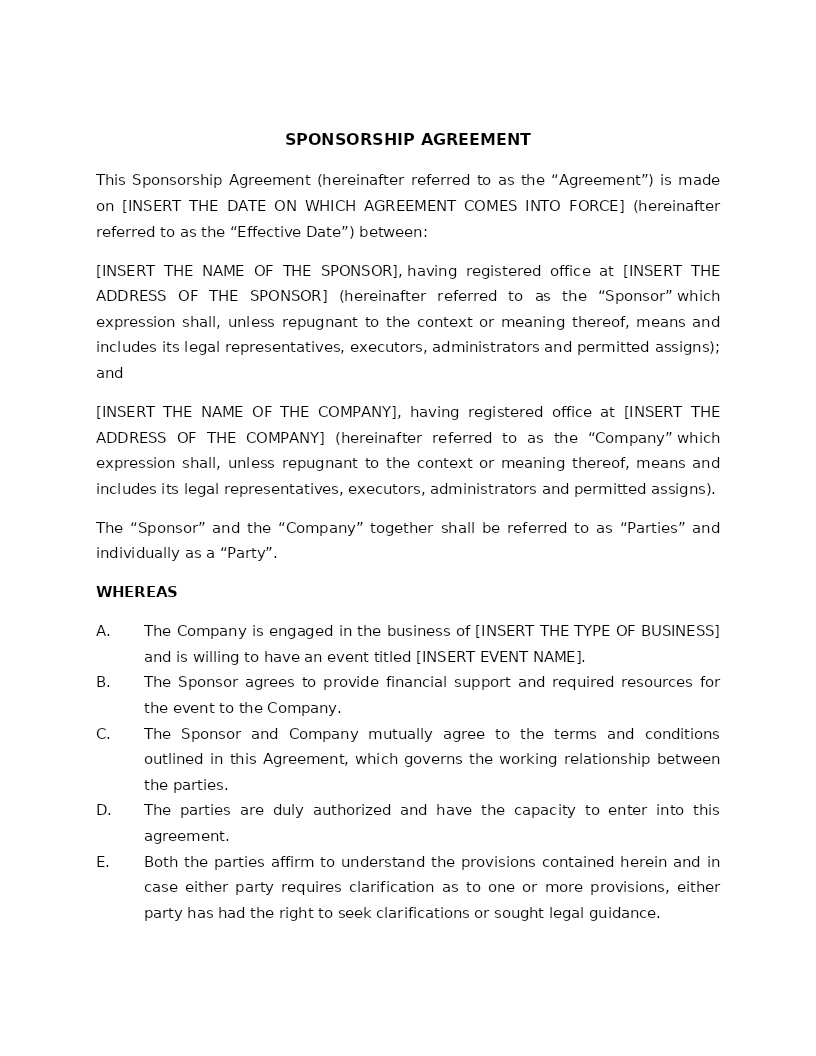
SPONSORSHIP AGREEMENT
How does it work?
1. Choose this template
Start by clicking on "Fill out the template"
2. Complete the document
Answer a few questions and your document is created automatically.
3. Save - Print
Your document is ready! You will receive it in Word and PDF formats. You will be able to modify it.
Understanding the Sponsorship Agreement
When a sponsor provides financial support, products, or services in exchange for brand exposure or promotional benefits, a clear legal framework is required to govern the relationship. A Sponsorship Agreement provides that structure. It defines the rights, obligations, promotional expectations, and commercial terms that will guide the partnership, whether the recipient is an event organizer, influencer, sports team, nonprofit, or digital creator.
Putting a Sponsorship Agreement in place ensures a professional, transparent, and legally protected collaboration that supports brand visibility while securing essential funding or resources for the recipient.
Where Sponsorship Agreements Are Commonly Used
Sponsorship Agreements are widely used across industries and promotional environments, including:
- Event sponsorships (conferences, concerts, sports tournaments, expos)
- Influencer and creator collaborations on social media platforms
- Brand placements at sports facilities, teams, or athletic programs
- Corporate sponsorships of nonprofit events or charitable initiatives
- Digital advertising partnerships across podcasts, livestreams, or online shows
- Product placement arrangements in media, entertainment, and productions
Whenever financial support or brand exposure is exchanged, a Sponsorship Agreement provides clarity and structured expectations for both parties.
Different Types of Sponsorship Agreements You May Encounter
- Financial Sponsorship: The sponsor provides monetary support in exchange for promotional assets, visibility, or branding rights.
- In-Kind or Product Sponsorship: The sponsor supplies products, services, or equipment instead of money, usually in return for marketing exposure.
- Digital or Influencer Sponsorship: Brands collaborate with influencers, content creators, or online personalities for paid promotions.
- Event Sponsorship: Sponsors receive branding at venues, digital materials, merchandise, or event programming in exchange for funding.
- Athletic or Team Sponsorship: Brands gain visibility through jerseys, sports gear, event signage, or athlete endorsements.
- Tiered Sponsorship Packages (Gold/Silver/Bronze): Multi-level benefits offering different exposure levels based on the sponsor’s contribution.
When Legal Guidance Becomes Helpful
Although many sponsorships seem straightforward, legal advice becomes essential when:
- Intellectual property, trademarks, or logos will be used in large-scale promotions
- The partnership spans multiple states or international jurisdictions
- The sponsorship includes performance-based metrics or ROI expectations
- Long-term or exclusive sponsorship rights are being negotiated
- The brand requires strict usage guidelines for name, photos, or likeness
- Content will be published across regulated industries (healthcare, finance, gaming)
- The agreement includes liability, indemnity, or insurance obligations
- Sponsorship extends to minors, collegiate programs, or sensitive sectors
Legal review ensures that terms are enforceable, compliant, and aligned with industry-specific standards.
How to Work with This Template
- Identify both parties and define the nature of the sponsorship arrangement
- Clearly describe the promotional benefits, branding rights, and deliverables
- Specify financial contributions, in-kind support, and payment schedules
- Outline intellectual property permissions, usage rights, and content approval processes
- Select the governing U.S. state law for the agreement
- Include expectations for event presence, audience reach, or digital engagement
- Review the terms together—legal review is optional but strongly recommended
- Sign electronically or in hard copy—e-signatures are enforceable across the United States
This template aligns with widely recognized industry standards for sponsorships across events, digital media, and promotional campaigns.
Frequently Asked Questions
Q1. What is a Sponsorship Agreement and why is it important for U.S. businesses and creators?
A Sponsorship Agreement is a legally binding contract that defines how a sponsor will provide support either financial or in-kind, in exchange for promotional benefits. In the U.S., this agreement helps prevent misunderstandings, supports brand compliance, and ensures both parties clearly understand what exposure, deliverables, and rights are being exchanged.
Q2. What should a Sponsorship Agreement typically include?
It should specify the sponsorship amount, promotional deliverables, branding rights, timelines, IP usage, approval requirements, termination terms, liability protections, and performance expectations. Clear documentation helps both parties manage obligations and evaluate campaign effectiveness.
Q3. Who owns the promotional content created under a sponsorship?
Ownership depends on the terms of the agreement. Some sponsors receive only a limited license to use photos, videos, or event footage, while others may require broader commercial usage rights. Clearly stating ownership and duration prevents disputes over content reuse or brand representation.
Q4. Can a sponsorship agreement include exclusivity rights?
Yes. Many sponsors require exclusivity to prevent the recipient from promoting competitors during the sponsorship term. Agreements can define the exclusivity scope whether by industry, event category, or duration along with additional compensation.
Q5. What happens if the recipient fails to deliver the promised promotional benefits?
The agreement may allow the sponsor to seek a refund, request additional promotional deliverables, terminate the contract, or pursue legal remedies. Having clear performance expectations protects the sponsor’s investment and ensures accountability.
Q6. Are Sponsorship Agreements enforceable across state lines?
Yes. Parties can select one state’s governing law commonly New York, California, or Delaware to ensure enforceability, even when the sponsor and recipient operate in different states.
Q7. Do Sponsorship Agreements cover intellectual property rights like logo usage?
Absolutely. A well-drafted agreement clarifies how the sponsor’s and recipient’s logos, trademarks, and brand assets can be used. These terms prevent unauthorized or misleading branding and protect both parties’ reputations.
Q8. Is a Sponsorship Agreement suitable for small businesses and local events?
Yes. Even smaller events or collaborations benefit from having terms in writing. Clear expectations around payment, delivery, promotion, and brand safety help maintain professionalism and reduce risk for both sides.