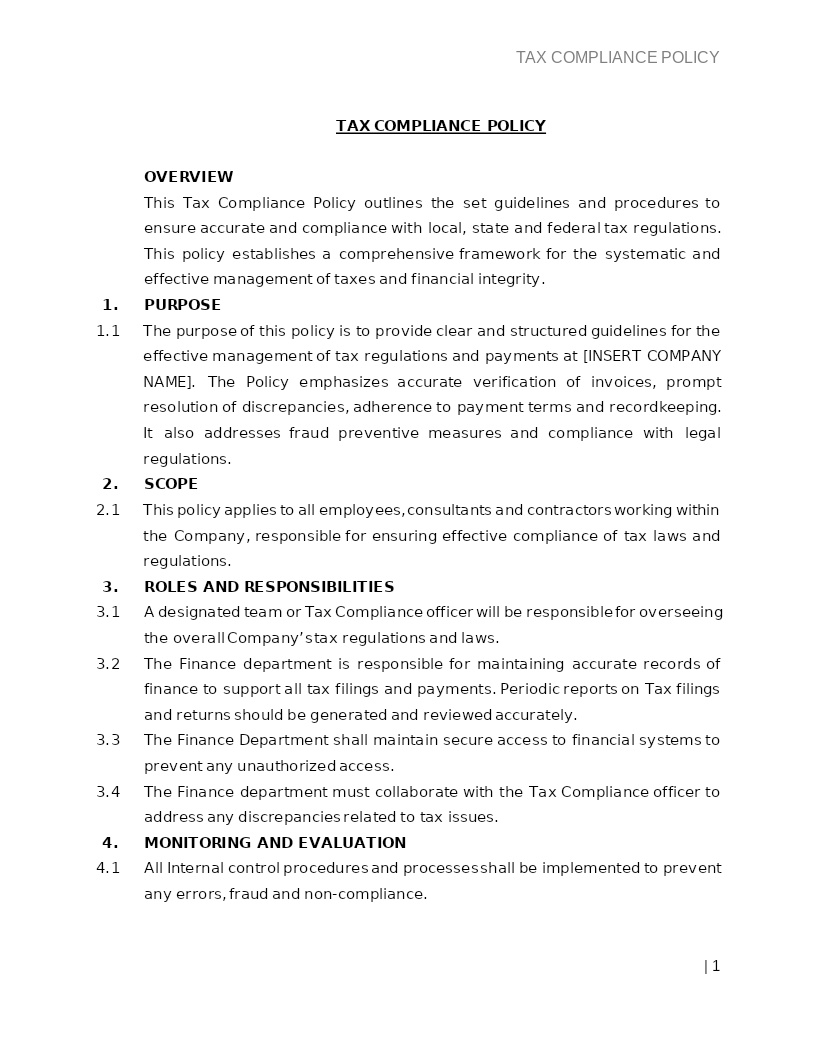
TAX COMPLIANCE POLICY
How does it work?
1. Choose this template
Start by clicking on "Fill out the template"
2. Complete the document
Answer a few questions and your document is created automatically.
3. Save - Print
Your document is ready! You will receive it in Word and PDF formats. You will be able to modify it.
Understanding Employment Relations Policies
An Employment Relations Policy sets the framework for how an organization manages interactions between employees and management. It defines expectations for communication, workplace conduct, conflict resolution, performance discussions, labor compliance, and employee engagement. This policy ensures that employers maintain fair, consistent, and transparent practices that align with U.S. labor laws, anti-discrimination regulations, wage-and-hour rules, and occupational safety standards.
A strong Employment Relations Policy helps foster a respectful, compliant, and productive work environment while giving employees clarity on their rights, responsibilities, and channels for raising concerns.
Where Employment Relations Policies Are Commonly Used
Employment Relations Policies apply across all industries and organizational sizes, including:
• Corporate offices and professional service firms
• Retail, hospitality, and service-based businesses
• Healthcare, education, and nonprofit organizations
• Manufacturing, construction, and industrial environments
• Startups and remote-first companies
• Unionized and non-unionized workplaces
Different Types of Employment Relations Areas You May Encounter
- Employee Communication & Feedback: Defines how information flows between management and staff through meetings, feedback cycles, and announcements.
- Performance & Workplace Expectations: Establishes standards for conduct, professionalism, and work quality.
- Conflict Resolution & Grievance Handling: Outlines how employees can raise concerns and how management must respond.
- Employee Rights & Legal Compliance: Ensures alignment with federal and state employment laws, including FLSA, EEOC, OSHA, and NLRA.
- Workplace Respect & Anti-Harassment Standards: Sets rules that prohibit discrimination, harassment, retaliation, and unfair treatment.
When Legal Guidance Becomes Helpful
Most organizations can implement this policy internally, but legal review is valuable when:
• The workforce is unionized, or labor negotiations are expected
• The company operates across multiple states with different labor requirements
• The policy must address sensitive matters like whistleblower protections or disciplinary actions
• The workplace structure includes remote, hybrid, or multi-site environments
• The business wants strong legal risk mitigation around employee disputes
How to Work with This Template
• Identify the scope of the policy and all covered employees
• Define communication expectations and reporting structures
• Outline employee responsibilities and employer obligations
• Add grievance, complaint, and conflict resolution procedures
• Include legal compliance requirements
• Select governing state law, if referenced
• Review the document with HR leadership (legal review optional)
• Share the policy and obtain acknowledgment from employees
Frequently Asked Questions
Q1. Why is an Employment Relations Policy important?
It promotes fairness and structure in the workplace by clarifying communication standards, employee rights, and management responsibilities. This helps minimize misunderstandings, improves morale, and ensures compliance with U.S. labor laws.
Q2. Does this policy apply to all employees?
Yes. Employment Relations Policies generally apply to full-time, part-time, temporary, and remote employees. Clear coverage ensures consistent treatment across the entire organization.
Q3. Does this policy address employee grievances or complaints?
Yes. It outlines how employees can report concerns, the steps managers must take, and how issues will be resolved. This ensures a fair and structured process for handling workplace conflicts.
Q4. How does this policy support legal compliance?
The policy helps organizations follow federal and state laws related to workplace rights, anti-discrimination, safety standards, wage compliance, and employee protections. It reduces legal risks by defining proper procedures.
Q5. Can the company update this policy after adoption?
Yes. Employers can revise the policy to reflect organizational changes or updates to employment laws, provided employees are notified and given access to the new version.
Q6. Does the policy cover communication expectations?
It includes guidelines for respectful communication, feedback processes, and ways employees can share workplace concerns or suggestions with management.
Q7. How does this policy affect remote employees?
The policy applies equally to remote and hybrid workers, helping ensure they follow conduct standards, communication expectations, and reporting procedures just like on-site staff.
Q8. Does this policy include disciplinary procedures?
It may outline general expectations and how performance or conduct issues will be addressed, ensuring fairness and consistency in HR decision-making.
Q9. Are employees required to sign the policy?
Many organizations request written acknowledgment to confirm that employees have read and understood the policy. This strengthens enforceability and compliance.
Q10. Is legal review required before using this policy?
Legal review is not mandatory but recommended, especially for companies operating in multiple states or industries with strict regulations. It helps ensure the policy aligns with U.S. employment laws and HR best practices.