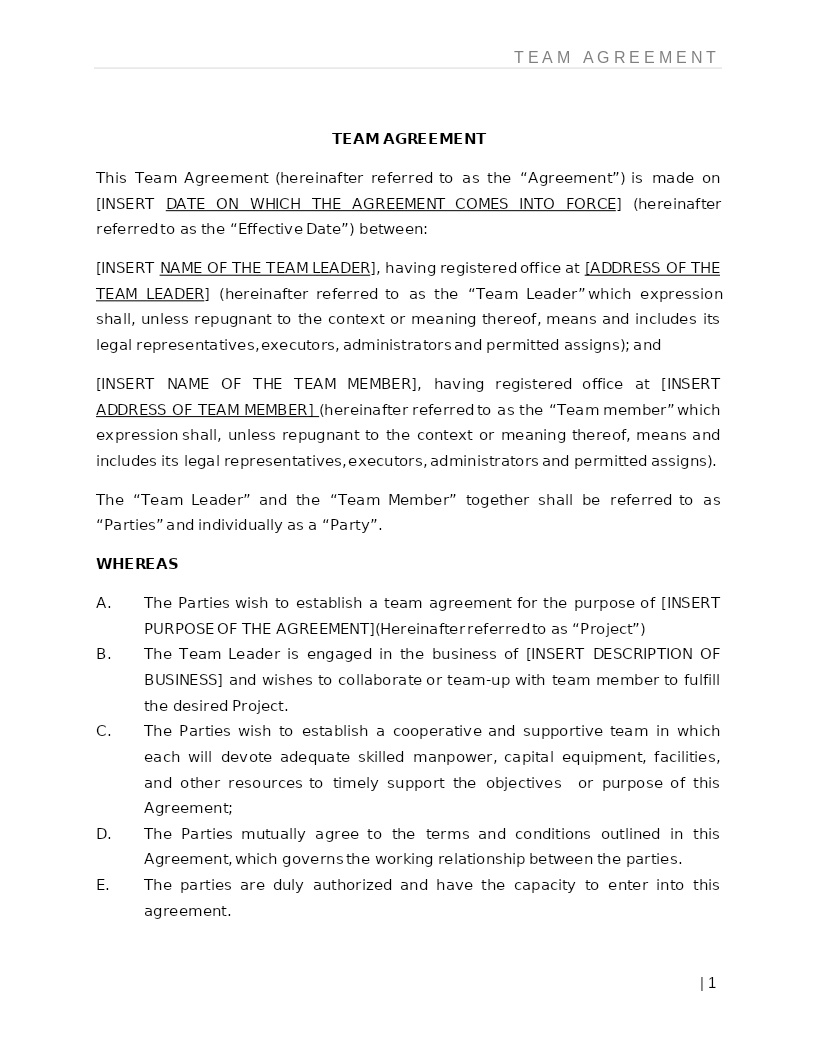
TEAM AGREEMENT
How does it work?
1. Choose this template
Start by clicking on "Fill out the template"
2. Complete the document
Answer a few questions and your document is created automatically.
3. Save - Print
Your document is ready! You will receive it in Word and PDF formats. You will be able to modify it.
Understanding Team Agreement In U.S.
A Team Agreement is a collaborative document that outlines how team members will work together, communicate, and handle responsibilities within a professional environment. It establishes expectations for teamwork, decision-making, conflict resolution, performance standards, and accountability. Designed to promote cohesion and clarity, a Team Agreement helps teams operate smoothly, reduces misunderstandings, and fosters a productive and respectful workplace. In the U.S., such agreements often incorporate organizational policies, labor regulations, and internal governance standards to ensure a professional and compliant team culture.
Where a Team Agreement Is Commonly Used
• Corporate teams and project groups
• Startups and small businesses
• Remote or hybrid work teams
• Cross-functional departments and task forces
• Academic research groups
• Nonprofit project teams
• Government and policy working groups
These agreements help unify team expectations and strengthen collaboration across all work environments.
Different Types of Team Agreements
- Project-Based Team Agreement: Created for temporary teams working on a specific project with defined goals and timelines.
- Operational Team Agreement: Used for long-term departments or units to maintain consistent standards and behaviors.
- Remote/Hybrid Team Agreement: Outlines communication practices, availability expectations, and digital collaboration rules.
- Leadership Team Agreement: Helps senior leadership align on goals, decision-making models, and conflict resolution methods.
When Legal Guidance Becomes Necessary
Legal consultation is advisable when:
• Team agreements intersect with employment laws or HR policies
• Confidentiality, data protection, or IP ownership is involved
• The agreement affects compensation, performance evaluation, or termination
• Teams operate across multiple states with different labor regulations
• Disputes or misconduct may require formal disciplinary processes
• Sensitive or regulated projects (e.g., healthcare, cybersecurity) are part of the team’s work
Real-time legal support ensures the agreement is enforceable, compliant, and aligned with organizational policies.
How to Work With This Team Agreement
• Define clear roles, responsibilities, and performance expectations
• Establish communication channels, meeting norms, and availability guidelines
• Document decision-making processes, voting rules, or approval flows
• Include conflict resolution procedures and escalation pathways
• Set accountability measures and shared team values
• Outline confidentiality obligations and IP considerations
• Ensure compliance with HR policies and workplace laws
• Review and update the agreement as team priorities evolve
This helps create a collaborative work environment grounded in transparency and mutual respect.
Frequently Asked Questions
Q1. Why is a Team Agreement important in U.S. workplaces?
A Team Agreement ensures clarity, accountability, and smooth collaboration within U.S. work environments. It aligns team behavior with company policies, clarifies expectations, and helps avoid conflicts. Many organizations use them to enhance productivity, communication, and compliance with employment standards.
Q2. Does a Team Agreement have legal significance?
While primarily a collaborative tool, a Team Agreement can support HR policies and workplace standards. When carefully drafted, it reinforces expectations that may be referenced in performance reviews or dispute resolution. Legal guidance helps ensure the agreement aligns with U.S. labor laws and internal policies.
Q3. Who should be involved in creating a Team Agreement?
All team members, the team leader, and HR representatives should participate to ensure fairness and alignment. Collaborative input builds ownership, accountability, and buy-in from every member. This democratic process strengthens trust and commitment within the team.
Q4. Can a Team Agreement help prevent workplace conflicts?
Yes. By defining communication norms, decision-making processes, and conflict-resolution steps, it proactively reduces misunderstandings. Teams have clear pathways for addressing disagreements, which improves morale and creates a more respectful working environment.
Q5. Are Team Agreements useful for remote or hybrid work teams?
Absolutely. Remote teams rely heavily on communication structure, timing expectations, and digital collaboration rules. A Team Agreement outlines availability norms, response times, and virtual meeting guidelines to ensure smooth and consistent remote teamwork.
Q6. How often should a Team Agreement be reviewed?
Teams should review their agreement at least annually or whenever significant changes occur, such as new team members, updated goals, or shifting responsibilities. Regular reviews ensure relevance and ongoing alignment with organizational priorities.
Q7. What happens if a team member does not follow the Team Agreement?
Noncompliance can be addressed through coaching, team discussions, or HR-guided corrective measures. The agreement provides a reference point for expectations, helping teams resolve issues fairly while encouraging accountability and professional conduct.
Q8. Can a Team Agreement include confidentiality or IP clauses?
Yes. Teams working with sensitive information or proprietary content can include confidentiality, NDA, or intellectual property rules. This protects the organization’s assets and ensures legal compliance, especially in industries like technology, healthcare, research, and finance.