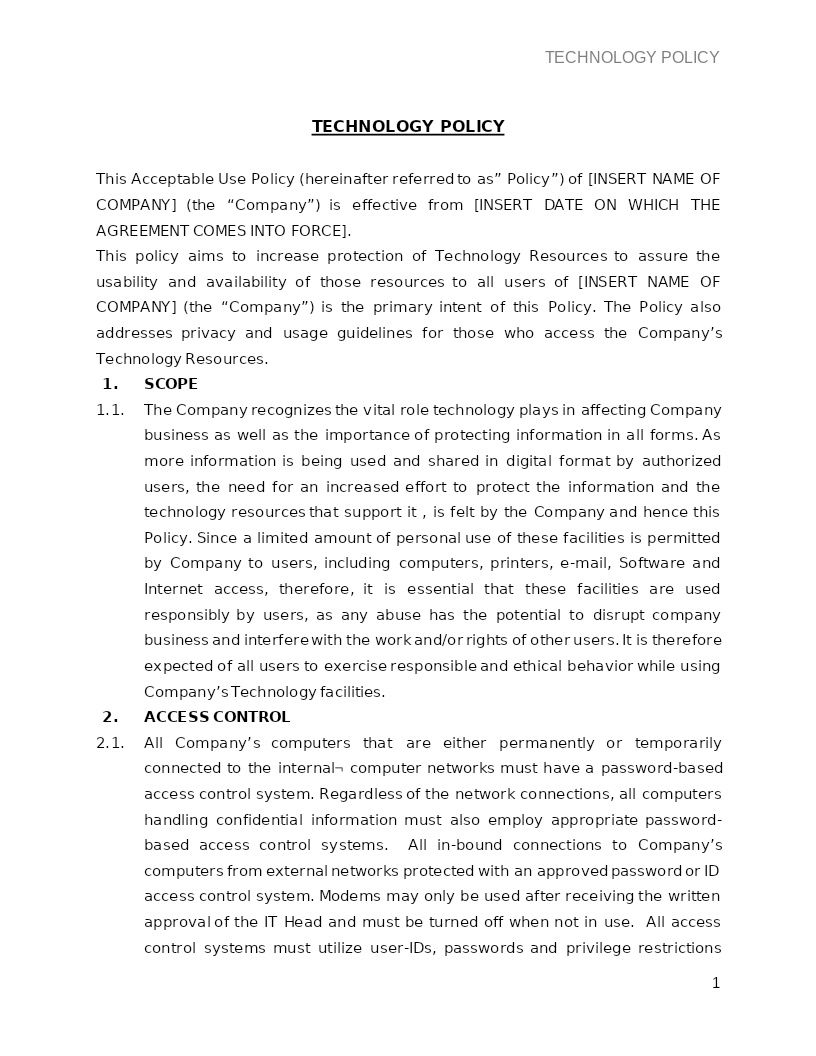
TECHNOLOGY POLICY
How does it work?
1. Choose this template
Start by clicking on "Fill out the template"
2. Complete the document
Answer a few questions and your document is created automatically.
3. Save - Print
Your document is ready! You will receive it in Word and PDF formats. You will be able to modify it.
Understanding Technology Policy in U.S.
A Technology Policy establishes clear rules and guidelines for the responsible use of devices, networks, software, and digital resources within an organization. It outlines expectations for acceptable use, data protection, cybersecurity, device management, and system access. This policy ensures employees utilize technology safely and efficiently while protecting the organization’s digital assets.
By defining standards aligned with U.S. data privacy laws, cybersecurity requirements, and industry-specific regulations, the policy minimizes risks, prevents misuse, enhances productivity, and supports secure and compliant operations across the workplace.
Where Technology Policies Are Commonly Used
Technology Policies are implemented across industries where technology, data security, and digital communications are integral to daily operations. They are widely used in:
• IT companies, SaaS providers, and cloud-based service environments
• Corporate offices, startups, and remote-work organizations
• Healthcare and financial sectors requiring HIPAA, GLBA, or SOX compliance
• Education, government agencies, and public institutions
• Retail, hospitality, logistics, and customer-service platforms
• Manufacturing and industrial sectors leveraging digital tools or IoT devices
Any organization relying on technology benefits from consistent guidelines that protect systems, streamline operations, and ensure secure usage.
Different Types of Technology Rules You May Encounter
- Acceptable Use Rules: Define appropriate and inappropriate behavior when using company devices, networks, email systems, or online tools. These rules help prevent misuse, distractions, and security risks.
- Cybersecurity and Data Protection Guidelines: Establish security standards aligned with U.S. regulations such as NIST, CCPA, HIPAA, and federal cybersecurity best practices. Includes password hygiene, device security, and breach-prevention measures.
- Software and Device Management Controls: Outline rules for installing software, updating systems, and using authorized devices only. Helps control licensing costs and prevents malware or unapproved applications.
- Internet and Email Usage Standards: Specify responsible use of internet access, communication tools, and online platforms to maintain professionalism and system integrity.
- Remote Work and Access Protocols: Cover VPN usage, secure access to company data, remote-device management, and protection of confidential information while working off-site.
When Legal Guidance Becomes Helpful
Legal review is especially important when drafting or customizing a Technology Policy because:
• U.S. cybersecurity and privacy laws, such as CCPA/CPRA, HIPAA, GLBA, FERPA, and various state breach-notification laws, impose strict obligations on data handling.
• Employers must navigate employee privacy rights, monitoring laws, and consent requirements that vary by state.
• Legal counsel ensures the policy includes enforceable language around acceptable use, confidentiality, intellectual property, and disciplinary actions.
• Technology-related agreements often intersect with licensing contracts, third-party service agreements, and data-processing obligations.
• Multi-state employers must harmonize rules across jurisdictions with different privacy, monitoring, and cybersecurity standards.
Real-time lawyers and in-house counsel ensure the policy aligns with operational needs, legal requirements, and evolving digital risks.
How to Work With This Policy Template
• Identify all technology resources covered under the policy, including hardware, software, networks, and cloud-based systems.
• Define acceptable and prohibited behaviors related to device usage, internet access, data handling, and digital communications.
• Align security measures with recognized U.S. cybersecurity frameworks and state privacy laws.
• Clarify user responsibilities regarding passwords, system access, and device protection.
• Establish protocols for reporting security incidents or suspected breaches.
• Ensure consistency with internal IT procedures, HR policies, and regulatory requirements.
• Review and update the policy regularly based on new technologies, legal changes, or cybersecurity threats.
Frequently Asked Questions
Q1. Why is a Technology Policy important for organizations?
A Technology Policy ensures secure, efficient, and responsible use of digital tools and systems. It protects company data from cyber threats, reduces misuse of devices, and promotes consistent technology practices across teams. By setting clear expectations, organizations enhance productivity and minimize risks to information security.
Q2. Does this policy help businesses comply with U.S. laws?
Yes. Technology Policies support compliance with laws such as HIPAA, CCPA/CPRA, GLBA, and state data-breach regulations. They outline proper data handling, system access, and cybersecurity requirements. With legal alignment, the organization reduces the risk of penalties, lawsuits, or regulatory violations.
Q3. What technology areas are usually covered under this policy?
Most Technology Policies address device usage, internet access, email rules, cybersecurity practices, software installations, data storage, and remote-access procedures. These areas help protect networks from malware, prevent data leaks, and ensure employees use systems appropriately.
Q4. How does a Technology Policy enhance cybersecurity?
The policy outlines security measures such as password protocols, encryption standards, safe browsing practices, and guidelines for reporting suspicious activity. It also helps prevent unauthorized access and supports compliance with industry cybersecurity frameworks. These measures significantly reduce the risk of breaches.
Q5. Can this policy help control technology costs?
Absolutely. By limiting unauthorized software installations, standardizing approved tools, and preventing equipment misuse, the policy reduces waste and unnecessary expenses. Controlled technology usage helps organizations manage budgets effectively and maintain cost-efficient operations.
Q6. How does the policy support remote or hybrid work environments?
The policy provides rules for secure remote access, use of VPNs, protection of confidential data off-site, and management of personal vs. company devices. These guidelines ensure that employees working remotely maintain the same level of security and compliance as on-site staff.
Q7. What happens if an employee violates the Technology Policy?
Violations may result in disciplinary actions ranging from warnings to termination, depending on the severity of the misconduct. The policy ensures consistent enforcement while protecting employee rights. It also outlines steps for investigating issues and preventing future incidents.
Q8. Is a Technology Policy suitable for small businesses as well?
Yes. Technology Policies are scalable and adaptable for businesses of all sizes. Small and medium-sized companies benefit greatly from having defined technology rules, as they often face higher cybersecurity risks with fewer resources. A clear policy strengthens security and supports stable growth.