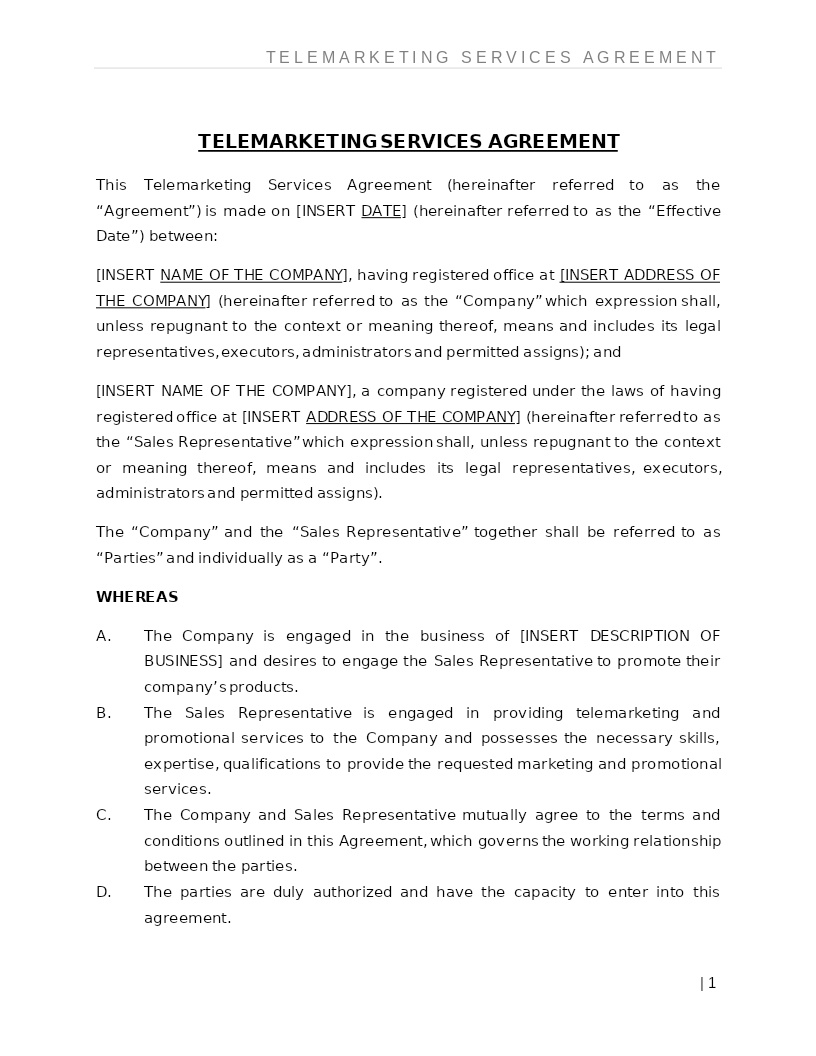
TELEMARKETING AGREEMENT
How does it work?
1. Choose this template
Start by clicking on "Fill out the template"
2. Complete the document
Answer a few questions and your document is created automatically.
3. Save - Print
Your document is ready! You will receive it in Word and PDF formats. You will be able to modify it.
Understanding Telemarketing Services Agreement
When a business in the United States engages an external telemarketing agency or call center, it becomes essential to establish a clear framework for how customer outreach, sales calls, and promotional activities will be carried out. A Telemarketing Services Agreement provides that structure. It defines what services will be performed, how customer information must be handled, the performance standards expected, and the legal requirements the provider must follow.
This agreement enables both parties to communicate openly, share campaign materials, and coordinate call strategies while maintaining strong safeguards around compliance, data protection, and customer privacy. By clearly outlining responsibilities and operational rules, it ensures the telemarketing provider acts only within the authorized scope and follows all applicable federal and state regulations, including the Telephone Consumer Protection Act (TCPA), Telemarketing Sales Rule (TSR), and Do-Not-Call (DNC) requirements.
Where Telemarketing Services Agreements Are Commonly Used
These agreements are widely used across industries whenever businesses rely on third-party telemarketers for customer outreach or sales-driven activities. Common situations include:
- Outbound sales campaigns, cold calling, and lead generation
- Appointment setting and follow-up calls
- Customer surveys and market research
- Renewal, retention, and subscription-based outreach
- Fundraising calls for nonprofits and charitable organizations
- Inbound customer support and call-handling arrangements
- Outsourced call center operations or seasonal staffing needs
Any time telemarketers represent your brand or contact your customers or prospects, this agreement sets clear expectations and operational controls.
Types of Telemarketing Services Agreements
- Outbound Telemarketing Agreement: Used when a provider makes calls for sales, promotions, or lead generation.
- Inbound Services Agreement: Covers customer assistance, inquiry management, or order-related call handling.
- Performance-Based Telemarketing Agreement: Includes compensation linked to sales conversions, qualified leads, or call productivity.
- Comprehensive Call Center Agreement: Combines inbound, outbound, reporting, compliance oversight, and customer data management.
- Campaign-Specific Agreement: Designed for a short-term telemarketing initiative with limited objectives and duration.
When Legal Guidance Becomes Helpful
Most business outreach campaigns can begin with a standard template, but legal consultation becomes valuable when:
- Sensitive customer data, regulated information, or large contact lists are involved
- Calls are made across multiple states or international jurisdictions
- The agreement includes complex payment structures, penalties, or sales quotas
- The industry is regulated (finance, healthcare, insurance, etc.)
- Detailed confidentiality or intellectual property protections are required
- The telemarketing provider accesses internal tools, scripts, or proprietary systems
- The business wants strong indemnity, compliance assurance, or liability protections
Legal review helps ensure the agreement aligns with federal and state laws, reflects the realities of telecom regulations, and safeguards the business from consumer complaints or penalties.
How to Work With This Template
- Identify the parties and define the scope of telemarketing services
- Clearly state the purpose of the engagement and the type of calling activities involved
- Specify the standards for call quality, reporting, scripts, and compliance
- Select the governing state law
- Address the requirements for TCPA, TSR, and Do-Not-Call compliance
- Define the payment structure, milestones, or commission terms
- Review the confidentiality and data-handling provisions (legal review optional)
- Sign digitally or via hard copy
The template is compatible with major e-signature platforms and follows contract practices commonly recognized throughout the United States.
Frequently Asked Questions
Q1. Is a Telemarketing Services Agreement necessary for basic calling campaigns?
Yes. Even for small or introductory calling campaigns, a Telemarketing Services Agreement is essential because it protects both parties and establishes clear operational guidelines. It outlines the standards for call quality, customer interactions, and the responsible use of customer information. Most importantly, it ensures the telemarketing provider follows all relevant federal and state telemarketing laws, including the TCPA, TSR, and Do-Not-Call regulations. This reduces legal risks, improves accountability, and creates a transparent framework for the calling activities.
Q2. Can this agreement be reused for future campaigns?
Yes, the core structure of the agreement can be reused. However, each new campaign may involve different goals, messaging strategies, target audiences, payment models, or performance expectations. Updating the scope of work and campaign-specific terms helps keep the agreement clear, enforceable, and aligned with current business needs. This also ensures that the telemarketing provider has accurate instructions tailored to each new project, which improves performance and compliance.
Q3. What if the telemarketing provider does not follow Do-Not-Call or TCPA rules?
Failure to follow DNC or TCPA laws can lead to fines and legal issues for your business. This agreement requires full compliance and specifies consequences for violations, helping protect your company from liability.
Q4. Does the agreement cover call recordings and data usage?
Yes. It clearly outlines how customer data, call logs, and recordings must be handled, stored, and protected. These provisions help safeguard sensitive information and ensure proper data privacy practices.
Q5. Can payment be based on performance or conversions?
Yes. The agreement can include commissions, bonuses, or pay-per-lead models. Defining these terms upfront ensures transparency and encourages aligned performance goals.
Q6. Are electronic signatures valid for this agreement?
Yes. Under US law, electronic signatures are legally enforceable. This allows both parties to sign the agreement quickly and securely through any recognized e-signature platform.
Q7. Is this suitable for outsourced call centers and agencies?
Absolutely. It is commonly used with third-party call centers, telemarketing agencies, and freelancers to ensure they follow your business’s standards, protect customer data, and comply with telemarketing regulations.
Q8. What happens if the provider breaches the agreement?
Depending on the breach, you may terminate the contract, stop their calling activities, retrieve or delete customer data, or take legal action. Clear consequences in the agreement help protect your business from operational and legal risks.