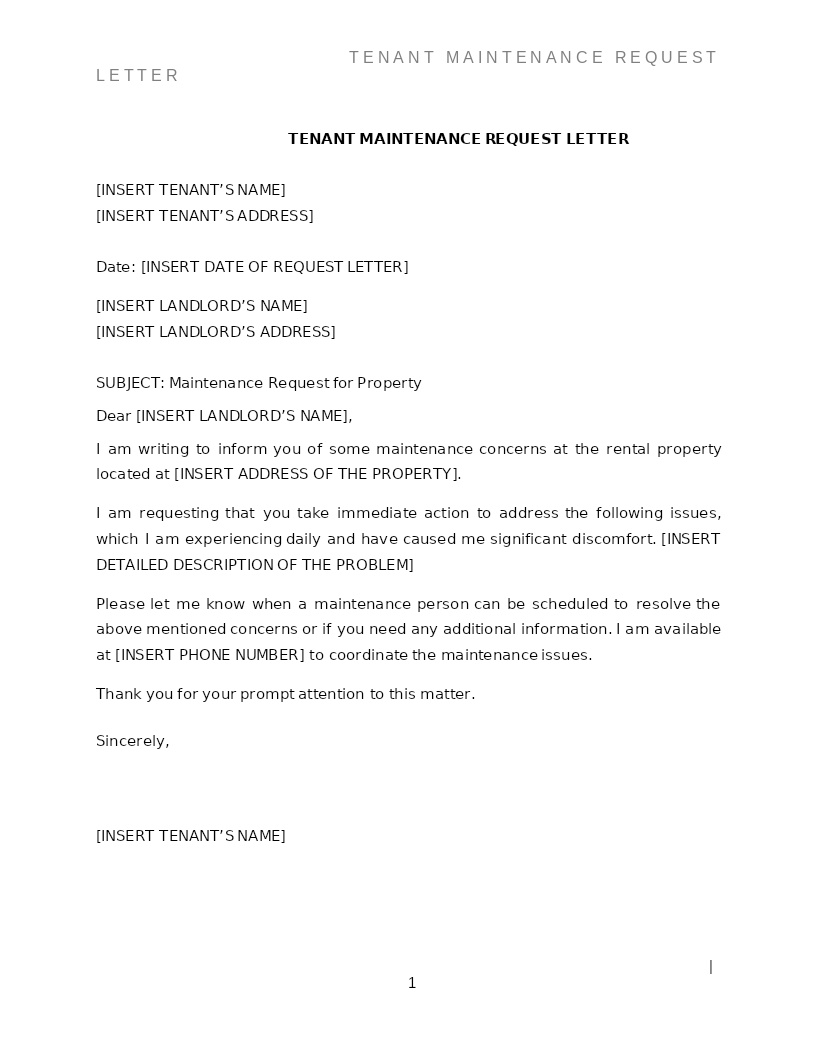
TENANT MAINTENANCE REQUEST LETTER
How does it work?
1. Choose this template
Start by clicking on "Fill out the template"
2. Complete the document
Answer a few questions and your document is created automatically.
3. Save - Print
Your document is ready! You will receive it in Word and PDF formats. You will be able to modify it.
Ensuring Proper Communication for Repair and Maintenance Needs in U.S. Rental Properties
When maintenance issues arise in a rental property, tenants need to have a clear and formal framework to notify their landlord or property manager. A Tenant Maintenance Request Letter provides that structure. It documents the problem, outlines what repairs are needed, and establishes a timeline for addressing the issue, ensuring the rental unit remains safe, functional, and compliant with habitability laws.
Sending this letter allows both parties to communicate openly, helps prevent disputes about responsibility or delays, and creates a written record that supports the tenant’s rights under state landlord–tenant laws.
Where Tenant Maintenance Request Letters Are Commonly Used
These letters are standard across a wide range of residential rental situations, including:
- Reporting plumbing problems, leaks, or water damage
- Requesting electrical or appliance repairs
- Addressing mold, pest, or safety concerns
- Documenting structural or HVAC issues
- Following up on maintenance previously promised but not completed
- Communicating concerns required under state habitability rules
Any time repairs are necessary, a written maintenance request ensures clarity, accountability, and timely action.
Different Types of Maintenance Requests You May Encounter
- Urgent or Emergency Repair Request: Covers issues requiring immediate attention—such as gas leaks, burst pipes, or electrical hazards.
- Routine Maintenance Request: Addresses non-emergency issues like faulty appliances, minor leaks, or cosmetic repairs.
- Health & Safety Maintenance Request: Used for mold concerns, pest infestations, broken locks, or anything affecting well-being.
- Follow-Up Request Letter: Sent when previous maintenance requests have gone unanswered or unresolved.
When Legal Guidance Becomes Helpful
While many repairs can be handled with a simple written request, legal guidance is helpful when:
- The landlord ignores repeated maintenance requests
- The issue involves habitability violations under state law
- Repairs affect safety, health, or the ability to live in the home
- The tenant is considering rent withholding or repair-and-deduct remedies
- The landlord threatens eviction for requesting repairs
- Damage causes financial loss or requires temporary relocation
Legal review helps ensure tenants assert their rights correctly and prevents retaliation or wrongful charges.
How to Work with This Template
- Identify the tenant, landlord, and full rental property address
- Describe the maintenance issue clearly and factually
- Include the date the problem was discovered and any attempts to resolve it
- Request timely action and propose access times for repairs
- Attach photos or evidence if helpful
- Review for compliance with state laws (legal review optional)
- Send via email, certified mail, or a method that provides proof of delivery
This template aligns with broadly recognized landlord–tenant practices across the United States and supports proper documentation for future reference.
Frequently Asked Questions
Q1. Why is a Tenant Maintenance Request Letter important?
A written maintenance request ensures the landlord receives formal notice of the issue and cannot claim they were unaware. It serves as a record that protects the tenant if the repair is delayed or mishandled. This documentation can be essential if the issue affects safety or habitability. It also encourages landlords to respond promptly and professionally.
Q2. What should I include in a Tenant Maintenance Request Letter?
Your letter should describe the problem, when it began, and how it affects the rental unit. Include photos if available, and request a reasonable repair timeline. Providing contact information and preferred access times helps the landlord schedule repairs efficiently. Clear details make the request easier to process.
Q3. How does this letter protect the tenant’s legal rights?
The letter establishes a formal record proving the tenant notified the landlord, which is crucial for habitability claims, rent withholding, or repair-and-deduct remedies. If damage becomes worse, the tenant can show they acted responsibly. Documentation also reduces the risk of being blamed for damage the tenant did not cause.
Q4. What happens if the landlord ignores the maintenance request?
If the landlord does not respond, tenants may seek options under state law, such as repair-and-deduct, filing a complaint with local housing authorities, or pursuing legal action. Having a written request strengthens the tenant’s case. A follow-up letter or certified mail notice can further document negligence.
Q5. Can I send this maintenance request by email?
Yes. Many states allow emailed notices if the lease or communication history supports it. Email creates a timestamped record that benefits the tenant. However, for serious issues, sending the letter through certified mail or another trackable method offers additional protection. Always keep copies of your correspondence.
Q6. Is the landlord required to fix all reported issues?
Landlords must repair issues affecting health, safety, and habitability, such as plumbing failures, heating problems, pest infestations, and dangerous conditions. Cosmetic repairs may not be required unless the lease says otherwise. A written request clarifies the nature of the issue and helps determine responsibility.
Q7. Should I allow the landlord access to complete repairs?
Yes. Most state laws require tenants to provide reasonable access for repairs. Offering preferred time windows in your letter shows cooperation and prevents delays. If the landlord abuses access rights, the tenant may rely on the written record to resolve the issue.
Q8. Can this letter help avoid disputes about property damage?
Absolutely. Documenting the issue early helps distinguish tenant-caused damage from normal wear and tear. If the landlord tries to deduct repair costs from the security deposit, the written request supports the tenant’s position. The letter also shows the tenant took proactive steps to prevent further damage.