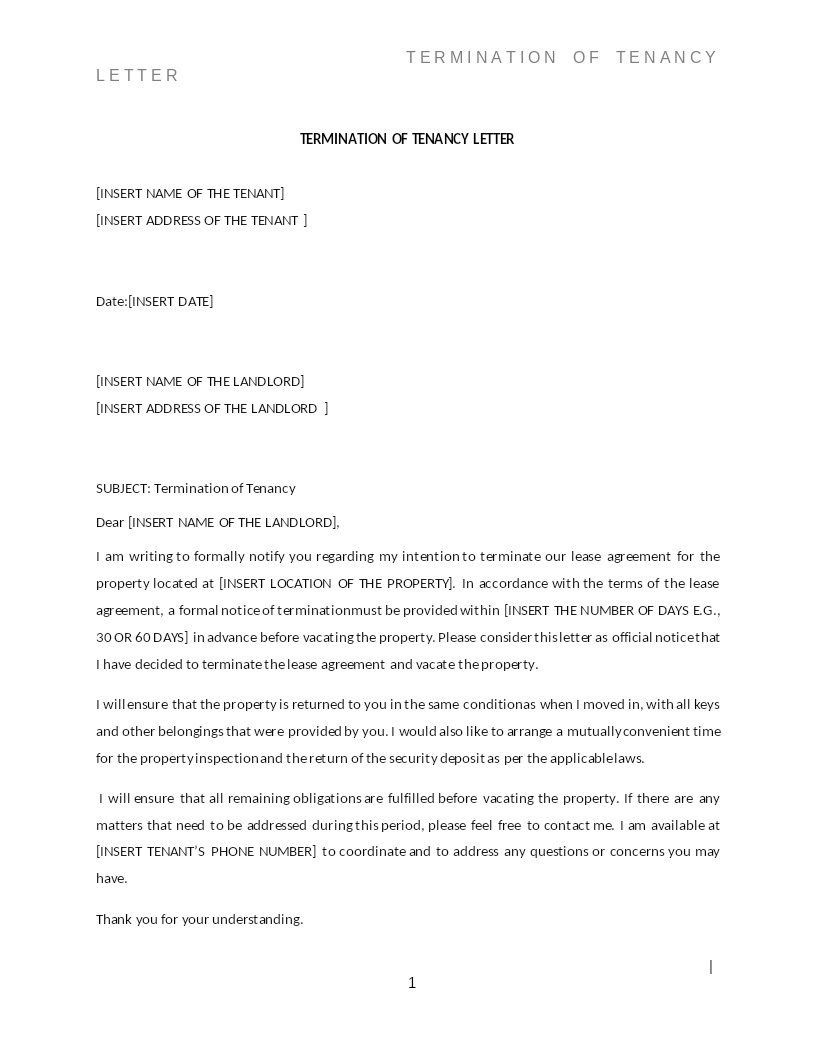
TERMINANTION OF TENANCY NOTICE
How does it work?
1. Choose this template
Start by clicking on "Fill out the template"
2. Complete the document
Answer a few questions and your document is created automatically.
3. Save - Print
Your document is ready! You will receive it in Word and PDF formats. You will be able to modify it.
Ensuring Clear and Lawful Communication When Ending a Residential Tenancy in the United States
When a tenant decides to move out of a rental property, it’s important to have a clear and formal framework that outlines how the tenancy will be concluded. A Termination of Tenancy Letter provides that structure. It specifies the tenant’s intent to end the lease, identifies the move-out date, and ensures the notice meets the requirements of the lease agreement and state-specific rental laws.
Sending this notice creates a clear, documented record that protects the tenant’s rights while helping the landlord plan for the transition. It sets expectations, prevents misunderstandings, and promotes a smooth, legally compliant move-out process.
Where Termination of Tenancy Letters Are Commonly Used
Termination letters from tenants are routinely used in a variety of rental situations, including:
- Ending a month-to-month or periodic tenancy
- Moving out at the end of a fixed-term lease
- Early termination permitted under state laws or lease terms
- Relocating due to job changes, family needs, or financial shifts
- When documentation is required for deposit return or dispute resolution
- Providing written notice as required by state housing regulations
Any time a tenant ends their rental relationship, a formal letter ensures proper notice, clarity, and legal compliance.
Different Types of Tenancy Termination Notices You May Encounter
- Standard Notice of Intent to Vacate: Used for ending periodic or month-to-month leases with required notice periods.
- End-of-Lease Non-Renewal Notice: Provides advance notice that the tenant will not renew the lease after its expiration.
- Early Termination Notice (Lease-Specific): Used when the lease allows early termination based on conditions such as job transfer, military duty, or landlord breach.
- Notice for Legal or Safety Reasons: Sent when local laws allow immediate or accelerated termination due to unsafe conditions or landlord violations.
When Legal Guidance Becomes Helpful
While most tenancy termination notices are straightforward, legal assistance is valuable when:
- The tenant needs to terminate early and the lease doesn’t clearly permit it
- There are disputes regarding repairs, habitability, or landlord obligations
- The landlord refuses to accept written notice or claims it is invalid
- The tenant anticipates conflict regarding the security deposit
- The rental is subject to rent control, special local laws, or complex lease provisions
- Eviction threats or retaliation concerns may arise
Legal review helps ensure the notice is enforceable and protects the tenant’s rights under applicable state housing laws.
How to Work with This Template
- Clearly identify the tenant, landlord, property address, and lease details
- Specify the intended move-out date and notice period
- Reference the lease or state laws requiring written notice
- Provide a forwarding address for deposit and future communications
- Document any final inspection requests or key return procedures
- Review the notice for compliance (legal review optional)
- Send the notice in writing—preferably via trackable or documented delivery
The template is designed to meet common standards across the United States and supports convenient execution through physical or electronic delivery.
Frequently Asked Questions
Q1. Why is a Termination of Tenancy Letter important for tenants in the U.S.?
A Termination of Tenancy Letter ensures the tenant gives proper notice as required by the lease and state law. It clearly communicates the tenant’s move-out date and intention to end the tenancy. This prevents misunderstandings and protects the tenant from being charged additional rent or penalties. It also serves as an official record if the landlord disputes the termination.
Q2. What information should be included in a Termination of Tenancy Letter?
The letter should include the tenant’s name, the rental property address, the intended move-out date, and the required notice period. It should reference the lease terms or local law that govern notice rules. Tenants may also include a forwarding address for the security deposit and request a final inspection. A detailed letter strengthens the tenant’s legal position.
Q3. How does a Termination of Tenancy Letter protect the tenant?
It prevents claims of improper notice and ensures the tenant is not held responsible for rent beyond the notice period. If disputes arise, such as allegations of abandonment or late notice, the letter provides essential documentation. It also clarifies responsibilities regarding cleaning, key return, and final move-out procedures. This reduces the likelihood of conflict or unexpected charges.
Q4. What happens if a tenant doesn’t send a proper termination letter?
Failure to provide written notice may result in continued rent liability or deductions from the security deposit. Some states treat verbal notice as invalid, which can lead to legal or financial consequences. Without a formal letter, landlords may claim the tenant stayed longer than intended. A written notice protects the tenant and ensures compliance with housing laws.
Q5. Is email notice acceptable for ending a tenancy?
In many states, email notice is valid only if the lease specifically allows electronic communication. If not, written notice delivered by mail or in person is required. Sending notice through certified mail or other trackable methods helps ensure proof of delivery. Tenants should always check lease terms to avoid invalid notice.
Q6. Can a tenant terminate a lease early using this letter?
Yes, but only if the lease or state law permits early termination. Certain circumstances, such as military deployment, domestic violence protections, or landlord habitability violations, may legally allow early termination. The letter can formally document the reason and request release from the lease. Legal advice may be helpful when invoking statutory protections.
Q7. Will this letter help with the return of the security deposit?
Yes. By providing a forwarding address and confirming the move-out date, the letter helps ensure timely deposit processing. Most states require landlords to return deposits within a specific timeframe. The letter documents when the clock starts and gives the tenant leverage if deductions are improper or delayed.
Q8. Should tenants request a final inspection in the termination letter?
Yes. Requesting a walkthrough inspection allows tenants to address repair or cleaning issues before moving out. This reduces the chance of unexpected deductions from the security deposit. Including the request in the letter also creates a record of the tenant’s attempt to comply with move-out obligations. It helps maintain transparency and fairness during the transition.