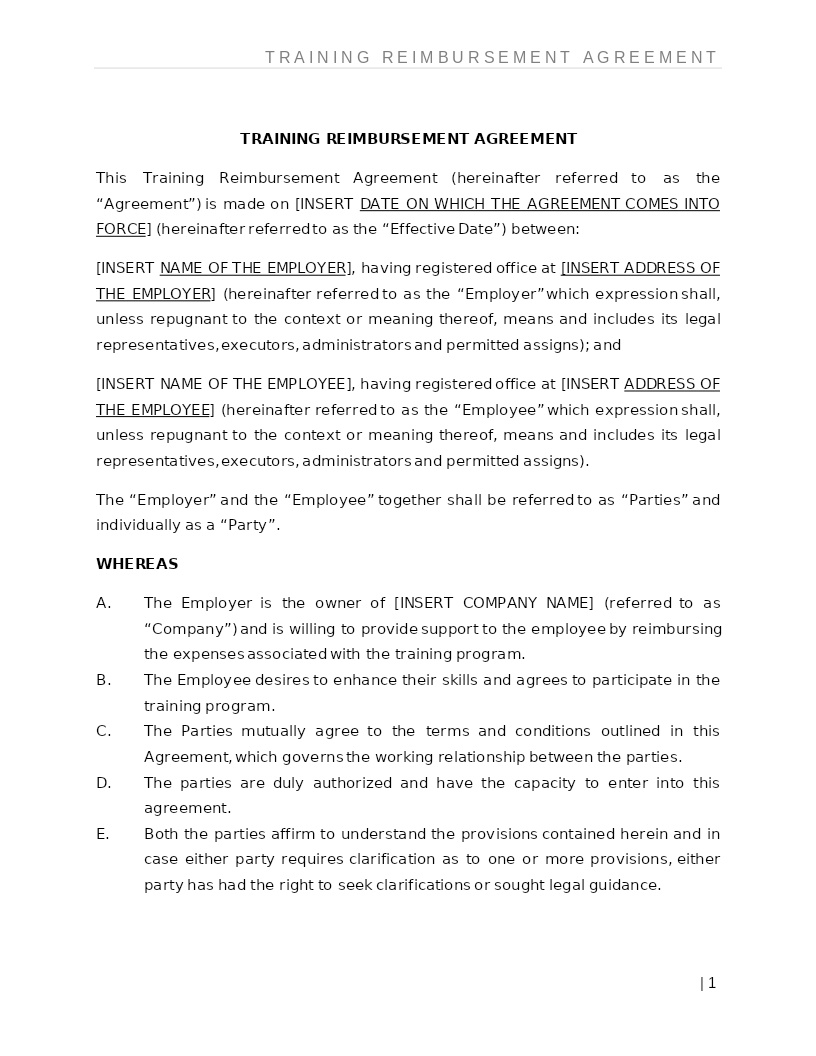
TRAINING REIMBURSEMENT AGREEMENT
How does it work?
1. Choose this template
Start by clicking on "Fill out the template"
2. Complete the document
Answer a few questions and your document is created automatically.
3. Save - Print
Your document is ready! You will receive it in Word and PDF formats. You will be able to modify it.
Understanding A Training Reimbursement Agreement in U.S.
A Training Reimbursement Agreement is a legally binding contract between an employer and an employee that outlines the terms under which the employer pays for work-related training, certifications, courses, or skill-development programs. The agreement typically includes repayment obligations if the employee resigns, is terminated for cause, or fails to complete the training within a specified period.
This document protects the employer’s financial investment while promoting professional development, ensuring both parties clearly understand their responsibilities and the conditions under which reimbursement may be required. It also helps maintain compliance with U.S. labor laws and prevents disputes related to training costs and repayment obligations.
Where a Training Reimbursement Agreement Is Commonly Used
A Training Reimbursement Agreement is widely used across industries where employee skill enhancement is essential, including:
- Information technology and software development
- Healthcare and medical professions
- Corporate and executive training programs
- Compliance-driven industries such as finance and insurance
- Manufacturing and technical trades
- Sales, marketing, and leadership development programs
- Licensing, certification, and continuing education requirements
Different Types of Training Reimbursement Agreements
- Full Reimbursement Agreement: Requires employees to repay 100% of training costs if they leave within a specified time.
- Pro-Rated Reimbursement Agreement: Repayment decreases gradually over months or years based on tenure after completing training.
- Certification-Based Agreement: Applies when employees obtain specific licenses or professional certifications funded by the company.
- Tuition Assistance Repayment Agreement: Used when companies pay for college courses, MBA programs, or continuing education.
- Travel & Training Expense Agreement: Includes reimbursement terms for travel, accommodation, and training-related materials.
When Legal Guidance Becomes Helpful
Legal consultation becomes essential when:
- Training costs are significant or involve multi-year commitments
- Repayment structures must comply with federal and state wage and hour laws
- Employees work across various states with different employment regulations
- The company wants to ensure enforceability in case of early resignation
- Repayment involves payroll deductions or arbitration terms
- The agreement forms part of the employment contract or onboarding documentation
- The employer wants to avoid potential claims of unfair labor practices or coercion
Legal professionals help ensure your agreement is enforceable, compliant, and tailored to your unique operational needs.
How to Work With This Training Reimbursement Agreement
- Clearly outline eligible training programs and approval procedures
- Specify exact reimbursement amounts, deadlines, and repayment triggers
- Communicate pro-rated repayment schedules in writing
- Ensure employees sign the agreement before training begins
- Retain signed copies for HR and payroll documentation
- Regularly review and update the agreement to align with company policy and state labor laws
- Inform employees about repayment methods, including payroll deductions where legally permitted
A clear and well-structured agreement ensures transparency, fairness, and smooth implementation.
Frequently Asked Questions
Q1. Is a Training Reimbursement Agreement legally enforceable in the U.S.?
Yes. Training Reimbursement Agreements are generally enforceable as long as they comply with federal and state labor laws and are not unfairly burdensome to employees. Clear disclosure, voluntary consent, and transparent repayment terms help ensure legal validity.
Q2. Can an employer deduct repayment directly from an employee’s paycheck?
It depends on the state. Some states allow payroll deductions if the employee has provided written authorization, while others restrict deductions to protect employees’ wages. Employers must follow both federal wage laws and state-specific regulations when structuring repayment.
Q3. What happens if an employee is terminated involuntarily?
In many agreements, involuntary termination (not due to misconduct) releases the employee from repayment obligations. However, employers may structure terms differently based on company policy. Clear definitions within the agreement prevent confusion and disputes.
Q4. Does the agreement cover travel or exam fees related to training?
Yes. A Training Reimbursement Agreement can include training materials, travel expenses, exam fees, certification renewals, and more. The specific covered costs should be listed to ensure transparency and avoid misunderstandings.
Q5. How long must an employee stay with the company after completing training?
Employers typically require employees to stay between 6 months and 3 years after training, depending on the cost and complexity. Pro-rated repayment schedules allow flexibility while protecting the employer’s investment.
Q6. Can an employee negotiate the terms of a Training Reimbursement Agreement?
Yes. Employees often negotiate repayment timelines, pro-rated schedules, or which training programs qualify. Open discussions foster fairness and ensure mutual understanding before signing.
Q7. Is the reimbursement amount taxable for the employee?
If the employee has to repay the company, the reimbursement itself is not taxable. However, employer-funded training may have tax implications if it does not qualify as a business-related expense under IRS guidelines. Employers should consult tax professionals for compliance.
Q8. What if an employee fails the course or does not complete the training?
Most agreements require partial or full repayment if training is not completed or certification is not achieved. Clear language specifying performance expectations ensures fairness and avoids future disputes.