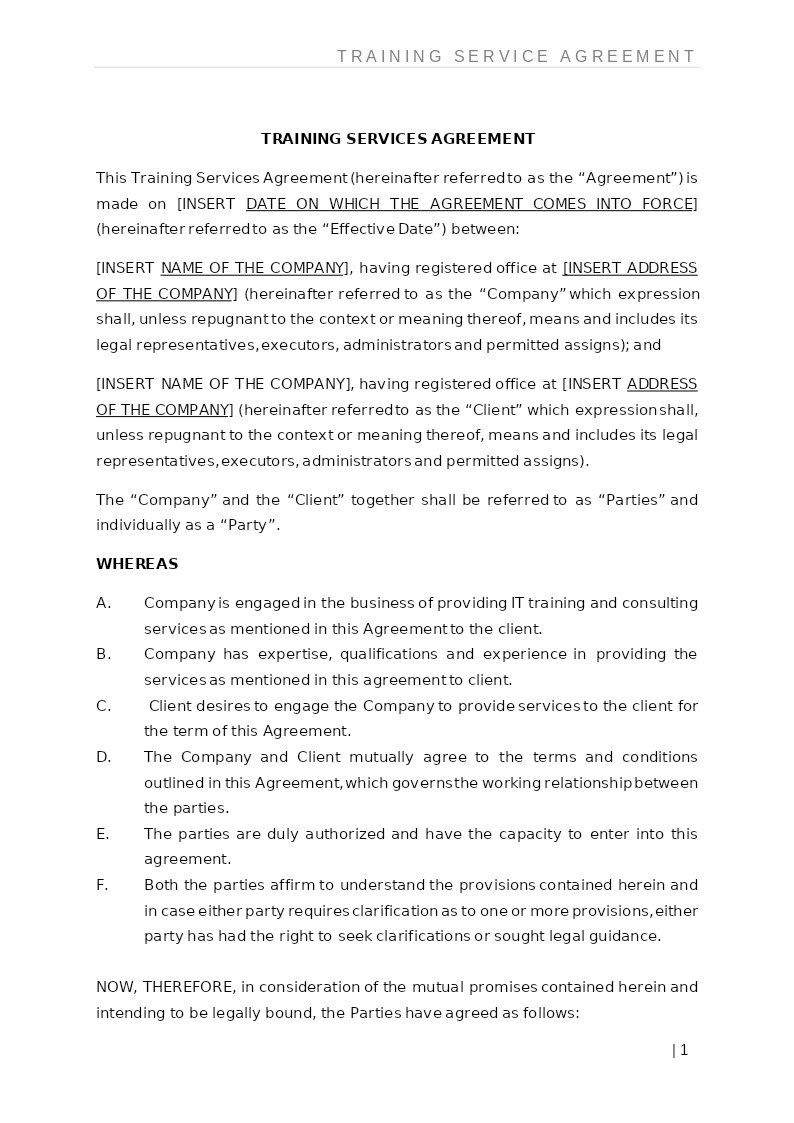
TRAINING SERVICES AGREEMENT
How does it work?
1. Choose this template
Start by clicking on "Fill out the template"
2. Complete the document
Answer a few questions and your document is created automatically.
3. Save - Print
Your document is ready! You will receive it in Word and PDF formats. You will be able to modify it.
Establishing Clear Terms for Delivering Professional Training Services in U.S. Organizations
A Training Services Agreement is a formal contract that outlines the terms under which a service provider will deliver training programs to a client. It defines the scope of training, delivery methods, responsibilities of both parties, payment terms, performance expectations, and dispute-resolution processes.
By setting out these terms in writing, both the client and the provider gain transparency, legal protection, and a structured understanding of how the training will be executed—from start to completion.
Where Training Services Agreements Are Commonly Used
Training agreements are widely used across the United States in both corporate and educational environments, including:
- Corporate training programs for employee development
- Technical, software, and IT skills training
- HR compliance trainings (harassment prevention, safety, ethics)
- Professional certifications and industry-specific courses
- Government, healthcare, and finance sector skill programs
- Independent consultants delivering customized workshops
Any time structured training is being delivered by an external provider or consultant, a formal agreement ensures expectations and responsibilities are clearly defined.
Different Types of Training Service Structures You May Encounter
- Corporate or Workforce Development Training: Programs aimed at improving employee performance, leadership, communication, or operational skills.
- Technical and Software Training: Instruction on specialized software, IT systems, cybersecurity, or technical tools.
- Compliance and Regulatory Training: Mandatory training covering ethical standards, safety rules, legal compliance, and workplace regulations.
- Customized or Project-Based Training: Tailored sessions built around a company’s internal processes, tools, or industry requirements.
- Certification or Accreditation-Based Training: Structured programs designed to prepare participants for professional exams or verification standards.
When Legal Guidance Becomes Helpful
While many training agreements follow a standard structure, legal support becomes valuable when:
- The training includes proprietary content, sensitive data, or licensed materials
- Payment schedules, milestones, or cancellation policies impact financial obligations
- The agreement spans multiple states with varying regulatory requirements
- Liability, indemnification, or risk-management clauses must be customized
- The provider is granting or restricting usage rights to copyrighted materials
- Disputes may arise around training performance, deliverables, or outcomes
Legal review ensures the agreement is enforceable, compliant, and aligned with both parties’ operational and financial expectations.
How to Work with This Template
- Identify the parties involved in the training engagement
- Define the purpose, scope, and objectives of the training
- Outline the responsibilities, deliverables, timelines, and expected outcomes
- Establish payment terms, cancellation rules, and rescheduling policies
- Select governing U.S. state law and dispute-resolution mechanisms
- Review the final terms collaboratively before execution
- Sign electronically or in hard copy for formal implementation
This template reflects U.S. contract standards and supports both on-site and virtual training programs.
Frequently Asked Questions
Q1. Why is a Training Services Agreement important for U.S. businesses?
A Training Services Agreement ensures that both the client and provider have crystal-clear expectations regarding content, duration, responsibilities, and deliverables. It reduces misunderstandings, helps manage financial obligations, and outlines legal protections. For U.S. businesses investing in skill development, it ensures structured and reliable training execution.
Q2. Does this agreement protect the training provider’s intellectual property?
Yes. Most Training Services Agreements include IP clauses that protect slides, curriculums, methodologies, and proprietary content. The client typically receives usage rights only for internal purposes. This prevents unauthorized copying, distribution, or repurposing of training materials.
Q3. How does the agreement help prevent financial disputes?
The contract clearly outlines payment terms, invoicing timelines, refund rules, and penalties for cancellations or no-shows. By defining fees upfront, both parties avoid disagreements related to billing or unexpected costs. This transparency is critical for financial planning and accountability.
Q4. Can this agreement address virtual and remote training programs?
Absolutely. Modern training engagements often include online modules, webinars, virtual workshops, and LMS-based sessions. The agreement can specify platform requirements, access rules, recording restrictions, and attendance expectations. This ensures smooth delivery regardless of location.
Q5. Does this agreement allow the client to set performance expectations?
Yes. Many U.S. organizations include detailed performance criteria, learning objectives, and evaluation standards. This ensures the provider delivers training that actually meets the client’s development goals. Clear performance measures also help resolve disputes and verify service completion.
Q6. What happens if the client needs to reschedule or cancel training sessions?
The agreement typically contains rescheduling windows, cancellation fees, and notice requirements. These provisions protect the provider from last-minute cancellations and ensure fairness for both parties. Clearly defined terms help maintain professional boundaries and reduce operational disruptions.
Q7. Are liability and indemnification clauses necessary?
Yes. Training may involve physical activities, technology access, or workplace interactions, which carry inherent risks. Liability clauses help determine responsibility for damages, injuries, or losses. Indemnification provisions protect each party from claims arising from the other's actions.
Q8. Is this agreement suitable for freelancers, consultants, and independent trainers?
Definitely. Independent trainers often use Training Services Agreements to formalize expectations, secure payment rights, and protect their content. The agreement also helps them manage reliability, scope changes, and timelines. For small training businesses, it builds credibility and professionalism.