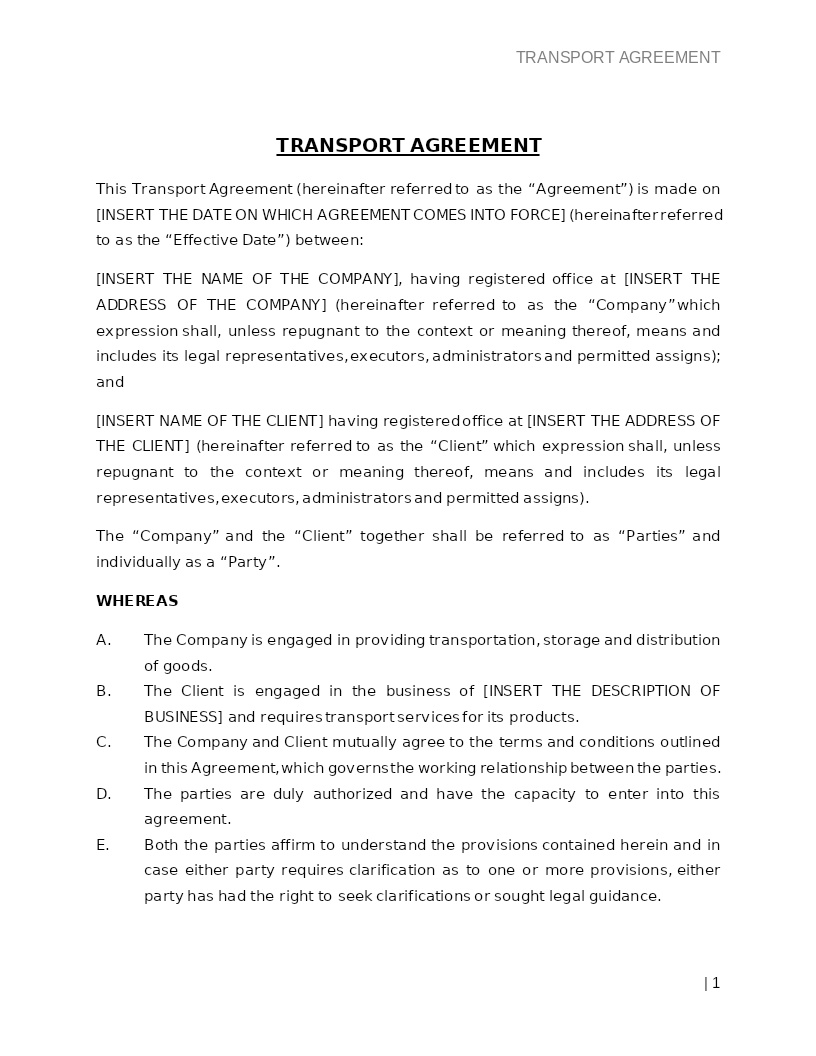
TRANSPORTATION AGREEMENT
How does it work?
1. Choose this template
Start by clicking on "Fill out the template"
2. Complete the document
Answer a few questions and your document is created automatically.
3. Save - Print
Your document is ready! You will receive it in Word and PDF formats. You will be able to modify it.
Understanding Transportation Agreements in U.S. Commercial Operations
When businesses need to move goods, materials, or passengers, a Transportation Agreement provides the legal framework that governs how the service will be performed. It outlines delivery terms, service standards, pricing, liability, insurance, and compliance obligations.
A Transportation Agreement ensures that both the transport provider and the client operate with clarity and accountability, reducing operational risks and preventing disputes. It creates a structured environment where both parties know what to expect, from pick-up timelines to insurance claims.
Where Transportation Agreements Are Commonly Used
Transportation contracts are widely used across U.S. industries, especially when logistics, delivery performance, or regulated transportation activities are involved. Some common scenarios include:
- Shipment of goods for manufacturers, wholesalers, and distributors
- E-commerce order delivery and last-mile logistics
- Freight forwarding, trucking, and cross-border carrier services
- Moving hazardous materials or regulated commodities
- Passenger transport services (charter buses, shuttle services, corporate transport)
- Courier services, express delivery, and temperature-controlled logistics
- Long-term logistics partnerships and 3PL arrangements
- Construction, mining, or agriculture-related material transport
Whenever a business depends on timely, safe, and compliant transportation, a written agreement helps establish firm expectations.
Different Types of Transportation Agreements You May Encounter
- Goods Transportation Agreement: Used when a carrier transports physical goods from one point to another. Includes delivery timelines, freight terms, liabilities, and insurance.
- Passenger Transportation Agreement: Covers service terms for transporting individuals , such as employee shuttles, event transportation, or charter services.
- Freight Broker Agreement: Between a broker and a carrier, outlining responsibilities for arranging freight without assuming carrier liability.
- Dedicated Fleet or Long-Term Logistics Agreement: Used when a transport provider supplies ongoing logistics support, often with dedicated vehicles, drivers, or routes.
- Owner-Operator Agreement: Common in trucking. Sets terms between independent driver-owners and transport companies.
- Cross-Border Transportation Agreement: Used for international or interstate shipments subject to U.S. DOT, FMCSA, or customs regulations.
- Warehouse-to-Transport Service Agreement: Integrates storage, handling, and delivery into one arrangement.
Each type serves different operational needs but always aims to protect both parties and reduce risk.
When Legal Guidance Becomes Helpful
While many transportation contracts appear straightforward, legal review becomes valuable when:
- High-value or fragile goods are being transported
- The service crosses multiple U.S. states or international borders
- Hazardous materials, pharmaceuticals, or regulated goods are involved
- The agreement includes performance guarantees or penalties
- The transport provider uses subcontractors or third-party carriers
- Insurance coverage is complex or requires special endorsements
- The arrangement involves recurring or long-term logistics commitments
- Vehicle, driver, or compliance requirements fall under FMCSA or DOT rules
Legal consultation ensures the agreement covers operational risks, regulatory requirements, and liability issues that generic templates may miss.
How to Work With This Template
- Identify the transport provider and the client
- Define the scope of services (goods, passengers, delivery routes, timelines)
- Specify service obligations, performance standards, and communication protocols
- Outline pricing, payment terms, fuel charges, and additional fees
- Define liability limits and insurance requirements
- Add compliance provisions aligned with U.S. federal and state transportation laws
- Choose the governing state law and dispute mechanism
- Review the terms internally or with legal counsel (optional but recommended)
- Sign via electronic signature or physical copies
The template is fully compatible with major U.S. e-signature platforms and follows commercial contracting standards widely accepted across the United States.
Frequently Asked Questions
Q1. Is a Transportation Agreement necessary for basic delivery services?
Yes. A Transportation Agreement is essential even for routine deliveries because it clearly defines delivery timelines, pricing, liability, and service standards. This ensures smooth operations and prevents misunderstandings, making it especially important for businesses that rely on consistent and secure transportation services.
Q2. Can the same Transportation Agreement be reused for future shipments or new clients?
Yes, you can reuse the agreement, but it should be updated for each shipment or new business relationship. Adjustments to scope, delivery routes, insurance, deadlines, and pricing help maintain accuracy and make the contract enforceable in case of disputes.
Q3. What happens if goods are damaged or lost during transportation?
Liability for damaged or lost goods is typically outlined in the contract. Most U.S. transportation agreements follow federal freight regulations and require carriers to maintain sufficient cargo insurance. The agreement specifies how claims should be filed and who is financially responsible.
Q4. Are electronic signatures valid on Transportation Agreements in the U.S.?
Yes. Transportation Agreements signed electronically are legally enforceable under the ESIGN Act and state e-signature laws. As long as both parties consent to e-signing, the contract holds full legal validity.
Q5. Does this agreement cover delays, missed deadlines, or service interruptions?
Yes. A Transportation Agreement includes provisions for delivery timelines, acceptable delays, service disruptions, and responsibilities in case of unforeseen events like weather conditions or equipment failures. This helps maintain accountability and reduces operational disputes.
Q6. Can this Transportation Agreement be used for interstate or international shipments?
Yes. The agreement can cover interstate and cross-border transportation, but it must be customized to comply with U.S. DOT, FMCSA regulations, customs laws, and international transport rules. Legal review is recommended for multi-jurisdictional shipments.
Q7. What types of insurance should a transportation provider have?
Most agreements require the carrier to maintain general liability insurance, cargo insurance, commercial auto insurance, and any specialized coverage needed for hazardous or high-value goods. Insurance clauses help protect both parties from financial loss.
Q8. Can the transport provider use subcontractors or third-party carriers?
Yes, subcontractors may be used if the agreement allows it. However, the contract should clearly state whether client approval is needed, how liability flows down, and who is responsible for compliance and service quality when third-party carriers are involved.