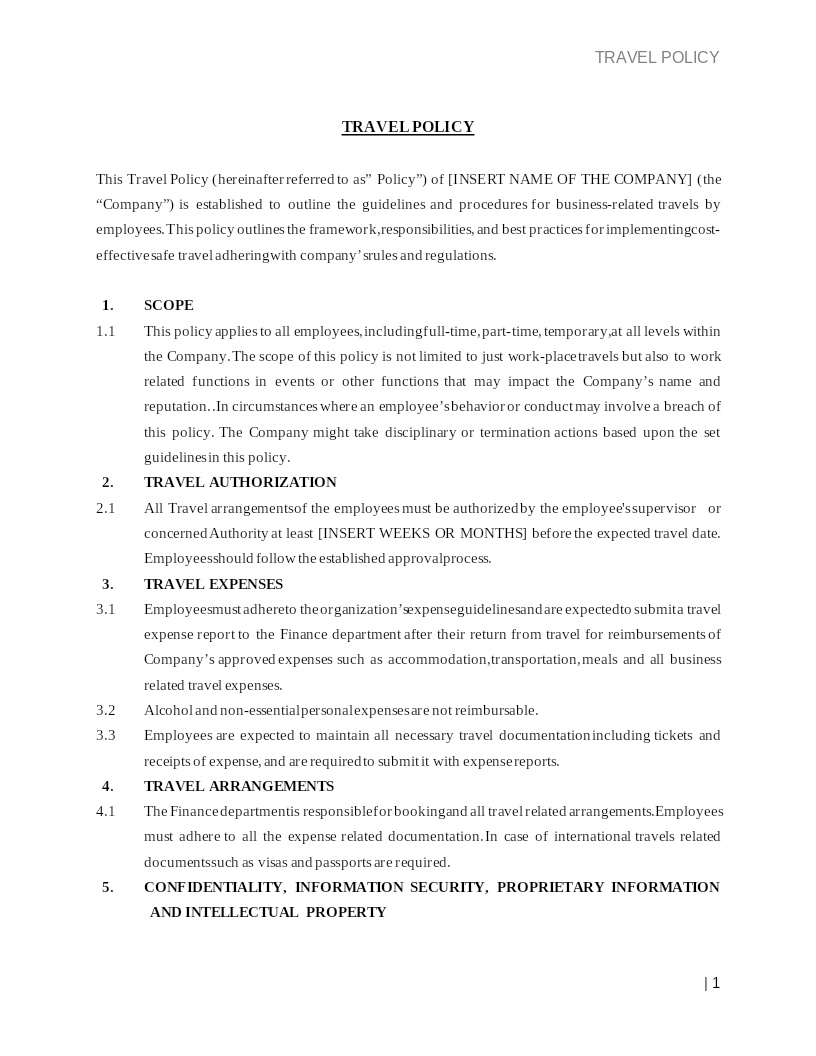
TRAVEL POLICY
How does it work?
1. Choose this template
Start by clicking on "Fill out the template"
2. Complete the document
Answer a few questions and your document is created automatically.
3. Save - Print
Your document is ready! You will receive it in Word and PDF formats. You will be able to modify it.
Supporting Employee Travel with Clear Guidelines
When employees travel for business whether attending meetings, conferences, training programs, or client engagements it’s important to have a structured policy that outlines expectations, approval procedures, booking standards, expense rules, and safety requirements. A Travel Policy provides this framework. It ensures that employees understand how to plan trips, spend responsibly, stay compliant with company guidelines, and remain safe while representing the organization.
Implementing a Travel Policy promotes consistency, reduces travel-related risks, manages costs, and helps employees navigate business trips confidently and responsibly.
Where Travel Policies Are Commonly Used
Travel Policies are standard across organizations that require employees to travel, including:
• Client meetings, sales visits, and field operations
• Conferences, seminars, and professional training
• Corporate events, off-site workshops, and team building
• Inter-office travel across branches or locations
• Project-based assignments requiring temporary relocation
• Vendor visits, facility inspections, and audits
• Remote work-related travel or hybrid work transitions
Different Types of Travel Guidelines You May Encounter
- General Travel Policy: Covers everyday business travel, transportation, lodging, meals, and expenses.
- Executive or Senior-Level Policies: Includes premium accommodations, upgraded travel classes, and higher spending allowances.
- International Travel Policy: Addresses passports, visas, per diem rules, medical coverage, and risk management for overseas travel.
- Remote or Hybrid Travel Guidelines: Includes rules for travel to headquarters, coworking spaces, or client sites.
- Travel Safety & Security Standards: Covers emergency procedures, restricted travel zones, compliance with U.S. safety regulations, and health requirements.
When Legal Guidance Becomes Helpful
Legal review becomes useful when:
• The policy must comply with IRS rules on travel reimbursements
• Employees are traveling internationally, triggering immigration or tax considerations
• The organization needs clear liability protections and disclaimers
• Travel involves high-risk locations or industries
• The company covers extended stays or temporary relocations
• The policy includes allowances, per diems, or reimbursement audits
• Industry regulations (healthcare, finance, government) require additional controls
How to Work with This Template
• Define who is eligible to travel and for what purposes
• Establish expense categories, spending limits, and approval processes
• Clarify booking procedures for flights, lodging, and transportation
• Specify reimbursement documentation requirements
• Include health, safety, and emergency guidelines
• Outline rules for international travel
• Select the governing state law (if applicable)
• Review the policy internally (legal review optional)
• Share digitally or integrate into HR systems
Frequently Asked Questions
Q1. Why is a Travel Policy important for employees and the organization?
A Travel Policy provides clear expectations around trip planning, expense management, safety, and conduct. It protects the organization from unnecessary costs and helps employees travel confidently with structured guidelines.
Q2. Does the Travel Policy cover reimbursements for meals, lodging, and transportation?
Yes. The policy outlines which expenses are reimbursable, daily spending limits, approved lodging types, and documentation required for reimbursement under U.S. IRS rules.
Q3. How should employees book flights or hotel stay?
Employees typically book travel through approved vendors or platforms. The policy defines booking standards, preferred rates, and whether advance approvals are required.
Q4. Are personal expenses ever reimbursed during business travel?
No. Personal purchases, entertainment costs, or unrelated detours are not reimbursable. The policy clearly identifies what is considered personal vs. business-related.
Q5. Does the policy include international travel guidelines?
Yes. It addresses passports, visas, currency rules, safety protocols, medical coverage, and compliance with U.S. regulations when employees travel abroad.
Q6. What happens if an employee exceeds spending limits?
Expenses above the approved limit may not be reimbursed unless a valid business justification is provided and approved. The policy helps prevent overspending.
Q7. Are employees covered by insurance while traveling for work?
Most companies provide travel-related insurance for emergencies, accidents, or lost property. The policy specifies coverage levels and reporting requirements.
Q8. How are travel advances handled?
Some organizations provide prepaid cards or travel advances. The policy outlines eligibility, accounting rules, and repayment procedures.
Q9. Can the Travel Policy apply to remote or hybrid workers?
Yes. The policy can include guidelines for travel to headquarters, client offices, or required off-site meetings for remote and hybrid employees.
Q10. Are electronic receipts accepted for reimbursement?
Yes. Digital receipts, emails, and app-generated confirmations are widely accepted as long as they meet the documentation requirements defined in the policy.