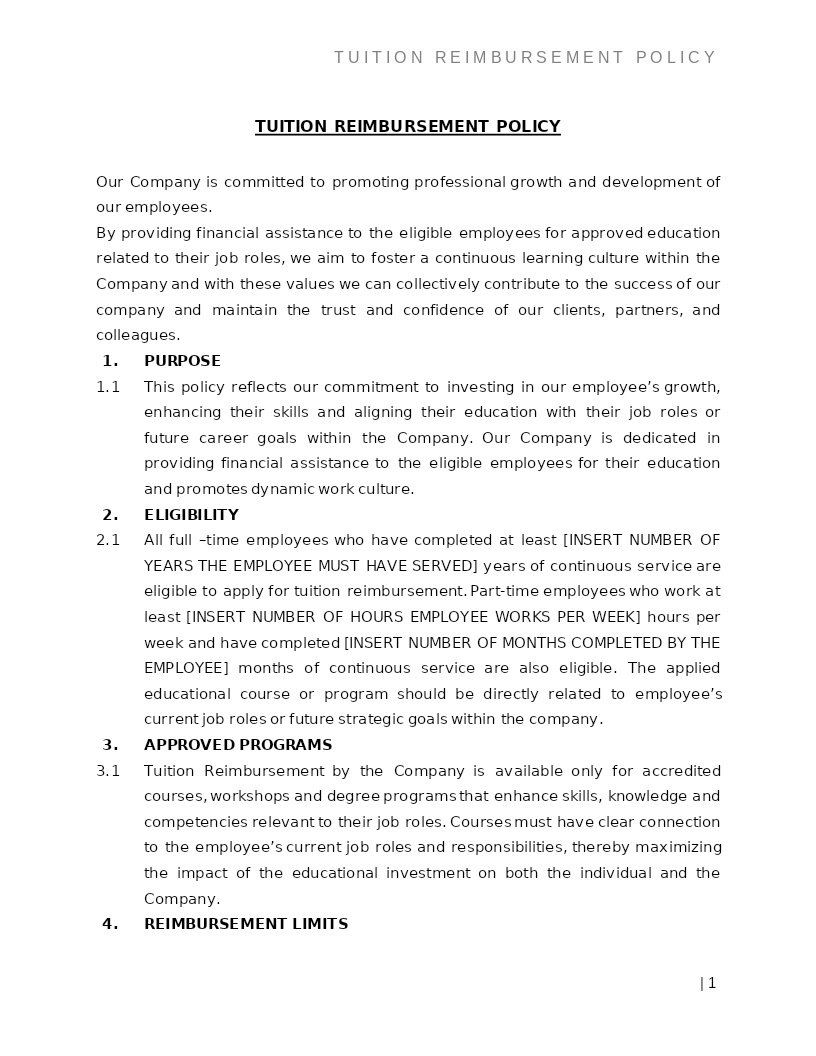
TUITION REIMBURSEMENT POLICY
How does it work?
1. Choose this template
Start by clicking on "Fill out the template"
2. Complete the document
Answer a few questions and your document is created automatically.
3. Save - Print
Your document is ready! You will receive it in Word and PDF formats. You will be able to modify it.
Understanding the Purpose and Use of a Tuition Reimbursement Policy
When a company is committed to supporting employee development, higher education, and long-term career advancement, it becomes essential to establish a clear framework that governs how educational expenses will be reimbursed. A Tuition Reimbursement Policy provides that structure. It defines eligibility criteria, outlines approved academic programs, specifies reimbursement limits, and sets expectations for performance and repayment obligations.
Having this policy in place builds mutual trust between employees and employers. It encourages continuous learning, strengthens talent retention, and promotes a culture of growth and innovation. Employees gain opportunities to expand their credentials, and businesses benefit from a more capable, knowledgeable, and competitive workforce.
Where Tuition Reimbursement Policies Are Commonly Used
Educational reimbursement programs are widely implemented across U.S. industries, including:
- Corporate organizations with career advancement pathways
- Technology and engineering companies requiring updated skills
- Healthcare organizations requiring certifications and continuing education
- Financial services firms supporting professional licensure
- Government agencies and non-profit entities offering benefits for workforce development
- Retail, hospitality, and logistics companies promoting internal promotions
Any time an employer assists with educational costs, a written policy ensures transparency, compliance, and consistent administration.
Different Types of Tuition Reimbursement Programs You May Encounter
- Degree-Based Reimbursement: Covers associate, bachelor's, or master’s degree programs relevant to an employee’s role or career path.
- Certification and Licensing Support: Reimburses costs for professional certifications, exams, or licenses required for industry compliance or skill advancement.
- Skill-Building or Vocational Courses: Includes short-term courses, workshops, or technical programs that improve job-specific capabilities.
- Continuing Education Programs: Supports required CE credits in regulated sectors such as nursing, accounting, or real estate.
When Legal Guidance Becomes Helpful
While many tuition programs operate smoothly, legal review becomes important when:
- Reimbursement rules intersect with wage and hour laws, repayment obligations, or employment classification issues.
- The policy includes clawback clauses requiring repayment if an employee leaves within a set timeframe.
- State laws govern educational assistance taxation or reimbursement terms.
- The employer covers regulated learning (healthcare, finance, law) requiring compliance checks.
- Employee performance data or academic records are involved, triggering privacy requirements.
- Multi-state employers need consistency across differing state labor laws.
Legal counsel ensures the policy is enforceable, compliant, and aligned with organizational risk-management standards.
How to Work with This Template
- Identify eligible employees and define the types of approved educational programs.
- Clarify reimbursement limits, documentation required, and grade or completion requirements.
- Determine repayment obligations for early termination, if applicable.
- Specify governing state laws and compliance with tax and labor regulations.
- Review the terms internally or with legal counsel (optional).
- Communicate the policy to employees and obtain acknowledgment.
This policy aligns with widely recognized U.S. HR benefit structures and integrates seamlessly with payroll and organizational development systems.
Frequently Asked Questions
Q1. Why is a Tuition Reimbursement Policy important for U.S. employers?
A structured policy ensures fairness, transparency, and consistent administration of educational benefits. It demonstrates the company’s investment in employee development, strengthens recruitment efforts, and supports long-term retention. By defining clear rules, employers can better manage costs while empowering employees to advance their careers.
Q2. What types of educational programs are typically eligible for reimbursement?
Most employers reimburse degree programs, certifications, workshops, and job-related skill courses. Programs that enhance job performance or align with future leadership paths are commonly approved. The policy can also include continuing education requirements in regulated industries.
Q3. Do employees have to remain with the company after receiving reimbursement?
Many businesses include repayment or “clawback” clauses requiring employees to stay for a specified period after reimbursement. This protects the company’s investment while encouraging long-term commitment. The specific timeframe and conditions should be clearly stated in the policy.
Q4. Are tuition reimbursements taxable?
Under U.S. tax laws, employers can provide up to a certain annual limit in tax-free educational assistance. Amounts above that limit may be taxable unless they qualify as work-related education. The policy should clarify tax implications to avoid compliance issues.
Q5. How are reimbursement amounts determined?
Reimbursement may be based on course relevance, grades achieved, or annual limits. Some companies reimburse 100% of approved expenses, while others offer tiered reimbursement based on performance or program type. Clear formulas and documentation requirements prevent misunderstandings.
Q6. Does the policy cover online programs or part-time education?
Yes. Many employers support online degrees, remote learning, and part-time programs, as these options allow employees to balance education with work obligations. The key requirement is that the course meets the organization’s relevance and approval standards.
Q7. What documentation must employees provide to receive reimbursement?
Common documentation includes proof of enrollment, itemized tuition receipts, and final grades or completion certificates. The policy may require manager approval or HR verification. Proper documentation ensures accountability and accurate processing.
Q8. Can employers limit reimbursement based on performance or role?
Yes. Companies often require satisfactory job performance, tenure, or manager recommendation before approving reimbursement. This ensures that educational investments support employees who are aligned with organizational goals and committed to long-term growth.