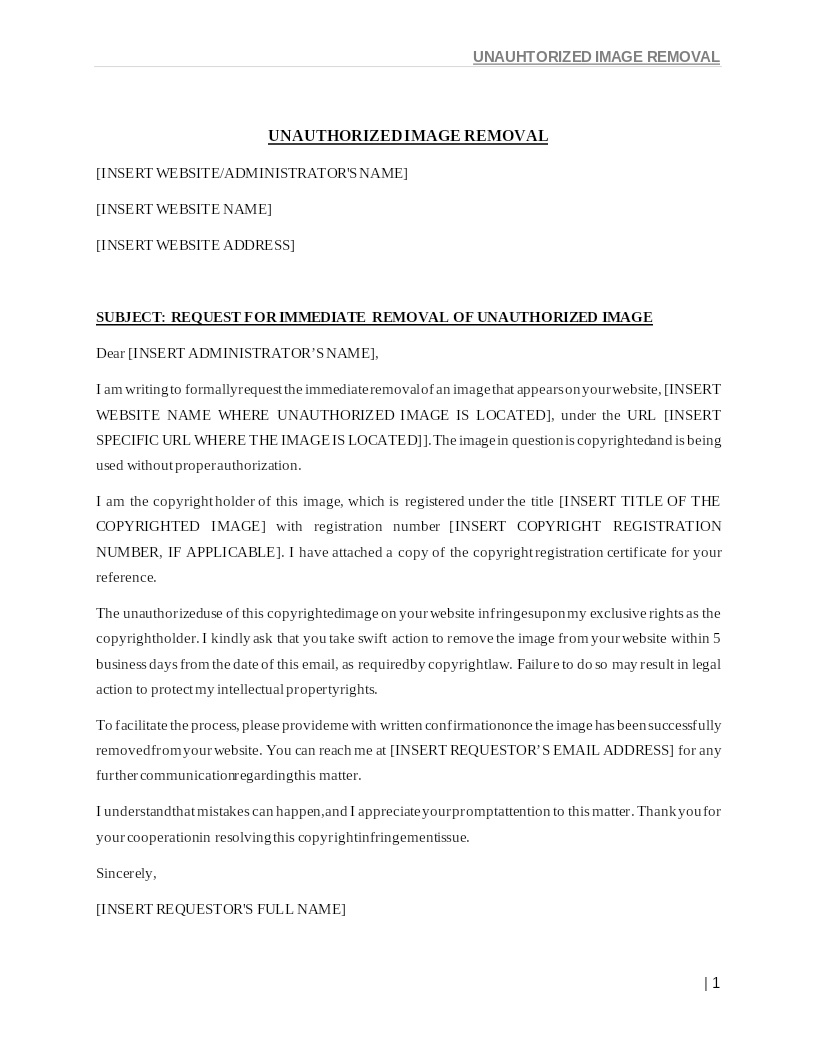
UNAUTHORIZED IMAGE REMOVAL REQUEST
How does it work?
1. Choose this template
Start by clicking on "Fill out the template"
2. Complete the document
Answer a few questions and your document is created automatically.
3. Save - Print
Your document is ready! You will receive it in Word and PDF formats. You will be able to modify it.
Formally Requesting Removal of Unauthorized Images Through Written Notice
Individuals and businesses have the right to control the use of their likeness, proprietary images, and creative assets. When an image is posted, displayed, or distributed without lawful authorization, a formal written request is often necessary to initiate removal and prevent further misuse. An Unauthorized Image Removal Request serves this purpose. It outlines the legal basis for demanding removal of the infringing content, identifies the unauthorized image(s), and provides notice to the hosting party or offending uploader, all in accordance with U.S. copyright law, privacy and publicity rights, DMCA takedown rules, and applicable state regulations.
By issuing an Unauthorized Image Removal Request, the requester creates a documented, traceable communication demanding corrective action. This allows the recipient an opportunity to voluntarily comply, helps preserve legal rights, and may also serve as evidence if enforcement action becomes necessary.
Where Unauthorized Image Removal Requests Are Commonly Used
Unauthorized Image Removal Requests are utilized in a wide variety of personal, commercial, and online contexts, including:
• Misuse of copyrighted photographs, artwork, or graphics
• Unauthorized posting of personal images on websites or social media
• Use of business logos, product photos, or branding materials without permission
• Publication of images violating privacy rights or likeness rights
• Use of employee or model photographs without proper consent
• Online harassment, impersonation, or reputation-related misuse
• Unapproved image use in advertisements, listings, videos, or profiles
• Improper use of images in e-commerce, marketing, or promotional content
Whenever an image is used unlawfully or without consent, a removal request establishes the first step toward resolving the issue.
Different Types of Unauthorized Image Removal Requests You May Encounter
1. Copyright-Based Removal Requests (DMCA Notices): Used when the requester owns the copyrighted image and seeks removal under DMCA law.
2. Privacy or Likeness-Based Removal Requests: Used when the requester’s personal image or likeness is displayed without permission.
3. Commercial Misuse Removal Requests: Address unauthorized brand, logo, or product use in commerce.
4. Harassment or Safety-Related Removal Requests: Seek removal of harmful or threatening images posted to intimidate or defame.
5. Social Media or Platform-Specific Removal Requests: Follow procedures for removal on platforms such as Facebook, Instagram, and e-commerce sites.
When Legal Guidance Becomes Helpful
Legal counsel may be advisable when:
• The unauthorized image is defamatory, harmful, or used for harassment
• The image misuse involves Copyright Act violations
• A DMCA takedown notice needs to be properly drafted
• The images appear on a foreign or uncooperative platform
• The subject involves minors or sensitive personal data
• The party responsible refuses removal or disputes ownership rights
• The matter may escalate to litigation or a formal complaint
Legal review ensures that the request complies with U.S. notice requirements and preserves the requester’s rights for potential enforcement.
How to Work with This Template
• Identify the image(s) being used without authorization
• State the legal basis for removal (copyright ownership, privacy, likeness rights)
• Provide URLs, screenshots, or descriptive detail to locate the infringing content
• Demand prompt removal and prevent future use
• Specify deadlines for compliance
• Include preferred contact details and delivery methods
• Retain copies of the request for legal recordkeeping
• Deliver the letter through verifiable means (email, certified mail, platform reporting tools)
This template follows widely accepted U.S. online-content and intellectual-property enforcement practices and may be used by individuals, businesses, photographers, models, creators, and rights-holders.
Frequently Asked Questions
Q1. What is an Unauthorized Image Removal Request, and why is it important?
An Unauthorized Image Removal Request is a formal communication demanding that an unlawfully posted or improperly used image be removed. It is important because it establishes written notice, protects legal rights, and provides documentation should further enforcement become necessary.
Q2. What laws protect me when someone uses my image without permission?
U.S. laws that may apply include the Copyright Act, DMCA takedown rules, privacy and publicity rights, and certain state consumer-protection or harassment laws. The applicable law depends on the nature of the image and how it is used.
Q3. How quickly must the image be removed?
While no universal deadline exists, most requests specify 24–72 hours. Platforms responding to DMCA notices often act more quickly, sometimes within 24 hours.
Q4. Do I need to own the copyright to request image removal?
No. If the image contains your likeness or personal identity, you may request removal even without copyright ownership. Copyright-based requests require proof of ownership.
Q5. What if the offending party refuses to remove the image?
You may escalate the matter by filing a DMCA takedown notice, reporting to the hosting platform, sending a cease-and-desist letter, or seeking legal action depending on the circumstances.
Q6. Are unauthorized image removals handled differently on social media?
Yes. Platforms such as Instagram, YouTube, and Facebook have specific reporting tools and policies for copyright, impersonation, and privacy violations.
Q7. Does sending a removal request help with future legal claims?
Yes. A written request creates a record of notice and can be used as evidence of good-faith action if the dispute escalates to litigation or regulatory complaints.
Q8. Are electronic signatures or emailed requests valid?
Yes. Under the ESIGN Act, electronically signed letters are enforceable, and email is widely accepted for DMCA notices and content-removal requests.
Q9. Does a DMCA notice apply to all image misuse situations?
No. DMCA procedures apply only to copyright claims. Privacy, likeness, and harassment issues may require different legal frameworks and letters.
Q10. How can I prevent future unauthorized use of my images?
You may watermark images, update terms of use, use licensing agreements, or register copyrights with the U.S. Copyright Office for stronger protection.