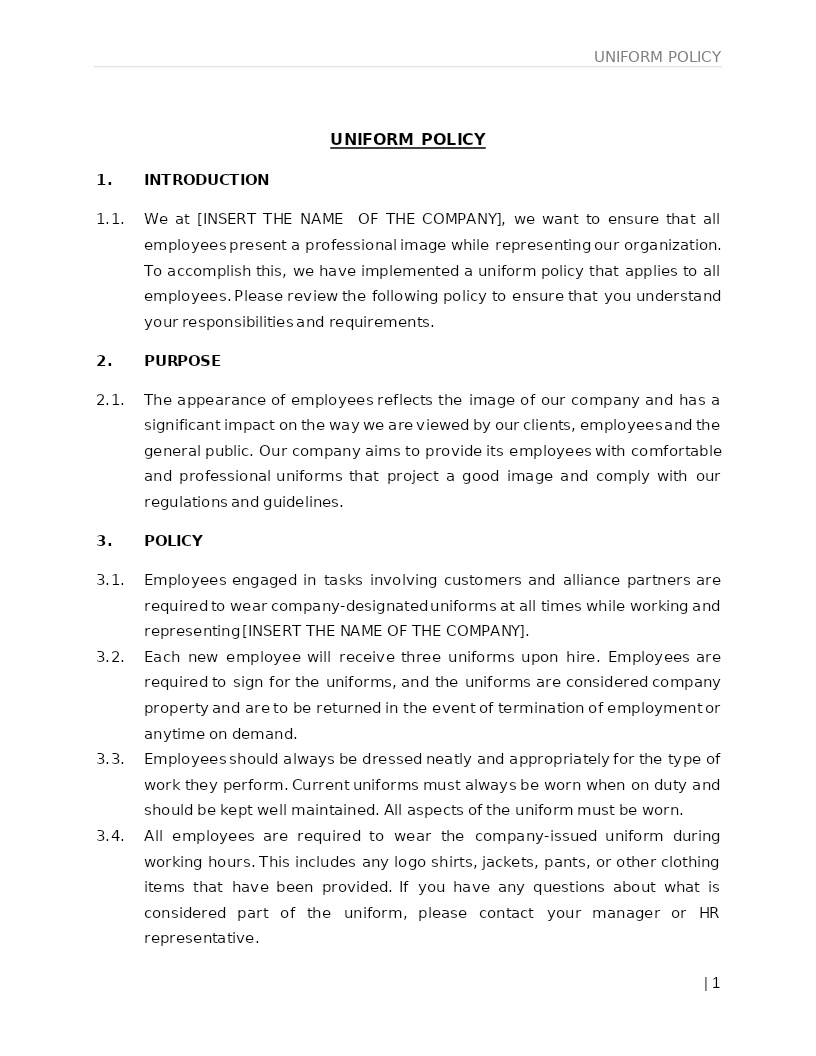
UNIFORM POLICY
How does it work?
1. Choose this template
Start by clicking on "Fill out the template"
2. Complete the document
Answer a few questions and your document is created automatically.
3. Save - Print
Your document is ready! You will receive it in Word and PDF formats. You will be able to modify it.
Supporting Professionalism, Safety, and Consistency Across the Organization
When an organization requires employees, students, or members to follow a standard dress code, it becomes essential to have a clear framework that governs how uniforms must be worn. A Uniform Policy provides that structure. It defines what qualifies as uniform attire, outlines dress expectations, and establishes guidelines to ensure consistency and professionalism across the environment.
Implementing a Uniform Policy fosters unity, enhances organizational identity, and maintains safety and decorum. It ensures that attire aligns with brand values, workplace standards, and operational needs.
Where Uniform Policies Are Commonly Used
Uniform requirements are standard across many industries and institutions, including:
- Schools, colleges, and educational programs
- Healthcare facilities, clinics, and hospitals
- Hospitality, retail, and customer-service settings
- Manufacturing, construction, and industrial operations
- Security services, transportation teams, and public safety roles
- Corporate environments with branded or role-specific attire
- Event staffing, promotional teams, and field representatives
Any time standardized attire supports professionalism, safety, or brand representation, a structured uniform policy is essential.
Different Types of Uniform Requirements You May Encounter
- Standard Daily Uniforms: Regular attire worn during work or school hours, designed to create a cohesive and professional appearance.
- Role-Specific Uniforms: Specialized attire for roles requiring protective gear, branded clothing, medical scrubs, or safety equipment.
- Seasonal or Event-Based Uniforms: Uniforms modified for weather changes, special events, conferences, or promotional campaigns.
- Identification-Based Uniforms: Uniforms paired with badges, IDs, or color codes to support security and role recognition.
- Safety-Driven Uniforms: Reflective wear, non-slip shoes, helmets, gloves, and other items required for injury prevention.
When HR or Legal Guidance Becomes Helpful
While many uniform rules can be implemented internally, professional guidance becomes valuable when:
- Uniform requirements intersect with state or federal labor laws
- Dress code rules involve cultural, religious, or disability accommodations
- Safety gear must comply with OSHA or industry regulations
- Uniform fees, reimbursements, or employer-paid requirements apply
- Gender neutrality, anti-discrimination, or equal-opportunity laws are relevant
- Branding standards need legal protection or trademark compliance
Legal or HR review ensures your policy aligns with U.S. employment laws, avoids discrimination issues, and supports a fair and inclusive work environment.
How to Work with This Template
- Identify the types of uniforms required for each role or department
- Specify rules for appearance, grooming, accessories, and safety gear
- Clarify who is responsible for purchasing, maintaining, or replacing uniforms
- Outline accommodation processes for medical, religious, or cultural needs
- Define consequences for non-compliance and documentation procedures
- Ensure compliance with OSHA, labor laws, and organizational standards
- Communicate expectations clearly through handbooks, orientation, and signage
This structure supports U.S. workplace consistency, safety, and professional image guidelines.
Frequently Asked Questions
Q1. Why is a Uniform Policy important for U.S. workplaces and institutions?
A Uniform Policy ensures consistency, professionalism, and safety across the organization. It helps maintain brand identity, prevents distractions, and supports a positive public image. Clear guidelines create fairness and help employees or students understand expectations from day one.
Q2. Do uniform policies need to comply with U.S. labor and anti-discrimination laws?
Yes. Employers must ensure the policy does not discriminate based on gender, religion, disability, or cultural expression. Requests for reasonable accommodations must be considered. Reviewing compliance ensures the policy remains fair, inclusive, and legally sound.
Q3. Who typically pays for uniforms in the U.S.?
Payment responsibilities vary by employer and state law. Some employers provide uniforms at no cost, while others offer reimbursements or require employee contributions. The policy clarifies these obligations and ensures compliance with wage laws preventing deductions that reduce pay below minimum wage.
Q4. Can employees request exceptions or accommodations to the uniform rules?
Yes. Employees may request modifications for medical, religious, cultural, or disability-related reasons. Employers must evaluate such requests under federal laws like ADA and Title VII. Clear processes help maintain respect, fairness, and compliance.
Q5. How does a Uniform Policy enhance safety in the workplace?
Safety uniforms, such as high-visibility vests, non-slip footwear, protective gloves, or flame-resistant clothing, help reduce risk and comply with OSHA standards. These requirements ensure employees can perform their duties safely, especially in high-risk environments.
Q6. Can a Uniform Policy help strengthen brand identity?
Absolutely. Uniforms create a consistent, recognizable image that reinforces the organization’s brand. Whether in customer-facing or operational roles, uniforms help build trust, professionalism, and visual unity. This enhances both internal culture and public recognition.
Q7. How are violations of uniform rules typically handled?
Violations may be addressed through verbal reminders, written warnings, or progressive discipline depending on the severity. Consistent application ensures fairness and prevents claims of bias. The policy explains procedures clearly so employees understand potential consequences.
Q8. Are uniform requirements applicable in remote or hybrid work settings?
Yes, if employees attend virtual meetings, client calls, or represent the company online, appearance guidelines may still apply. A Uniform Policy can define expectations for video-call attire to maintain professionalism in remote environments.