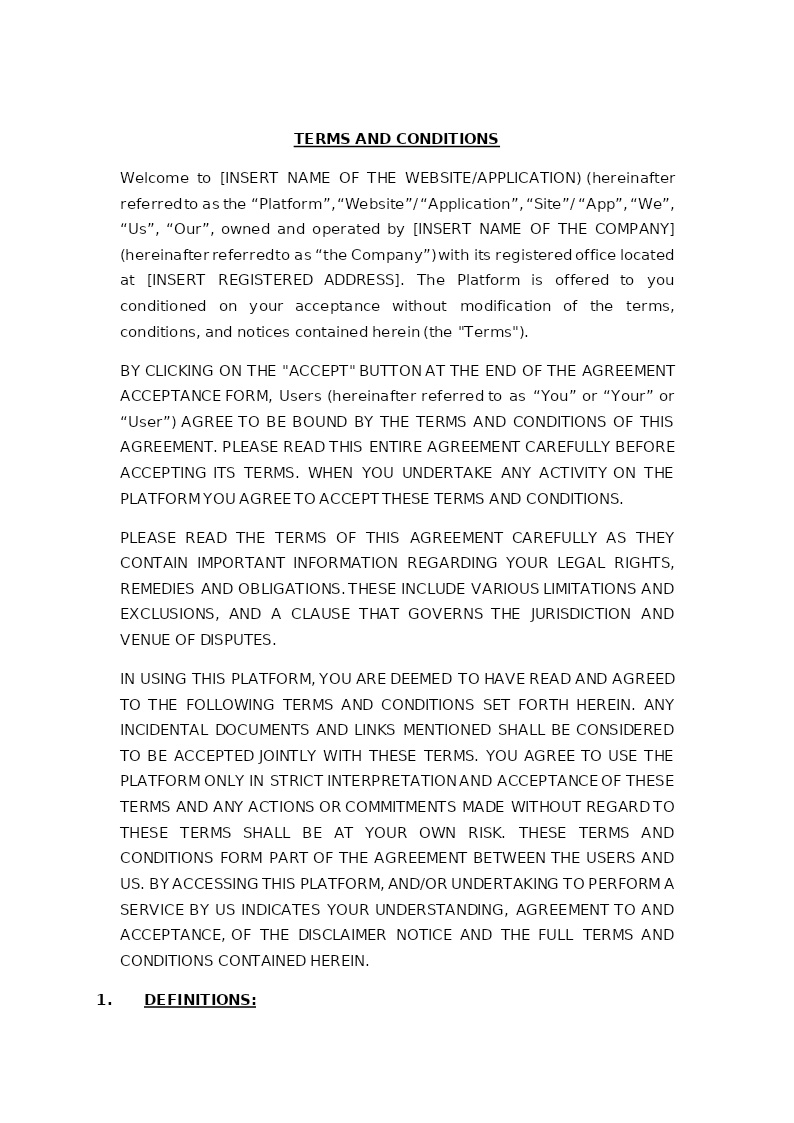
USERS TERMS AND CONDITIONS
How does it work?
1. Choose this template
Start by clicking on "Fill out the template"
2. Complete the document
Answer a few questions and your document is created automatically.
3. Save - Print
Your document is ready! You will receive it in Word and PDF formats. You will be able to modify it.
Understanding User Terms and Conditions for E-Commerce in U.S.
User Terms and Conditions for E-commerce outline the rules and expectations that customers must follow when accessing, browsing, or making purchases on an online platform. These terms establish a legally binding agreement between the platform and its users, covering account creation, order placement, payments, returns, refunds, privacy practices, and dispute resolution.
By defining clear standards for responsible use, the Terms and Conditions ensure transparency, protect user rights, and safeguard the platform from misuse, while maintaining compliance with U.S. e-commerce, consumer protection, and data privacy laws.
Where User Terms and Conditions for E-Commerce Are Commonly Used
User Terms and Conditions apply to:
• Online retail stores and e-commerce marketplaces
• Subscription-based digital service platforms
• SaaS applications with paid features
• Online booking, delivery, or service platforms
• Marketplace platforms connecting buyers and third-party sellers
• Mobile e-commerce applications and web-based storefronts
• Membership-based online shopping sites
• Direct-to-consumer brand websites
Any platform offering digital or physical products to consumers should establish clear, enforceable User Terms and Conditions.
Different Commercial Uses That May Need Additional Review
- Account Registration & User Verification: Terms governing accurate information, age restrictions, and identity security.
- Order Placement & Payment Terms: Rules for order acceptance, pricing accuracy, billing authorization, and payment security.
- Shipping, Delivery & Fulfillment Terms: Guidelines outlining timelines, shipping methods, liability, and delays.
- Returns, Refunds & Cancellations: Clear procedures to avoid disputes, aligned with U.S. consumer protection laws.
- User Conduct & Prohibited Activities: Restrictions against fraud, misuse, harmful content, and unauthorized access.
- Intellectual Property Protection: Rules protecting trademarks, copyrights, product images, and digital content.
- Privacy & Data Use: Disclosure of data collection and usage practices consistent with CCPA, COPPA, and other U.S. regulations.
When Legal Guidance Becomes Helpful
Although many platforms use standardized Terms, legal assistance becomes valuable when:
• Operating across U.S. states with differing privacy or consumer laws
• Launching specialized services (subscription models, digital goods, or regulated products)
• Using advanced advertising, retargeting, or data-driven tools requiring explicit consent under FTC guidelines
• Managing disputes involving chargebacks, fraud, or contract enforcement
• Handling sensitive customer data or third-party integrations
Legal review helps ensure that the Terms are enforceable, compliant, and customized to reflect the platform’s risk environment.
Frequently Asked Questions
Q1. What do User Terms and Conditions cover on an e-commerce platform?
They outline rules for account creation, order processes, payments, shipping, privacy, returns, refunds, and dispute resolution. These terms define user rights and responsibilities, ensuring a transparent and secure shopping experience. They also protect the platform’s business interests and legal standing.
Q2. Are users legally bound by the Terms and Conditions when using the platform?
Yes. When users access the website, browse products, create an account, or complete a purchase, they legally agree to the Terms and Conditions. This agreement ensures both the platform and the user follow established rules and obligations under U.S. contract and consumer protection laws.
Q3. Why are Terms and Conditions important for preventing disputes?
They clarify expectations, set consistent rules, and provide detailed processes for returns, refunds, cancellations, and dispute resolution. By eliminating ambiguity, they significantly reduce conflicts between users, sellers, and the platform while strengthening compliance.
Q4. How do the Terms and Conditions protect user data?
They disclose how the platform collects, stores, and processes personal data in accordance with U.S. privacy laws such as CCPA, COPPA, and FTC regulations. These terms ensure users understand their rights and how their data is safeguarded.
Q5. Can the platform modify the Terms and Conditions?
Yes, but users must be notified of material changes. Updated terms typically take effect once published or upon user acknowledgment. This ensures ongoing compliance with evolving laws, technologies, and business operations.
Q6. Are there restrictions on prohibited activities under these terms?
Absolutely. Activities such as fraud, unauthorized access, misuse of content, abusive behavior, and illegal transactions are strictly prohibited. These rules help maintain safety, integrity, and trust on the platform.
Q7. How are disputes resolved under the Terms and Conditions?
Most e-commerce platforms include arbitration or mediation clauses, specifying how conflicts will be addressed outside traditional courts. These mechanisms provide faster and more cost-effective resolutions, benefiting both users and the platform.
Q8. Do the Terms and Conditions cover third-party sellers or services?
Yes. When the platform involves third-party vendors, logistics providers, or payment processors, the Terms clarify the extent of the platform’s responsibility. Users are informed about interactions with third parties and any applicable limitations of liability.