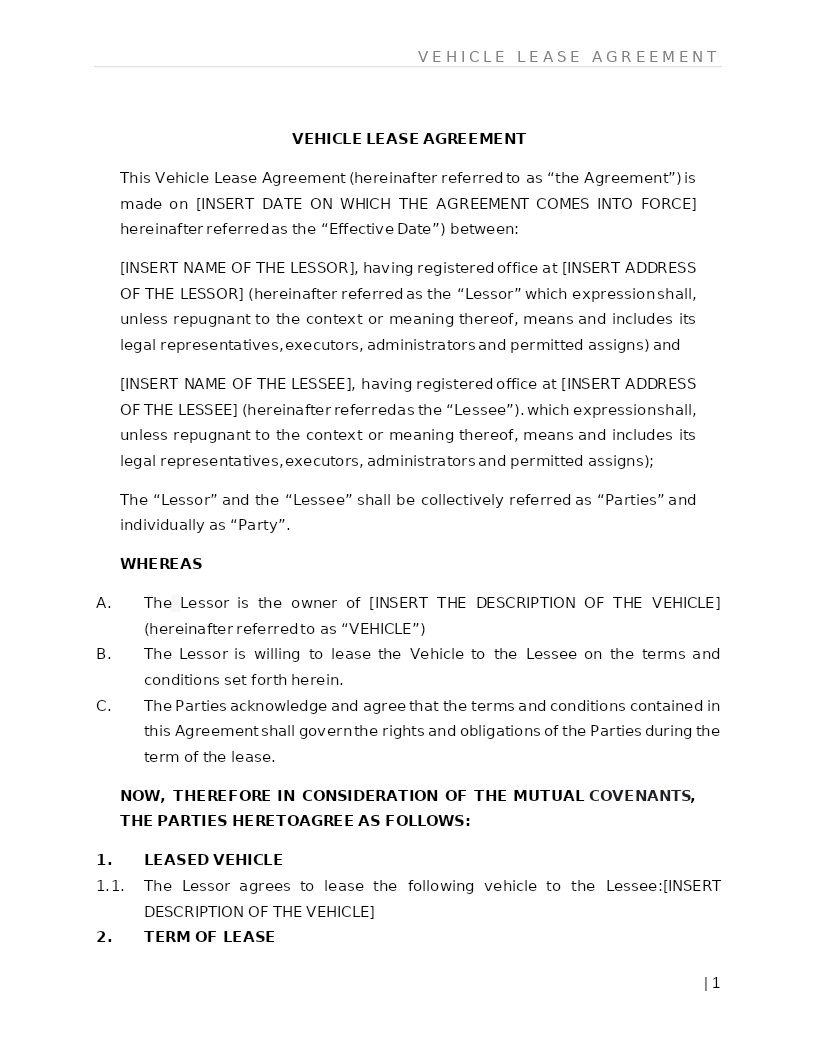
VEHICLE LEASE AGREEMENT
How does it work?
1. Choose this template
Start by clicking on "Fill out the template"
2. Complete the document
Answer a few questions and your document is created automatically.
3. Save - Print
Your document is ready! You will receive it in Word and PDF formats. You will be able to modify it.
Understanding Vehicle Lease Agreement in U.S.
A Vehicle Lease Agreement is a legally binding contract between a lessor (vehicle owner or leasing company) and a lessee (individual or business) that outlines the terms for leasing a vehicle. It specifies key details such as the lease duration, monthly payments, mileage limits, insurance requirements, maintenance responsibilities, and conditions for returning the vehicle. It may also include options for early termination, purchase at lease-end, and penalties for excessive wear and tear. This agreement ensures both parties clearly understand their rights and obligations, creating a transparent and legally compliant leasing arrangement under U.S. law.
Where Vehicle Lease Agreements Are Commonly Used
Vehicle Lease Agreements are widely used in:
- Personal and family vehicle leases
- Commercial fleet leasing for businesses
- Rideshare or delivery vehicle programs
- Luxury vehicle rentals and long-term leases
- Corporate employee vehicle benefit programs
- Car dealerships and leasing agencies
Any individual or business leasing a vehicle benefits from a structured and legally compliant lease agreement.
Different Types of Vehicle Lease Agreements You May Encounter
- Standard Closed-End Lease: Common for personal use, lessee returns the vehicle at lease-end with no ownership obligations.
- Open-End Lease: Often used for commercial vehicles, lessee may be responsible for the vehicle’s residual value.
- Commercial Fleet Lease: Designed for businesses leasing multiple vehicles for operations.
- Lease-to-Own Agreement: Allows the lessee to purchase the vehicle at the end of the lease.
- Short-Term Vehicle Leasing Contracts: Used for temporary business needs, events, or seasonal operations.
When Legal Guidance Becomes Helpful
Legal consultation is important when:
- Leasing vehicles for commercial or interstate operations
- Drafting indemnity, liability, or accident-related clauses
- Negotiating early termination provisions
- Defining mileage restrictions and wear-and-tear standards
- Adding purchase-option or trade-in terms
- Leasing specialized vehicles (e.g., trucks, vans, equipment vehicles)
- Reviewing insurance obligations and accident liability
A lawyer ensures the agreement complies with U.S. leasing laws, consumer protection rules, and financial regulations.
How to Work With This Vehicle Lease Agreement
- Define lease duration, monthly payments, and mileage limits
- Specify insurance requirements and necessary coverage
- Document maintenance responsibilities and repair obligations
- Establish late fees, penalties, and early termination rules
- Clarify wear-and-tear standards and return conditions
- Address accident procedures and liability allocation
- Ensure both parties sign before the vehicle is released
Frequently Asked Questions
Q1. Why is a Vehicle Lease Agreement important?
A Vehicle Lease Agreement protects both the lessor and lessee by outlining financial obligations, usage rules, and insurance requirements. It helps prevent disputes by documenting the lease terms and ensures compliance with U.S. consumer protection and financing laws.
Q2. What key information is included in a Vehicle Lease Agreement?
Typical agreements include lease duration, payment terms, mileage limits, maintenance responsibilities, insurance coverage, and return conditions. These details help set clear expectations and ensure that both parties understand their rights and duties during the lease period.
Q3. Who is responsible for insurance during a vehicle lease?
Under U.S. requirements, the lessee usually must maintain full insurance coverage, including liability, collision, and comprehensive. The agreement specifies minimum coverage amounts and ensures the lessor is protected in case of accidents or theft.
Q4. What happens if the lessee exceeds the mileage limit?
Mileage limits are standard in lease agreements. Exceeding the limit results in a per-mile fee, which is clearly stated in the contract. This protects the lessor from excessive vehicle depreciation and ensures the lessee understands the cost of over-usage.
Q5. Can the lessee terminate the lease early?
Yes, but early termination usually involves penalties or remaining lease payments. The agreement describes approved early-termination scenarios, including financial obligations and the process for returning the vehicle. This helps avoid unexpected costs or disputes.
Q6. What is considered “excessive wear and tear” at lease-end?
Excessive wear includes significant dents, scratches, interior damage, mechanical neglect, or missing equipment. The agreement defines acceptable wear standards based on industry guidelines, helping the lessee understand vehicle-care expectations.
Q7. Are maintenance and repairs included in the lease?
Most agreements require the lessee to perform routine maintenance such as oil changes, tire rotations, and basic repairs. Major repairs may fall under warranty or separate service plans. Proper documentation protects both parties in case of disputes.
Q8. Can the lessee purchase the vehicle at the end of the lease?
Many Vehicle Lease Agreements include a buyout or purchase-option clause. This allows the lessee to buy the vehicle for a predetermined price at lease-end. It provides flexibility for those who may wish to keep the vehicle long-term.