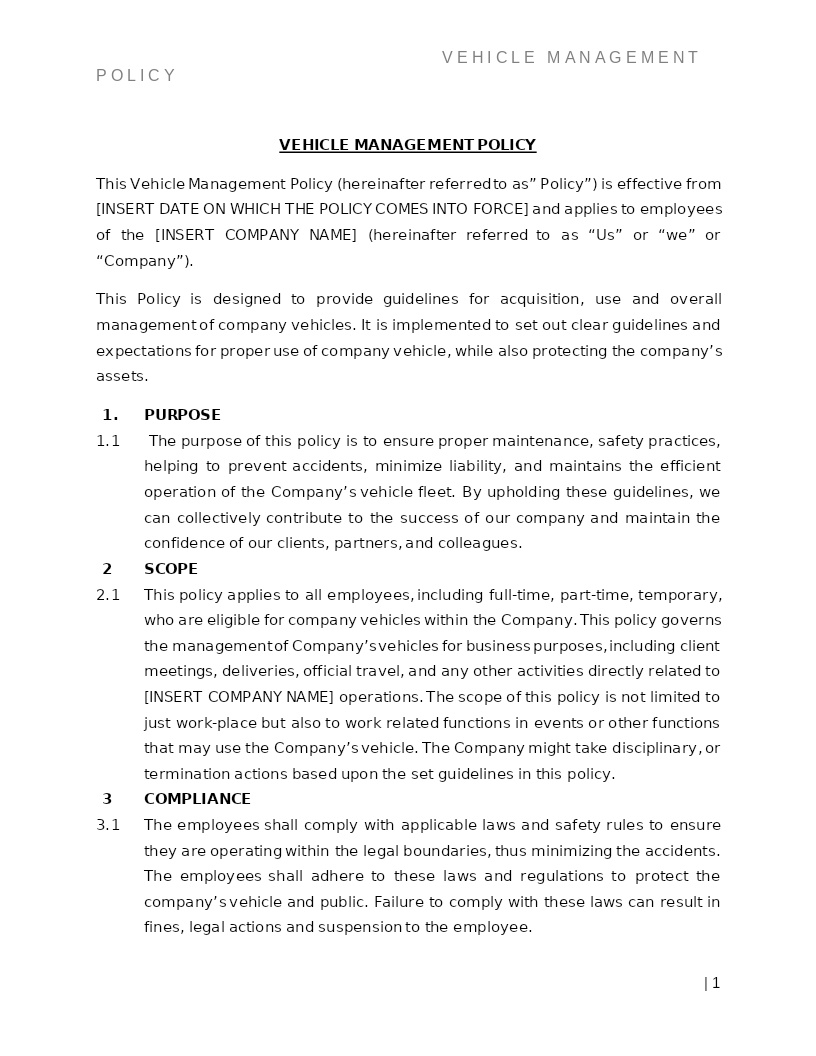
VEHICLE MANAGEMENT POLICY
How does it work?
1. Choose this template
Start by clicking on "Fill out the template"
2. Complete the document
Answer a few questions and your document is created automatically.
3. Save - Print
Your document is ready! You will receive it in Word and PDF formats. You will be able to modify it.
Understanding a Vehicle Management Policy
A Vehicle Management Policy is an essential internal document that outlines how company vehicles are to be used, maintained, operated, and monitored. It sets clear standards for safe driving, fuel consumption, maintenance schedules, accident procedures, and driver responsibilities. This policy ensures that vehicles are utilized efficiently, remain in safe working condition, and comply with federal and state regulations. It also helps protect company assets, promote safety, and reduce liability risks associated with improper vehicle use.
By establishing clear rules and expectations, a Vehicle Management Policy supports operational efficiency, reduces costs related to fuel, repairs, and accidents, and maintains accountability among employees who use company-owned or leased vehicles.
Where a Vehicle Management Policy Is Commonly Used
Organizations across multiple sectors rely on a structured Vehicle Management Policy to manage their fleet effectively, including:
- Logistics, transportation, and distribution companies
- Construction and infrastructure businesses using commercial vehicles
- Service companies such as HVAC, plumbing, and maintenance teams
- Medical and home-care providers using field vehicles
- Corporate offices offering company cars to employees
- Government agencies and public departments managing official vehicles
- Nonprofits with transportation units or volunteer driver programs
Wherever vehicles are used for work, a formal policy ensures safety, legal compliance, and operational consistency.
Common Types of Vehicle Management Policies
- Fleet Usage Policy: Focuses on rules for operating and maintaining multiple company vehicles across departments.
- Company Car Policy: Provides guidance for employees using a company-assigned car for business or limited personal purposes.
- Commercial Vehicle Operations Policy: Addresses safety, load limits, licensing requirements, and compliance obligations for commercial drivers.
- Maintenance & Inspection Policy: Outlines preventive maintenance schedules, inspection standards, and reporting procedures.
- Fuel & Expense Policy: Defines rules for fuel cards, reimbursements, mileage logs, and cost-tracking procedures.
- Accident & Incident Response Policy: Establishes the steps employees must follow in case of collisions, breakdowns, violations, or emergencies.
When Legal Guidance Becomes Helpful
Legal review is beneficial when the policy involves:
- Multi-state vehicle operations with differing laws
- Commercial drivers subject to DOT, OSHA, or FMCSA regulations
- High-risk industries requiring additional insurance coverage
- GPS tracking, telematics, or driver-monitoring tools that impact employee privacy
- Liability allocation for accidents, negligent driving, or unauthorized use
- Policies involving leased vehicles, rentals, or subcontractor fleets
- Reimbursement rules that must comply with IRS mileage standards
Legal consultation ensures that the policy is compliant, enforceable, and aligned with organizational risk-management practices.
How to Work with This Policy
- Specify which vehicles the policy applies to
- Define allowed and prohibited uses
- Include maintenance, inspection, and reporting requirements
- Outline insurance standards and documentation
- Set rules for accidents, violations, and emergencies
- Clarify disciplinary measures for violations
- Review and update periodically to reflect regulatory changes
- Obtain acknowledgment from all employees using vehicles
This policy ensures structured vehicle use across the organization and supports overall safety and compliance.
Frequently Asked Questions
Q1. What is the main purpose of a Vehicle Management Policy?
A Vehicle Management Policy provides clear rules for using, maintaining, and safeguarding company vehicles. It ensures employees operate vehicles safely, follow maintenance schedules, and comply with legal requirements. The policy helps organizations minimize accidents, reduce operational expenses, and maintain accountability.
Q2. Does this policy apply to both company-owned and leased vehicles?
Yes, most policies apply to any vehicle the organization owns, rents, or leases for business operations. It ensures consistent standards for safety, maintenance, and driver responsibilities regardless of who legally owns the vehicle. This helps create uniform processes for inspections, repairs, and insurance coverage.
Q3. What responsibilities do drivers have under a Vehicle Management Policy?
Drivers must follow traffic laws, maintain clean driving records, report damage or incidents promptly, and use vehicles only for authorized purposes. They may also be responsible for completing mileage logs, checking fluid levels, and performing daily inspections. These duties help ensure safe and efficient vehicle use.
Q4. How does a Vehicle Management Policy reduce company liability?
The policy establishes clear expectations for driver behavior, accident reporting, and vehicle maintenance. By outlining safety protocols and disciplinary procedures, it reduces the risk of negligent driving, equipment failure, or improper vehicle use. This framework protects the company from avoidable legal claims and financial losses.
Q5. Can a company track vehicle usage using GPS or telematics?
Yes, many organizations use GPS tracking for safety, route optimization, fuel efficiency, and theft prevention. However, the policy should clearly explain tracking practices, privacy considerations, and how the data will be used. Transparency ensures compliance with privacy laws and maintains trust with employees.
Q6. What happens if an employee damages a company vehicle?
The policy outlines reporting procedures, required documentation, and responsibility for damages. Depending on company rules, insurance coverage, and the nature of the incident, the employee may face disciplinary action or be required to undergo additional training. Clear guidelines help prevent disputes and ensure timely repairs.
Q7. Are personal errands or non-business use allowed?
Most policies strictly limit personal use unless explicitly authorized. If personal use is permitted, rules regarding mileage, fuel costs, and liability must be clearly defined. Restricting unauthorized use helps reduce wear and tear, prevent insurance issues, and maintain professional standards.
Q8. How often should company vehicles be inspected or serviced?
Regular inspections and maintenance schedules are critical for safety and efficiency. Most policies require monthly checks, pre-trip inspections, and manufacturer-recommended service intervals. Keeping detailed maintenance logs ensures compliance, reduces breakdowns, and extends vehicle life.