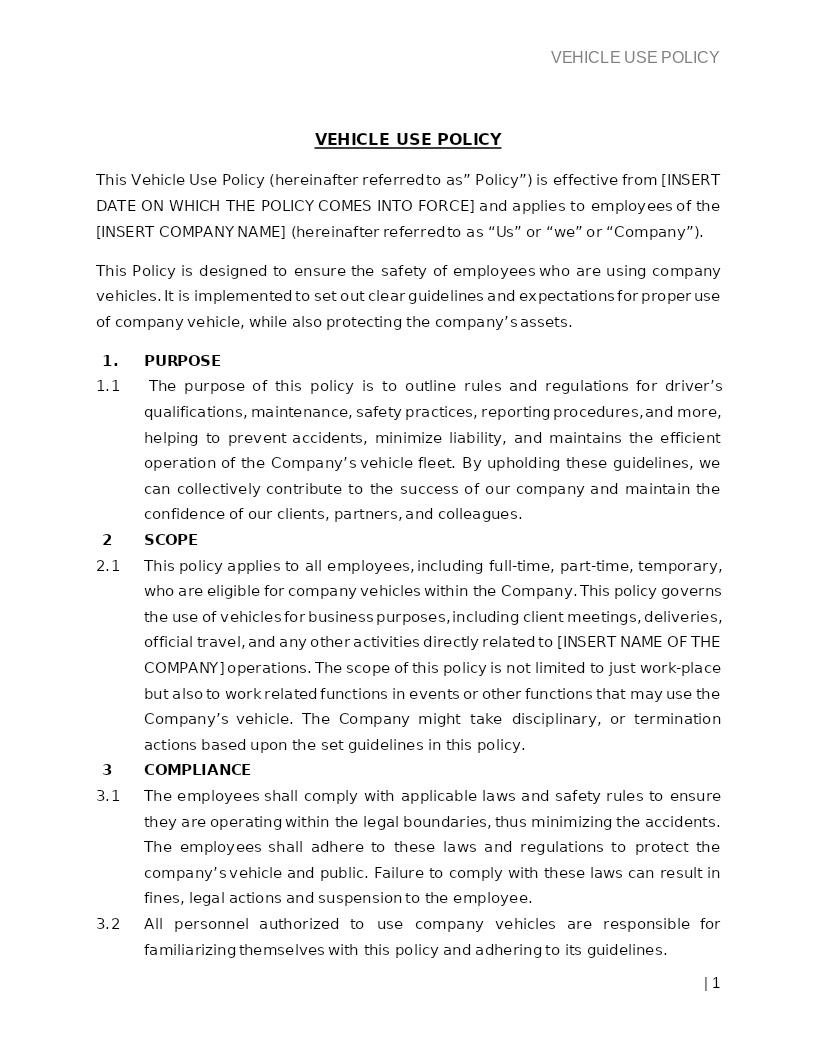
VEHICLE USE POLICY
How does it work?
1. Choose this template
Start by clicking on "Fill out the template"
2. Complete the document
Answer a few questions and your document is created automatically.
3. Save - Print
Your document is ready! You will receive it in Word and PDF formats. You will be able to modify it.
Supporting Safety, Compliance, and Responsible Conduct Through a Vehicle Use Policy
A Vehicle Use Policy is a formal organizational directive that governs the operation, maintenance, and authorized use of company-owned, leased, or employee-owned vehicles used for business purposes. Designed in alignment with U.S. federal and state motor-vehicle regulations, including the Department of Transportation (DOT) standards, Federal Motor Carrier Safety Regulations (FMCSR), state driver-licensing rules, employer-liability laws, and workplace-safety requirements enforced by OSHA, this policy establishes clear expectations regarding the safe and lawful operation of vehicles. It outlines conditions for authorized use, driver responsibilities, accident-reporting procedures, insurance compliance, maintenance obligations, and disciplinary consequences for misuse or unsafe conduct. The policy ensures that employees understand their duty to operate vehicles responsibly, comply with all traffic laws, and safeguard company property, public safety, and organizational reputation.
A comprehensive Vehicle Use Policy defines what constitutes acceptable and prohibited vehicle use, including the boundaries of personal use, transporting unauthorized passengers, the operation of vehicles under the influence of drugs or alcohol, distracted driving prohibitions, and adherence to state and municipal traffic laws. It further establishes protocols for vehicle inspections, reporting mechanical issues, submitting mileage logs, and managing fuel or toll expenses. The policy also details requirements for driver eligibility, including valid driver's licenses, periodic motor-vehicle record checks, and compliance with background-screening criteria. Additionally, it outlines procedures that must be followed in the event of accidents, incidents, moving violations, or property damage, specifying responsibilities for documentation, reporting, and cooperation with insurance investigations. By implementing this policy, organizations mitigate legal risks, reduce liability exposure, enhance fleet safety, and promote consistent, compliant vehicle operations.
Where Vehicle Use Policies Are Commonly Used
Vehicle Use Policies are widely implemented across sectors that rely on transportation or employee mobility, including:
- Delivery and logistics companies with commercial fleets
- Construction and industrial organizations operating work trucks or equipment vehicles
- Healthcare providers using vehicles for patient transport or mobile services
- Sales and corporate teams requiring routine business travel
- Field-service providers handling on-site repair, maintenance, or installation work
- Government contractors subject to federal fleet-compliance rules
- Educational institutions transporting students, staff, or equipment
- Nonprofits providing community outreach or transportation services
Any organization with employees who drive vehicles for business benefits from a structured Vehicle Use Policy.
Different Types of Vehicles Use Policies You May Encounter
1. Company-Owned Vehicle Policies: Apply to vehicles titled or leased by the employer.
2. Personal Vehicle for Business Use Policies (Mileage Reimbursement): Apply when employees use their own vehicles for work-related travel.
3. Commercial Motor Vehicle (CMV) Policies: Address requirements for DOT-regulated vehicles, including CDL licensing.
4. Fleet-Management Policies: Cover vehicle assignments, scheduling, maintenance, and fuel or usage tracking.
5. Zero-Tolerance Driving Policies: Apply to high-risk environments involving hazardous materials or critical safety standards.
When Legal Guidance Becomes Helpful
Legal consultation is recommended when:
- Vehicles fall under DOT or FMCSR commercial-vehicle regulations
- The organization must ensure compliance with state insurance and liability laws
- Employees drive across state lines for business purposes
- Vehicles transport hazardous materials or regulated cargo
- Policies intersect with drug-testing requirements, including DOT-mandated testing
- Incidents involve personal injury, property damage, or criminal conduct
- Company procedures require privacy considerations for GPS tracking or telematics
- The organization needs to draft indemnification or liability-limitation provisions
Legal review ensures the Vehicle Use Policy aligns with U.S. safety, insurance, and employment laws, reducing exposure to disputes and regulatory penalties.
How to Work with This Template
- Identify eligible drivers and define authorization procedures
- Specify requirements for valid driver’s licenses, MVR checks, and training standards
- Establish rules governing safe operation, including seatbelt use, traffic-law compliance, and distracted-driving restrictions
- Clarify expectations for personal use of company vehicles, if permitted
- Set forth procedures for vehicle inspection, maintenance, and reporting mechanical issues
- Outline steps for accident reporting, documentation, and cooperation with insurance carriers
- Detail reimbursement rules for fuel, tolls, or mileage when using personal vehicles for business
- Include anti-drug and alcohol provisions consistent with state law and DOT requirements
- Define consequences for policy violations, including disciplinary action or termination
- Update the policy regularly to reflect changes in transportation law and company fleet needs
This template reflects best practices in fleet safety, liability risk management, and U.S. transportation compliance.
Frequently Asked Questions
Q1. What is a Vehicle Use Policy, and why is it important?
A Vehicle Use Policy outlines rules and expectations for employees operating company or personal vehicles for business purposes. It is essential because it promotes safety, reduces liability, ensures legal compliance, and protects organizational assets.
Q2. Does this policy cover personal vehicles used for work?
Yes. Many policies apply both to company-owned vehicles and personal vehicles used for business, with clear rules for mileage reimbursement, insurance requirements, and safety standards.
Q3. What safety requirements apply to employees driving for work?
Employees must follow all traffic laws, wear seatbelts, avoid distracted driving, maintain vehicle condition, and comply with any DOT or state safety requirements.
Q4. Are employees allowed to use company vehicles for personal purposes?
Only if explicitly permitted. If allowed, personal use must follow strict rules regarding passengers, destinations, and insurance compliance.
Q5. What should employees do in case of an accident?
Employees must report accidents immediately, document the incident, notify supervisors, cooperate with insurance investigations, and follow company procedures for repairs or replacement.
Q6. Can the company require drug or alcohol testing for drivers?
Yes. Employers may require testing, especially in safety-sensitive roles or when mandated by DOT regulations.
Q7. Does the policy allow GPS tracking of company vehicles?
Yes, with appropriate disclosure. Employers typically notify employees of GPS or telematics monitoring to comply with privacy laws.
Q8. Who pays for fuel and maintenance?
For company vehicles, the employer typically covers authorized expenses. For personal vehicles, employees may receive mileage reimbursement consistent with IRS guidelines.
Q9. What happens if an employee’s license is suspended?
The employee must report the suspension immediately. They may be restricted from driving or reassigned, depending on company needs and legal requirements.
Q10. Should legal counsel review the Vehicle Use Policy?
Yes. Legal review ensures compliance with transportation regulations, insurance laws, employment rules, and state-specific requirements.