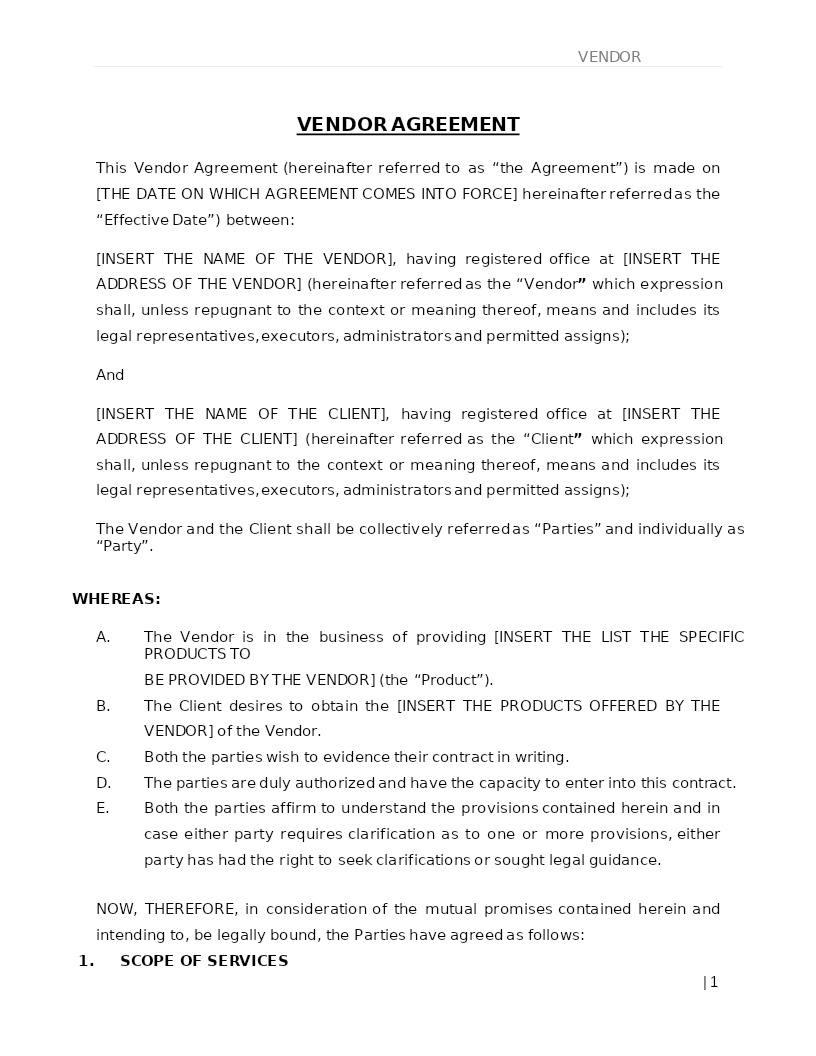
VENDOR AGREEMENT
How does it work?
1. Choose this template
Start by clicking on "Fill out the template"
2. Complete the document
Answer a few questions and your document is created automatically.
3. Save - Print
Your document is ready! You will receive it in Word and PDF formats. You will be able to modify it.
Understanding Vendor Agreements
A Vendor Agreement is a legally binding contract between a business (the “Client”) and a vendor or supplier outlining the terms under which goods or services will be provided. It sets clear expectations regarding deliverables, pricing, timelines, quality standards, payment terms, confidentiality, warranties, liabilities, and dispute resolution.
In the United States, Vendor Agreements operate under state contract laws, UCC (Uniform Commercial Code) regulations for the sale of goods, federal consumer protection rules, data privacy laws, and industry-specific compliance requirements. A well-drafted Vendor Agreement helps protect both parties by ensuring clarity, accountability, and legal enforceability throughout the business relationship.
Where Vendor Agreements Are Commonly Used
Vendor Agreements are used in nearly every industry and business environment, including:
- E-commerce and product-based businesses purchasing inventory
- Service providers such as marketing agencies, IT vendors, and consultants
- Event management companies hiring caterers, decorators, and logistics partners
- Retail stores purchasing goods from wholesale distributors
- Technology companies outsourcing software development or cloud services
- Manufacturers sourcing raw materials, packaging, or equipment
- Professional service firms contracting specialized vendors
Whenever a business relies on a third party to supply goods or services, a Vendor Agreement ensures that expectations are documented and legally enforceable.
Different Types of Vendor Agreements You May Encounter
- Goods Supply Agreement: Used when a vendor provides physical products, equipment, or inventory.
- Service Vendor Agreement: Covers outsourced services such as consulting, marketing, IT support, or maintenance.
- Master Vendor Agreement: Establishes long-term terms for repeated orders or ongoing services.
- Software/Technology Vendor Agreement: Used when procuring software, SaaS solutions, licenses, or IT services.
- Event or Project-Specific Vendor Agreement: Covers one-time events, installations, or project-based engagements.
When Legal Guidance Becomes Helpful
Legal guidance is beneficial when:
- The vendor relationship involves large financial obligations or sensitive data
- The vendor provides software, cloud services, or technology involving user data
- Goods are sold across state lines under UCC rules
- The contract involves intellectual property ownership or licensing rights
- The vendor will access confidential business information
- The agreement includes liability, indemnification, or insurance requirements
- There are concerns about vendor performance, delays, or quality control
Legal review ensures the agreement aligns with U.S. commercial laws and protects both parties from avoidable risks.
How to Work with This Template
- Identify the client and vendor, including business details
- Describe the scope of goods or services being provided
- Define pricing, payment terms, delivery schedules, and completion timelines
- Include quality standards, inspection rights, and acceptance criteria
- Add confidentiality and data protection requirements
- Include warranties, indemnities, and vendor liability limitations
- Choose the governing state law for disputes
- Outline renewal terms, termination procedures, and notice requirements
- Sign electronically or in hard copy following U.S. contract execution standards
This template is compatible with major U.S. e-signature platforms and follows widely accepted commercial contracting practices.
Frequently Asked Questions
Q1. What is a Vendor Agreement and why is it important?
A Vendor Agreement outlines the terms under which a supplier provides goods or services to a business. It helps prevent misunderstandings by clearly defining deliverables, pricing, quality expectations, and legal responsibilities protecting both parties and ensuring smooth business operations.
Q2. Are Vendor Agreements legally enforceable in the U.S.?
Yes. Vendor Agreements are enforceable under state contract law and, in cases involving goods, the Uniform Commercial Code (UCC). A well-written agreement helps ensure that both parties meet their obligations and provides a legal remedy if disputes arise.
Q3. What should be included in a Vendor Agreement?
A strong Vendor Agreement includes scope of work, pricing, delivery terms, quality standards, deadlines, confidentiality requirements, warranties, and dispute resolution procedures. These elements ensure clarity and protect both parties from unexpected issues.
Q4. Can Vendor Agreements cover both goods and services?
Yes. Many U.S. vendor contracts include a combination of goods (such as materials or equipment) and services (such as installation, support, or maintenance). The agreement will specify the responsibilities and requirements for each component.
Q5. How do businesses ensure vendor performance meets expectations?
Vendor Agreements often include service-level requirements, inspection rights, quality standards, and performance metrics. Businesses may also require periodic reporting, audits, or milestone reviews to ensure compliance throughout the engagement.
Q6. Are vendors required to carry insurance?
Many Vendor Agreements require vendors to maintain general liability, product liability, cyber liability, or professional liability insurance, depending on the nature of the goods or services. This protects both parties in case of accidents, defects, or financial loss.
Q7. What happens if a vendor fails to deliver on time?
If the vendor does not meet deadlines, the agreement may allow the client to demand corrective action, impose late penalties, terminate the agreement, or seek compensation. Clear timelines and consequences help maintain accountability.
Q8. Can a Vendor Agreement be terminated early?
Yes. Most agreements include termination clauses that allow either party to end the contract for non-performance, breach of terms, or convenience with prior written notice. The agreement outlines the procedures and obligations at the time of termination.
Q9. Are electronic signatures valid for Vendor Agreements?
Yes. Under the U.S. ESIGN Act, electronic signatures are fully enforceable. Most companies use digital platforms like Docu Sign or Adobe Sign to execute Vendor Agreements quickly and securely.
Q10. Is a Vendor Agreement suitable for small businesses?
Absolutely. Vendor Agreements help small businesses maintain professional standards, manage supplier relationships, and reduce risk. Even for smaller purchases or one-time services, having a written agreement prevents misunderstandings and protects both parties.