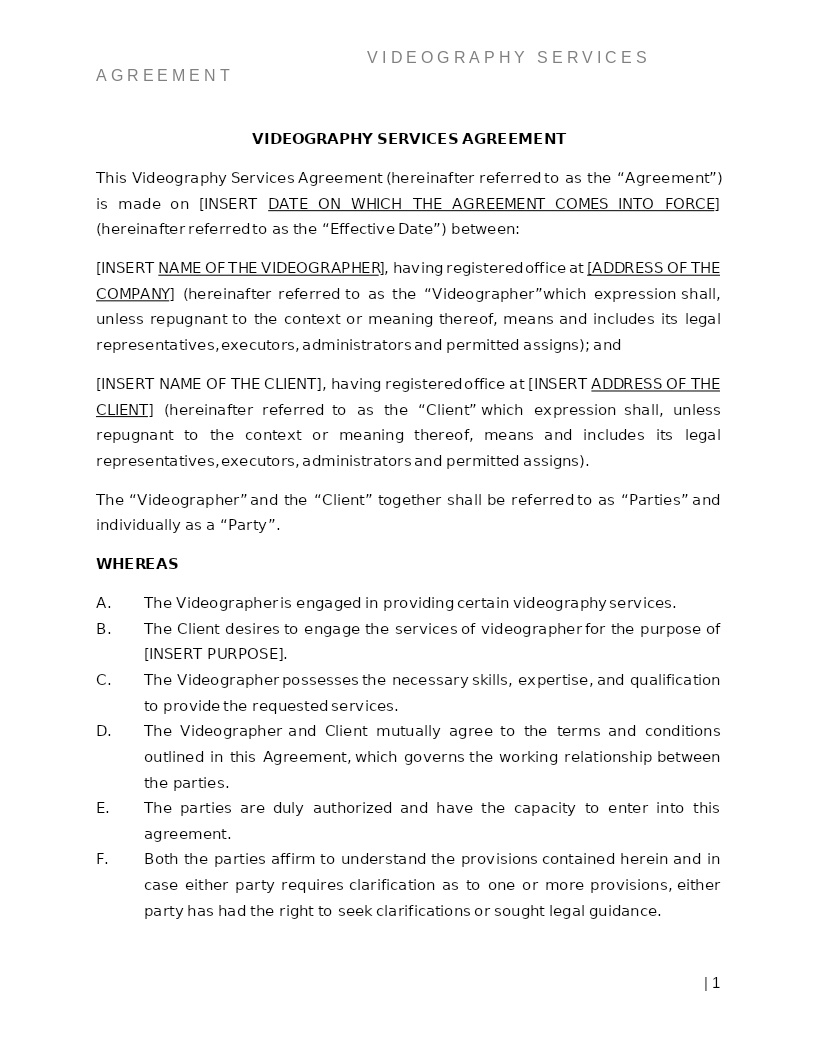
VIDEOGRAPHY SERVICES AGREEMENT
How does it work?
1. Choose this template
Start by clicking on "Fill out the template"
2. Complete the document
Answer a few questions and your document is created automatically.
3. Save - Print
Your document is ready! You will receive it in Word and PDF formats. You will be able to modify it.
Understanding Videography Services Agreement in U.S.
A Videography Services Agreement is a legally binding contract between a videographer and a client that outlines the terms and conditions of professional video production services. It defines the scope of work, such as filming, editing, post-production, and final deliverables, while setting expectations for timelines, payment terms, and usage rights. The agreement also clarifies important details like cancellation policies, revision limits, intellectual property rights, and liability protections. It establishes a clear understanding between both parties to ensure a smooth working relationship and compliance with U.S. service and copyright laws.
A well-drafted Videography Services Agreement helps prevent misunderstandings, protects legal rights, and ensures both the videographer and client understand their obligations, responsibilities, and expectations throughout the project.
Where Videography Services Agreements Are Commonly Used
Videography Services Agreements are frequently used for:
- Weddings, events, conferences, and corporate functions
- Promotional videos, advertisements, and brand campaigns
- Music videos, documentaries, and creative productions
- Social media content and influencer collaborations
- Real estate videography and virtual tours
- Educational, training, or instructional videos
- Long-term content creation contracts
Any project requiring professional video production benefits from a formal Videography Services Agreement.
Different Types of Videography Services Agreements You May Encounter
- Event Videography Agreement: Covers weddings, parties, corporate events, and live functions.
- Commercial Videography Agreement: Used for promotional, marketing, or business-related video content.
- Creative Production Agreement: Applies to documentaries, short films, music videos, and artistic projects.
- Ongoing Content Agreement: Used for long-term clients needing frequent video shoots or monthly retainers.
When Legal Guidance Becomes Helpful
Legal consultation becomes especially helpful when:
- The project involves complex intellectual property or licensing rights
- The videographer will capture sensitive or proprietary content
- Drone videography requires compliance with FAA regulations
- Multiple stakeholders (brands, talent, sponsors) are involved
- The agreement includes commercial usage, distribution, or royalties
- Filming takes place across multiple states or jurisdictions
- Either party needs detailed indemnity, liability, or cancellation provisions
Legal review ensures the agreement meets U.S. standards and adequately protects both parties.
How to Work With This Videography Services Agreement
- Clearly define the project scope, deliverables, and editing specifications
- Set payment terms, deposits, refund policies, and late fees
- Establish timelines, revision limits, and approval procedures
- Specify copyright ownership, licensing permissions, and usage rights
- Include liability disclaimers, safety protocols, and release requirements
- Address cancellation, rescheduling, and force majeure situations
- Review and sign electronically or in writing for documentation
Frequently Asked Questions
Q1. Why is a Videography Services Agreement important?
A Videography Services Agreement ensures that both the videographer and client understand the project expectations, timelines, and deliverables. It prevents disputes by clearly outlining responsibilities, payment terms, and editing scope. This written clarity protects both parties throughout the production process.
Q2. Who owns the copyright to the video footage?
Under U.S. copyright law, the videographer generally owns the footage unless rights are transferred in writing. The agreement specifies whether the client receives full ownership, a usage license, or limited distribution rights. Clear copyright terms prevent future conflicts over video usage.
Q3. What happens if the event is canceled or rescheduled?
Most agreements include cancellation and rescheduling clauses addressing refunds, deposit retention, or additional fees. These terms protect both parties from unexpected losses and ensure fair handling of changes outside the videographer’s control.
Q4. Are revision limits typically included in the agreement?
Yes. To avoid excessive editing requests, agreements usually set a specific number of revisions included in the package. Additional revisions may incur extra fees. Defining this upfront ensures smooth workflow and protects the videographer’s time.
Q5. Does the agreement cover licensing and usage rights?
Absolutely. The contract defines whether the client can use the video for personal, commercial, or online distribution. These usage terms protect the videographer’s creative rights and ensure lawful usage of the final product.
Q6. What if unexpected issues occur during filming?
The agreement includes clauses addressing equipment failure, weather problems, venue restrictions, or emergencies. These provisions set expectations for backups, rescheduling, and limitations of liability, minimizing disputes in unpredictable situations.
Q7. Can the agreement include confidentiality or non-disclosure terms?
Yes. Many projects, especially brand campaigns, corporate videos, and content involving minors, require confidentiality clauses. These terms protect sensitive information and prevent unauthorized sharing of footage or project details.
Q8. Is this agreement suitable for drone videography?
Yes, but additional FAA-compliant terms may be required. Drone videography often requires specific licensing, location permits, and safety rules. Adding these details ensures the project meets U.S. aviation regulations and mitigates liability risks.