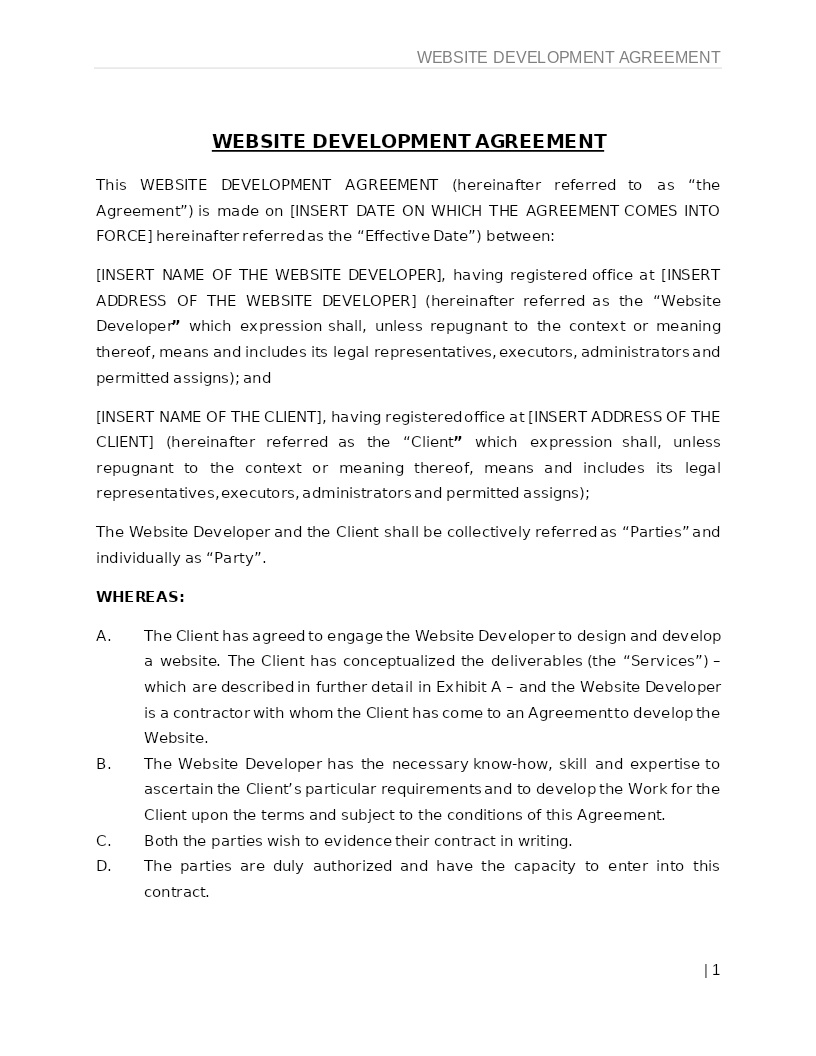
WEBSITE DEVELOPMENT AGREEMENT
How does it work?
1. Choose this template
Start by clicking on "Fill out the template"
2. Complete the document
Answer a few questions and your document is created automatically.
3. Save - Print
Your document is ready! You will receive it in Word and PDF formats. You will be able to modify it.
Creating Clear, Secure, and Professional Website Projects Through Website Development Agreements
A Website Development Agreement is a legally binding contract between a website developer or development agency and a client, defining the terms, scope, responsibilities, and deliverables associated with building a website. In the United States, this agreement is essential for setting expectations, protecting intellectual property, and ensuring a smooth, transparent workflow throughout the project.
This agreement covers design requirements, development tasks, content responsibilities, payment terms, testing procedures, maintenance obligations, confidentiality standards, and timelines. By documenting these conditions, both parties gain clarity and legal protection, reducing misunderstandings and ensuring the successful delivery of a functional, high-quality website tailored to the client’s needs.
Where Website Development Agreements Are Commonly Used
Website development agreements are widely used across U.S. industries, especially for:
- Business websites, e-commerce platforms, and SaaS websites
- Custom web applications, membership portals, or booking systems
- Startups and agencies building branding and digital identity
- Redesigns, migrations, or major updates to existing websites
- Projects involving third-party integrations, plugins, or APIs
- Freelancers, independent contractors, and development studios
Any situation involving custom website creation or redesign benefits from a structured and enforceable development agreement.
Different Types of Website Development Agreements You May Encounter
- Fixed-Price Development Agreement: Defines a clear scope and a set project fee, commonly used when requirements are well-defined and stable.
- Time-and-Materials Development Agreement: Charges based on hours worked and resources used, suitable for flexible, evolving, or long-term projects.
- Dedicated Team or Retainer Agreement: Provides ongoing access to a team or developer for continuous updates, new features, and extended support.
- Maintenance & Support Agreement (Standalone or Add-On): Covers post-launch services such as bug fixes, updates, backups, and performance monitoring.
- Agile or Milestone-Based Development Agreement: Uses sprints or milestones, ideal for complex projects requiring iterative development and frequent feedback.
Each type ensures clarity, protects IP rights, and helps clients and developers collaborate more effectively.
When Legal Guidance Becomes Helpful
You may need legal assistance when:
- The website involves sensitive data (healthcare, fintech, children’s data, e-commerce)
- Complex intellectual property or licensing rights are involved
- Third-party integrations require compliance approvals
- The project includes multi-state or international stakeholders
- The agreement includes performance guarantees or uptime commitments
- Major financial investments, long-term retainers, or recurring fees are involved
- The client wants exclusivity or ownership over custom tools or code
Legal support ensures enforceability, protects your rights, and avoids disputes during or after development.
How to Work With This Template
- Provide complete details of both parties and define the full project scope
- Specify design requirements, development tasks, revisions, and deliverables
- Outline project stages, planning, UI/UX design, coding, testing, launch
- Clarify ownership of source code, graphics, databases, and content
- Include confidentiality, data protection, and IP-transfer clauses
- Add timelines, acceptance criteria, and detailed payment milestones
- Choose governing U.S. state law and preferred dispute resolution methods
- Finalize signatures, electronic signatures are fully valid under U.S. law
This template aligns with U.S. best practices for digital development and helps ensure smooth and professional project execution.
Q1. Why is a Website Development Agreement necessary in the U.S.?
A website development agreement ensures a clear understanding of project scope, deliverables, and timelines, helping prevent disputes and unexpected costs. It protects both parties by defining payment terms, revision limits, IP rights, and confidentiality obligations. In the U.S., where digital projects often involve third-party tools and data privacy rules, the agreement also helps ensure compliance with applicable laws.
Q2. Who owns the website’s source code under this agreement?
Ownership depends on the agreement’s terms. Most U.S. clients receive full rights to the final deliverables but developers retain rights to reusable tools, libraries, or frameworks unless otherwise assigned. A well-drafted agreement clearly defines what transfers to the client and what remains the developer’s proprietary IP, ensuring no future conflicts.
Q3. What happens if the client requests additional features mid-project?
The agreement typically requires a written change order outlining new features, pricing adjustments, and timeline updates. This prevents scope creep and ensures both parties agree to modifications before additional work begins. A defined process helps manage expectations and protects the developer from unpaid extra labor.
Q4. How does the agreement address project delays or missed deadlines?
Most agreements include a mutual responsibility clause, developers must meet timelines, and clients must provide required feedback or content promptly. If delays occur, the agreement outlines how deadlines will be adjusted and whether any penalties apply. This keeps the project on track and ensures accountability for both parties.
Q5. Is post-launch maintenance included in the Website Development Agreement?
Not always. Many U.S. developers offer maintenance, bug fixes, or updates as a separate paid service unless explicitly included in the agreement. A clear distinction is essential to avoid misunderstandings after launch, especially regarding long-term support, technical issues, or future feature enhancements.