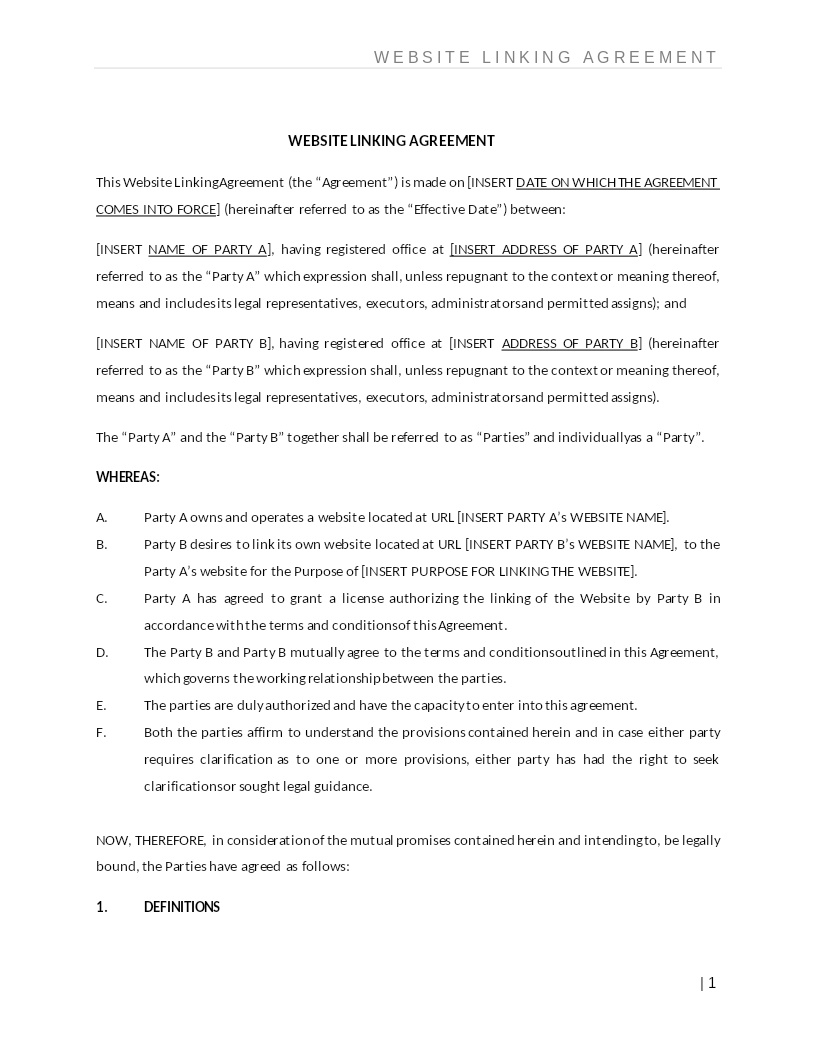
WEBSITE LINKING AGREEMENT
How does it work?
1. Choose this template
Start by clicking on "Fill out the template"
2. Complete the document
Answer a few questions and your document is created automatically.
3. Save - Print
Your document is ready! You will receive it in Word and PDF formats. You will be able to modify it.
Understanding Website Linking Arrangements in the United States
A Website Linking Agreement is a legally binding contract between two parties that governs how one website may link to another. It outlines the permissions, restrictions, and obligations associated with placing a hyperlink on a webpage. This includes guidelines for link placement, anchor text usage, branding rules, and any intellectual property limitations.
In the United States, linking agreements are important because they prevent misrepresentation, unauthorized endorsement claims, and trademark misuse. They also help websites comply with copyright laws, FTC advertising guidelines, and digital marketing standards, making the linking relationship professional, secure, and legally compliant.
Where Website Linking Agreements Are Commonly Used
Website Linking Agreements are used in various online relationships, including:
- Affiliate marketing and partnership programs
- Content collaborations and guest posting
- Sponsored links and promotional partnerships
- Business directories and resource listings
- Cross-promotions between brands or influencers
- Corporate websites linking to external tools, articles, or partners
- Educational institutions referencing external sources
- News outlets linking to partner websites or commercial pages
Any situation involving external hyperlinks can benefit from a clear linking agreement.
Different Types of Website Linking Agreements You May Encounter
- Basic Linking Agreement: Allows general hyperlinks under set guidelines without implying sponsorship or partnership.
- Affiliate or Partner Linking Agreement: Used when links are placed as part of affiliate marketing, referral programs, or paid promotions.
- Reciprocal Linking Agreement: Both parties mutually agree to link to each other for marketing or SEO purposes.
- Content Collaboration Linking Agreement: Used when links appear in guest posts, sponsored content, or co-authored articles.
- Commercial Linking Agreement: Applies when links drive traffic for advertising, generating revenue, or promoting commercial products.
When Legal Guidance Becomes Helpful
Legal consultation is important when:
- The link involves commercial promotion or advertising claims
- There is concern about intellectual property usage (logos, brand names, trademarks)
- The linking website accepts compensation or participates in affiliate programs
- FTC disclosure rules apply to promotional or sponsored links
- The agreement involves strict SEO rules, penalties, or performance requirements
- Linking may create confusion about endorsements or partnerships
- The websites operate in highly regulated industries (finance, healthcare, legal, etc.)
- The agreement includes usage of copyrighted content or branded marketing assets
Attorneys help ensure compliance with U.S. digital marketing laws and reduce risk.
How to Work With This Template
- Identify both parties and their website URLs
- Define the purpose of the link, informational, promotional, affiliate, etc.
- Specify the linking format, anchor text, and placement rules
- Outline branding and trademark usage permissions and restrictions
- Include liability limitations for content changes on either site
- Add SEO requirements such as no-follow tags or keyword restrictions
- Include termination rights, notice periods, and removal procedures
- Specify governing U.S. state law and dispute resolution mechanisms
- Review together (legal consultation recommended)
- Sign electronically or physically
This template follows standard U.S. website compliance practices and digital advertising guidelines.
Frequently Asked Questions
Q1. Why is a Website Linking Agreement important for online businesses?
A Website Linking Agreement protects both parties by clarifying how links may be used and displayed. It prevents unauthorized branding, false association claims, and misuse of intellectual property. This helps safeguard brand integrity while ensuring a professional and compliant linking relationship.
Q 2. Does this agreement protect against trademark and copyright issues?
Yes. The agreement specifies how logos, brand names, and copyrighted content may be used in connection with the link. This prevents infringement claims and protects the linking party from accidental violations while ensuring brand owners retain control over their intellectual property.
Q3. Can the agreement specify SEO rules or restrictions?
Absolutely. Many linking agreements include SEO guidelines such as anchor text rules, “no-follow” requirements, and restrictions on paid link practices. These terms help websites maintain ethical SEO compliance and avoid search engine penalties.
Q4. Does the agreement clarify the relationship between the websites?
Yes. It makes clear whether the link is informational, commercial, or part of a formal partnership. This avoids legal issues involving false endorsements or implied sponsorships and ensures transparency for users and regulatory agencies.
Q5. What if the linked website’s content changes or becomes harmful?
The agreement typically allows link removal if the linked website publishes harmful, offensive, or misleading content. This protects both parties’ reputations and reduces legal risk associated with associating with inappropriate or non-compliant content.
Q6. Are termination rights included in a Website Linking Agreement?
Yes. The agreement outlines how either party may request link removal, including notice periods and removal deadlines. This ensures that both sides maintain control over their online presence and can exit the linking arrangement if needed.
Q7. Does this agreement help with FTC compliance for sponsored or affiliate links?
Yes. The agreement can require proper disclosures for paid, sponsored, or affiliate links, helping marketers comply with FTC Advertising and Endorsement Guidelines. This reduces the risk of fines, penalties, and misleading advertising claims.
Q8. Can this agreement be customized for partnerships or promotional campaigns?
Definitely. The agreement can be tailored to suit affiliate programs, co-marketing campaigns, guest posts, and branded partnerships. Customization ensures the terms reflect the exact business relationship and marketing goals of both parties.