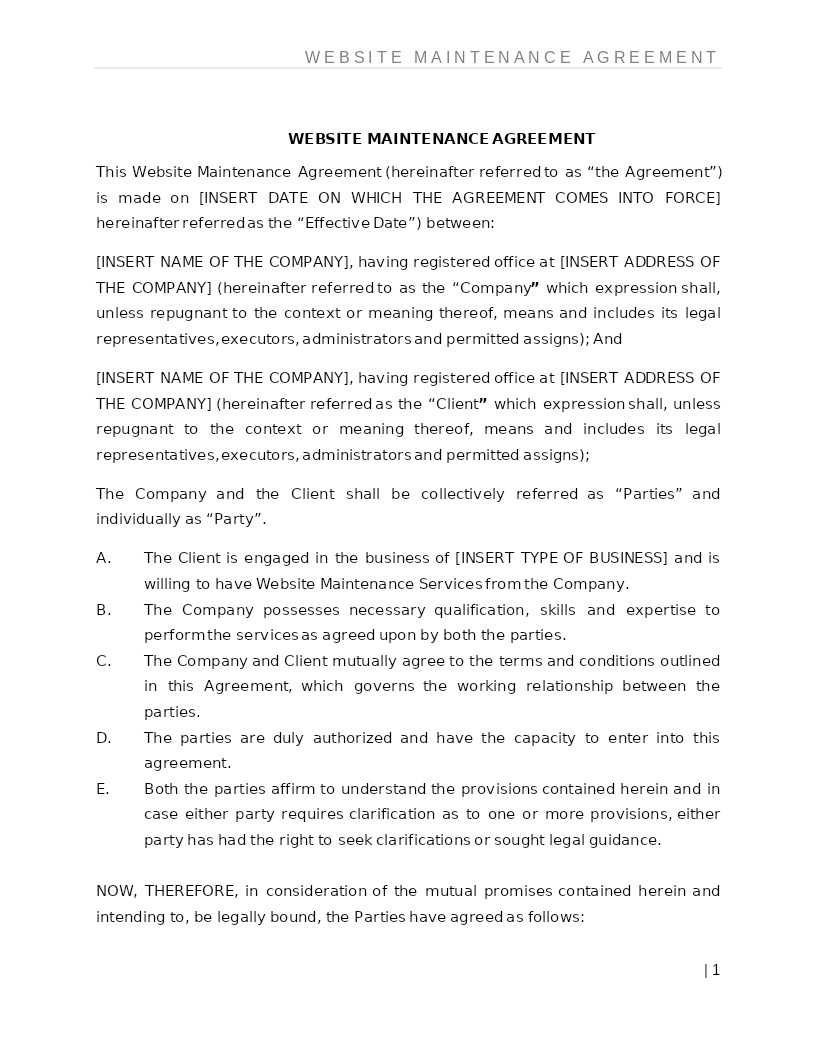
WEBSITE MAINTENANCE AGREEMENT
How does it work?
1. Choose this template
Start by clicking on "Fill out the template"
2. Complete the document
Answer a few questions and your document is created automatically.
3. Save - Print
Your document is ready! You will receive it in Word and PDF formats. You will be able to modify it.
Understanding Website Maintenance Agreement In U.S.
A Website Maintenance Agreement is a legally binding contract between a website owner and a service provider to ensure the continuous upkeep, security, and performance of a website. It defines responsibilities such as software updates, bug fixes, content changes, security monitoring, backups, and technical support. This agreement protects the website from cyber threats, reduces downtime, and ensures optimal performance, usability, and compliance with U.S. laws such as data protection regulations and industry standards. By having a structured maintenance plan, both parties maintain clear expectations, minimize disputes, and ensure long-term website stability.
Where a Website Maintenance Agreement Is Generally Used
A Website Maintenance Agreement is commonly used in:
- Businesses that rely on their website for sales, branding, or lead generation
- E-commerce platforms requiring constant monitoring and updates
- Companies handling sensitive customer information or operating under data privacy laws
- Agencies offering ongoing support and maintenance plans
- Individuals or businesses outsourcing website management
- Websites requiring uptime guarantees, backups, and cybersecurity protections
Different Types of Website Maintenance Services
- Basic Website Maintenance: Includes essential updates, security patches, and uptime monitoring.
- Technical and Backend Maintenance: Covers server updates, database optimization, backups, and bug fixes.
- Content Maintenance: Includes website content updates, image uploads, product changes, and page edits.
- Security Maintenance: Focuses on malware removal, security scans, firewall updates, and vulnerability checks.
- Performance Maintenance: Optimizes speed, responsiveness, loading times, and mobile functionality.
- Compliance Maintenance: Ensures compliance with U.S. regulations such as ADA accessibility, data security standards, and privacy guidelines.
When Legal Guidance Becomes Helpful
You may need legal assistance when:
- Drafting maintenance terms involving service-level guarantees
- Addressing cybersecurity obligations and liability allocation
- Ensuring compliance with U.S. privacy and data handling laws
- Managing cross-border data storage and third-party integrations
- Resolving disputes related to performance failure, downtime, or breach
- Handling intellectual property rights and ownership of digital assets
- Negotiating warranties, indemnification, and limitation of liability clauses
Legal counsel ensures your agreement complies with U.S. contract law, protects your business from liability, and minimizes operational risks.
How to Work With This Website Maintenance Agreement
- Clearly define the scope of services and exclusions
- Establish timelines for updates, support responses, and issue resolution
- Maintain written documentation of all changes, tickets, and communication
- Ensure secure handling of passwords, access credentials, and sensitive data
- Track deliverables, performance metrics, and backup schedules
- Review the agreement annually to align with updated technologies
- Document website owner responsibilities (hosting, domain renewal, etc.)
Frequently Asked Questions
Q1. What does a Website Maintenance Agreement typically include?
It includes services such as software updates, security patches, content changes, backups, uptime monitoring, and performance enhancements. The agreement also outlines payment terms, response times, dispute procedures, and ownership of digital assets to ensure clarity for both parties.
Q2. How often should website maintenance be performed?
Maintenance frequency varies depending on website complexity, but most U.S. businesses schedule weekly or monthly updates. High-traffic or e-commerce sites may require daily monitoring to keep security, speed, and functionality optimized at all times.
Q3. Who owns the website content under a maintenance agreement?
Typically, the website owner retains full ownership of all content, images, and branding. However, any plugins, tools, or licensed software used by the provider may remain the provider’s property. A clear ownership clause ensures transparency and avoids conflicts.
Q4. Does a maintenance agreement include emergency support?
Most agreements specify whether emergency support is included, available at extra cost, or limited to certain hours. Emergency support may cover site crashes, security breaches, or urgent downtime issues, and response times are usually defined in the contract.
Q5. Is website maintenance required for small businesses?
Yes. Even small websites need routine updates to prevent hacking, fix broken features, and maintain performance. A maintenance agreement helps small businesses stay compliant, secure, and competitive without needing in-house technical staff.
Q6. Can a maintenance agreement cover SEO or marketing tasks?
Some service providers offer SEO, content updates, or marketing enhancements as add-on services. The agreement should clearly state whether SEO tasks are included, optional, or excluded to avoid misunderstandings about service scope.
Q7. What happens if the website is hacked during the agreement?
Most agreements include cybersecurity protections, but responsibility depends on the terms. A well-drafted contract outlines response procedures, liability limitations, cleanup responsibilities, and preventive measures for future incidents.
Q8. Can the client cancel a Website Maintenance Agreement?
Yes. Cancellation terms are typically detailed in the contract, including notice periods, refund policies, and obligations upon termination. This ensures both parties end the relationship professionally and with proper documentation.