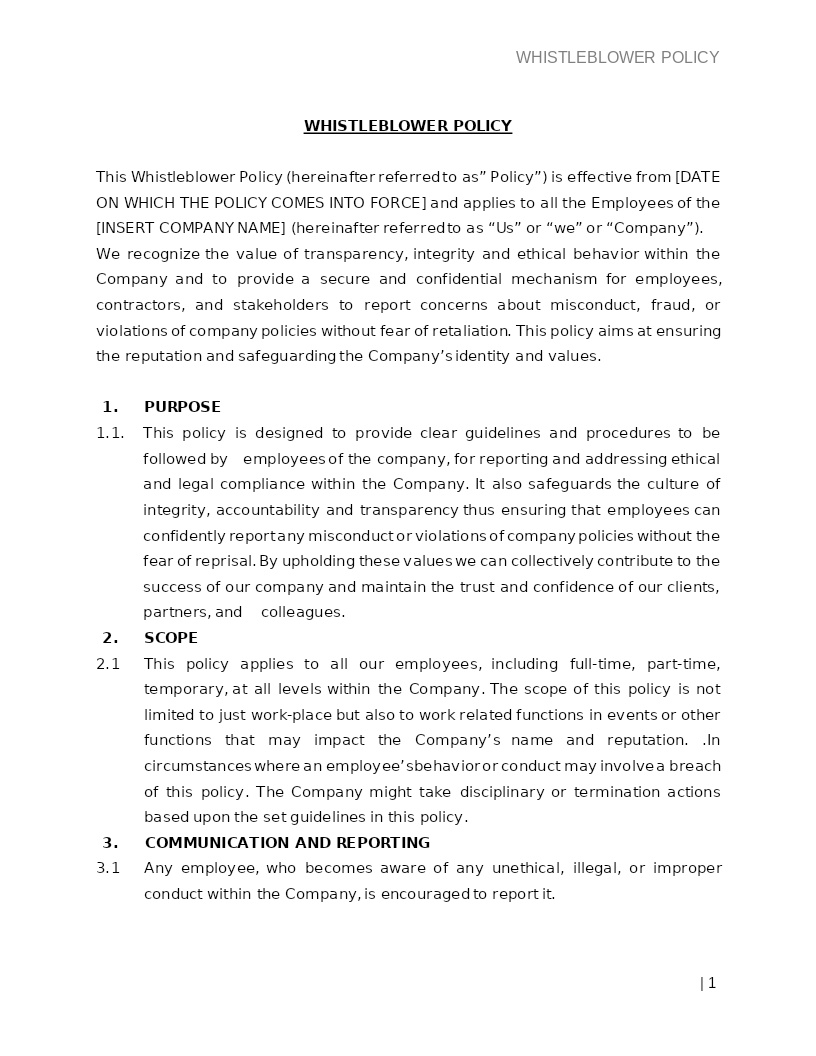
WHISTLEBLOWER POLICY
How does it work?
1. Choose this template
Start by clicking on "Fill out the template"
2. Complete the document
Answer a few questions and your document is created automatically.
3. Save - Print
Your document is ready! You will receive it in Word and PDF formats. You will be able to modify it.
Understanding Whistleblower Policies
A Whistleblower Policy establishes a clear framework for how employees, contractors, vendors, and stakeholders can safely report misconduct, unethical behavior, or violations of law within an organization. It explains what types of concerns may be reported, how reports are handled, and what protections apply to the reporting individual.
Implementing a Whistleblower Policy helps create a transparent culture where issues can be raised early before they evolve into legal or reputational risks. It reassures individuals that they can speak up without fear of retaliation, ensuring accountability and integrity throughout the company.
Where Whistleblower Policies Are Commonly Used
Whistleblower protections are considered standard in a wide range of U.S. industries and regulatory environments, including:
• Public companies subject to SEC rules
• Companies receiving government funding or grants
• Organizations with internal compliance or ethics programs
• Healthcare, financial services, and education sectors
• Businesses subject to anti-fraud, anti-corruption, or privacy regulations
• Non-profit organizations and charitable institutions
• HR departments managing internal grievances
Different Types of Whistleblower Situations You May Encounter
- Financial Misconduct: Fraud, embezzlement, improper recordkeeping, or accounting irregularities.
- Compliance Violations: Actions that breach federal, state, or industry-specific regulations.
- Workplace Misconduct: Harassment, discrimination, retaliation, or abuse of authority.
- Health & Safety Issues: Unsafe work practices, hazardous conditions, or violations of OSHA standards.
- Ethical Misconduct: Conflicts of interest, bribery, nepotism, or dishonest business practices.
When Legal Guidance Becomes Helpful
While many reports can be handled internally, legal support may be needed when:
• The report involves potential criminal activity
• The company must comply with federal whistleblower protections (e.g., SOX, OSHA, SEC)
• The concern relates to discrimination or harassment claims
• There are cross-border reporting considerations
• The whistleblower may require legal protection against retaliation
• External investigations or regulators become involved
How to Work with This Template
• Identify who can file a report (employees, vendors, partners, etc.)
• Define what qualifies as reportable misconduct
• Establish channels for reporting—hotline, email, form, or HR contact
• Outline confidentiality protections and non-retaliation commitments
• Describe how reports will be reviewed, investigated, and documented
• Choose a governing U.S. state law
• Finalize the policy for internal distribution
• Sign or approve through your organization’s standard procedures
Frequently Asked Questions
Q1. What is a Whistleblower Policy?
A Whistleblower Policy outlines how employees and stakeholders can report suspected misconduct safely. It ensures transparency in reporting, establishes investigation procedures, and protects the whistleblower from retaliation, supporting ethical business practices.
Q2. What types of issues should be reported under this policy?
Concerns may include fraud, harassment, discrimination, safety violations, unethical behavior, or anything that breaches company policy or U.S. laws. Clear reporting categories help individuals understand when to step forward.
Q3. Are whistleblowers protected from retaliation?
Yes. U.S. federal and state laws including the Sarbanes Oxley Act, Dodd-Frank Act, and OSHA prohibit retaliation. This policy reinforces those protections by ensuring that no employee is disciplined, demoted, or terminated for making a good-faith report.
Q4. Can a report be submitted anonymously?
Many organizations allow anonymous reporting through secure channels. Anonymous reports may limit follow-up questions, but they still receive full consideration and investigation.
Q5. Who receives and investigates whistleblower reports?
Reports are typically routed to HR, the Compliance Officer, or a designated ethics committee. For financial or regulatory issues, reports may be escalated to legal counsel or external investigators to ensure impartial review.
Q6. Will my identity be kept confidential?
Yes. To the fullest extent permitted by law, the policy ensures confidentiality of both the reporter and any individuals involved. Information is only shared on a strict need-to-know basis during the investigation.
Q7. What happens after a report is submitted?
The organization performs an initial review, opens an investigation, interviews relevant parties, gathers evidence, and determines whether corrective action is required. The whistleblower may receive updates based on the policy’s communication procedures.
Q8. Do whistleblower protections apply to contractors and vendors?
Yes. Many companies extend whistleblower protections to contractors, vendors, and partners since they may witness compliance issues or misconduct while working with the organization.
Q9. Do I need proof before submitting a report?
No. Reports must be made in good faith, meaning the reporter genuinely believes misconduct may have occurred. The company conducts the investigation employees are not required to gather evidence themselves.
Q10. Is legal advice recommended before making a whistleblower report?
It depends on the situation. While internal reports generally do not require legal advice, individuals raising complex regulatory, criminal, or high-risk issues may wish to consult an attorney to better understand available protections.