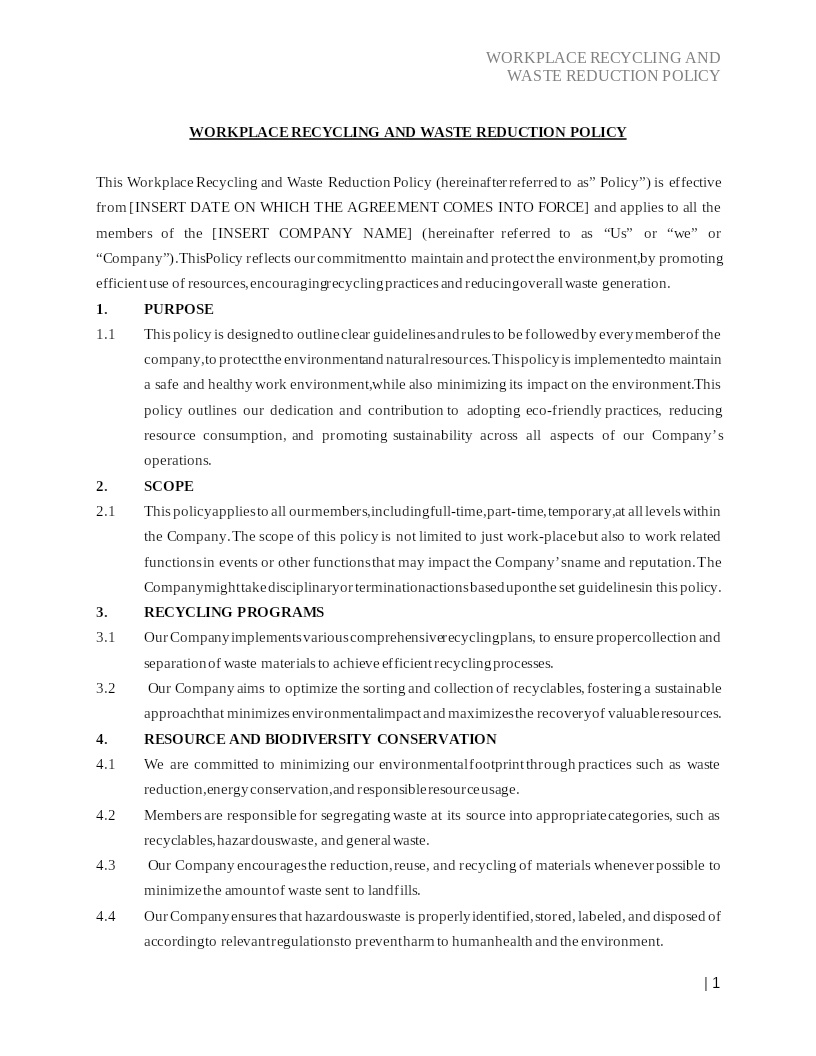
WORKPLACE RECYCLING AND WASTE REDUCTION POLICY
How does it work?
1. Choose this template
Start by clicking on "Fill out the template"
2. Complete the document
Answer a few questions and your document is created automatically.
3. Save - Print
Your document is ready! You will receive it in Word and PDF formats. You will be able to modify it.
Promoting Sustainability and Environmental Compliance Through a Workplace Recycling and Waste Reduction Policy
A Workplace Recycling and Waste Reduction Policy is a formal organizational directive that establishes the standards, procedures, and responsibilities associated with reducing waste, promoting recycling, and supporting environmentally sustainable practices within the workplace. Developed in alignment with U.S. federal and state environmental regulations, including the Resource Conservation and Recovery Act (RCRA), Environmental Protection Agency (EPA) waste-management guidelines, state recycling mandates, and local waste-diversion requirements, this policy outlines the company’s commitment to responsible environmental stewardship. It ensures that employees understand their obligations to minimize waste, properly dispose of recyclable materials, and comply with legislation designed to protect natural resources and reduce environmental harm.
A comprehensive Workplace Recycling and Waste Reduction Policy identifies the categories of materials subject to recycling, such as paper, plastics, metals, glass, e-waste, and organic waste, and it describes proper disposal methods and collection procedures. The policy also details processes for reducing waste at the source, promoting reuse, encouraging environmentally responsible purchasing decisions, and implementing company-wide sustainability initiatives. By adopting this policy, the organization strengthens its environmental compliance posture, supports long-term sustainability goals, fosters a culture of ecological responsibility, and reduces operational costs associated with waste disposal. The policy demonstrates the company’s commitment to environmental protection and corporate social responsibility.
Where Workplace Recycling and Waste Reduction Policies Are Commonly Used
Organizations across various industries rely on such policies, including:
- Corporate offices seeking to reduce paper, packaging, and office-supply waste
- Manufacturing facilities with significant materials handling and waste streams
- Technology companies with e-waste management and equipment recycling needs
- Retail and hospitality businesses with packaging, food service, and consumer-facing waste
- Educational institutions supporting environmental education and campus sustainability
- Healthcare facilities managing regulated and non-regulated waste responsibly
- Local governments and public agencies subject to municipal waste-diversion targets
- Nonprofits and community organizations promoting ecological awareness
Any workplace generating waste materials benefits from a structured recycling and reduction policy.
Different Types of Workplace Recycling and Waste Reduction Policies
1. General Recycling Policies: Focus on paper, plastic, metal, and glass recycling procedures.
2. E-Waste Management Policies: Address the proper handling, storage, and disposal of electronic devices under EPA guidelines.
3. Organic Waste and Composting Policies: Provide instructions for food-waste recycling and compost collection where applicable.
4. Hazardous Waste Reduction Policies: Regulate the disposal of chemicals, batteries, and other materials governed by RCRA.
5. Sustainable Procurement Policies: Encourage purchasing of environmentally friendly, reusable, or recyclable goods.
When Legal Guidance Becomes Helpful
Legal consultation may be required when:
- Waste streams include regulated or hazardous materials subject to RCRA or state hazardous-waste laws
- Recycling procedures must comply with municipal or state environmental mandates
- The company manages electronic waste governed by federal and state e-waste regulations
- Sustainability initiatives intersect with industry-specific compliance requirements
- The organization requires waste tracking, audit procedures, or regulatory reporting
- Vendor contracts involve recycling services, waste hauling, or environmentally sensitive handling
- Environmental claims or sustainability statements must comply with FTC Green Guides
Legal review ensures the policy aligns with U.S. environmental laws, avoids misleading environmental claims, and reduces compliance risks.
How to Work with This Template
- Define the organization’s waste-reduction objectives, scope, and compliance obligations
- Identify recyclable materials and outline proper segregation and disposal procedures
- Establish expectations for employee participation and departmental responsibilities
- Provide instructions for reducing waste at the source through sustainable purchasing and reuse
- Include protocols for e-waste disposal, shredding, or secure destruction where required
- Describe procedures for working with waste-hauling vendors and recycling service providers
- Implement training requirements and communication strategies to promote compliance
- Establish auditing, monitoring, and reporting structures to measure waste-reduction progress
- Require periodic reviews to ensure alignment with changing environmental regulations
- Secure acknowledgment from employees to confirm understanding of their responsibilities
This template reflects leading sustainability practices and legal compliance standards across U.S. workplaces.
Frequently Asked Questions
Q1. What is a Workplace Recycling and Waste Reduction Policy?
It is a formal policy that outlines procedures for reducing waste, promoting recycling, and maintaining environmental compliance. It helps organizations support sustainability while meeting EPA and state waste-management requirements.
Q2. Why is a recycling and waste-reduction policy important?
It reduces environmental impact, lowers disposal costs, promotes ethical corporate conduct, and ensures compliance with federal, state, and local waste-management regulations.
Q3. Does U.S. law require companies to recycle?
Some states and municipalities mandate recycling. Even where not legally required, many organizations adopt policies to support sustainability goals and stakeholder expectations.
Q4. What materials are typically included in workplace recycling programs?
Common recyclable materials include paper, cardboard, plastics, metals, glass, electronics, and organic waste.
Q5. Does the policy apply to remote workers?
Yes, many organizations extend sustainability guidelines to remote workers, encouraging responsible waste reduction and recycling practices at home.
Q6. Are hazardous materials covered in this policy?
Hazardous waste must be handled under separate procedures compliant with RCRA and applicable state laws. This policy may reference such procedures.
Q7. How does the company ensure employees follow recycling guidelines?
Compliance is supported through training, signage, designated recycling stations, internal audits, and periodic reviews of waste-reduction metrics.
Q8. Can companies make environmental claims in marketing based on this policy?
Yes, but claims must comply with the FTC Green Guides, requiring truthful and non-misleading environmental statements.
Q9. Should the policy include e-waste procedures?
Absolutely. Electronic waste is heavily regulated, and proper handling ensures environmental safety and data-security compliance.
Q10. Should legal counsel review this policy?
Yes. Legal review ensures the policy complies with federal and state environmental regulations and avoids exposure to false environmental-marketing claims.