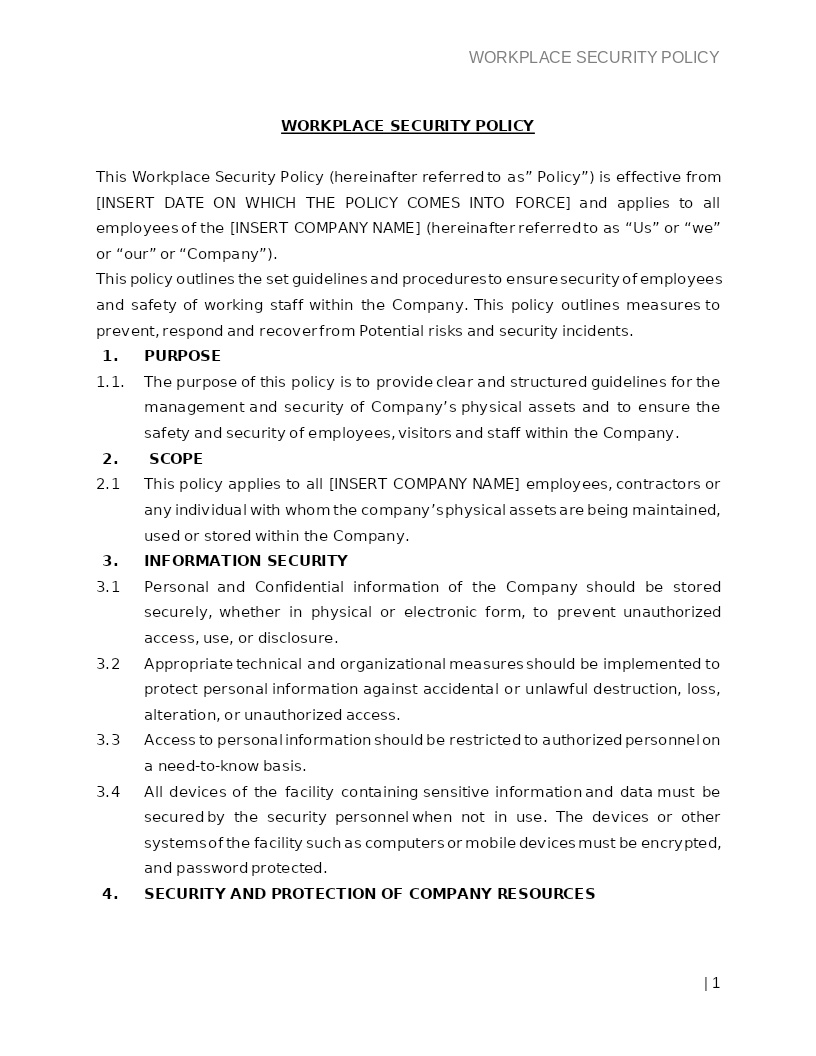
WORKPLACE SECURITY POLICY
How does it work?
1. Choose this template
Start by clicking on "Fill out the template"
2. Complete the document
Answer a few questions and your document is created automatically.
3. Save - Print
Your document is ready! You will receive it in Word and PDF formats. You will be able to modify it.
Understanding Workplace Security Policy in U.S.
A Workplace Security Policy is a formal set of rules, procedures, and safety measures designed to protect employees, company property, and sensitive information from potential threats. It addresses physical security, access control, visitor management, cybersecurity protocols, emergency preparedness, and employee responsibilities in maintaining a secure environment. In accordance with U.S. workplace safety guidelines, including OSHA regulations, data protection laws, and state-level security requirements, this policy provides a structured approach to preventing unauthorized access, workplace violence, theft, vandalism, and cyber incidents. By implementing a comprehensive Workplace Security Policy, organizations strengthen safety, maintain operational continuity, and foster a culture of awareness and accountability.
Where Workplace Security Policies are Commonly Used
- Corporate offices and business facilities
- Government workplaces
- Manufacturing plants and warehouses
- Healthcare and educational institutions
- Retail stores and commercial establishments
- Technology firms handling sensitive data
- Remote and hybrid work environments
Types of Workplace Security Policies
- Physical Security Policy: Focuses on access control, surveillance, and protection of physical assets.
- Cybersecurity Policy: Covers data protection, secure device use, password rules, and network security.
- Visitor Management Policy: Outlines procedures for registering, monitoring, and restricting visitor access.
- Emergency Response & Evacuation Policy: Details actions during fire, violence, natural disasters, or security threats.
- Workplace Violence Prevention Policy: Addresses threat reporting, zero-tolerance measures, and employee safety.
- Remote Work Security Policy: Ensures secure data handling and device use outside the workplace.
When Legal Guidance Becomes Helpful:
A Workplace Security Policy must comply with U.S. safety and privacy laws, industry regulations, and organizational protocols. Consulting real-time legal professionals ensures:
- Compliance with OSHA, state workplace safety laws, and data privacy regulations
- Effective handling of employee rights, surveillance rules, and security monitoring
- Proper drafting of liability protections and reporting obligations
- Customized security procedures suited to the company’s risk profile
- Legally enforceable policy language that withstands disputes
- Updated alignment with cybersecurity, access control, and emergency response requirements
- Comprehensive protection of confidential data, intellectual property, and physical assets
Legal experts ensure the policy is precise, enforceable, and tailored to your industry and operational needs.
How to Use This Policy
- Include in employee handbooks and onboarding materials
- Train staff on security protocols and emergency procedures
- Apply consistently across all departments and locations
- Review annually or when laws or company operations change
Frequently Asked Questions
Q1. What does a Workplace Security Policy typically include?
A Workplace Security Policy includes physical security measures, cybersecurity protocols, access controls, emergency procedures, and employee responsibilities. It outlines how employees should report suspicious behavior and how sensitive information must be protected. The policy ensures a consistent and structured approach to workplace safety.
Q2. Why is a Workplace Security Policy important for U.S. businesses?
U.S. businesses face increasing risks such as theft, workplace violence, cyberattacks, and data breaches. A security policy helps prevent incidents and ensures compliance with OSHA safety standards and state-specific regulations. It also builds employee confidence by demonstrating a commitment to safety and risk prevention.
Q3. How does a Workplace Security Policy support cybersecurity?
The policy includes guidelines for strong passwords, secure Wi-Fi networks, device protection, and proper use of company systems. It helps employees avoid phishing scams, malware, and unauthorized data sharing. These measures reduce cyber risks and protect confidential business information.
Q4. Who is responsible for implementing workplace security?
Responsibility is shared across employees, managers, and the company’s security or HR team. Employers establish the rules, install security systems, and provide training. Employees must follow procedures, report suspicious activity, and protect company equipment and data.
Q5. How does the policy protect against workplace violence?
It includes preventive measures such as threat assessment procedures, restricted access to sensitive areas, and zero-tolerance guidelines. Employees receive training on recognizing warning signs and reporting concerns. Clear steps for responding to emergencies help reduce harm and ensure rapid intervention.
Q6. What role does visitor management play in workplace security?
Visitor management helps control who enters the building, ensuring only authorized individuals have access. The policy may require sign-ins, ID badges, escorts, and visitor logs. These measures reduce the risk of theft, data exposure, or unauthorized access.
Q7. How often should a Workplace Security Policy be updated?
A policy should be reviewed yearly or whenever new risks, technologies, or legal requirements emerge. Changes in cybersecurity threats, access systems, and federal or state regulations may require updates. Regular revisions help maintain a strong and compliant security posture.
Q8. How can employees be trained on workplace security procedures?
Training can include workshops, online modules, emergency drills, and cybersecurity awareness programs. Employees learn how to report security incidents, follow safe practices, and respond to threats. Continuous training ensures security remains an active priority across the organization.