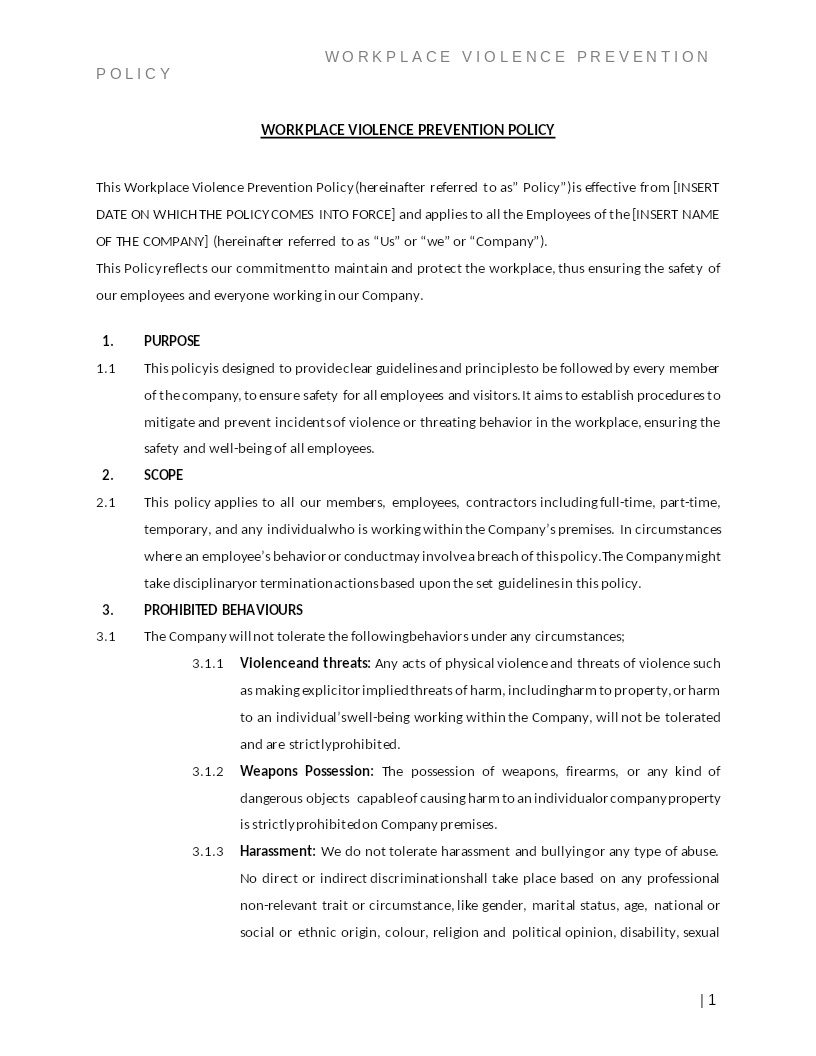
WORKPLACE VIOLENCE PREVENTION POLICY
How does it work?
1. Choose this template
Start by clicking on "Fill out the template"
2. Complete the document
Answer a few questions and your document is created automatically.
3. Save - Print
Your document is ready! You will receive it in Word and PDF formats. You will be able to modify it.
Creating a Safe and Respectful Work Environment
Ensuring employee safety is one of the most important responsibilities of any organization. A Workplace Violence Prevention Policy provides a clear framework for identifying, reporting, and addressing behaviors that could threaten the well-being of employees, customers, or visitors. It outlines what constitutes unacceptable conduct, clarifies reporting channels, and establishes the procedures the organization will follow when potential risks arise.
A comprehensive policy allows businesses to create a safe environment where employees feel protected and empowered to speak up. It also helps employers comply with U.S. Occupational Safety and Health Administration (OSHA) guidelines, state workplace safety laws, and industry standards.
Where Workplace Violence Prevention Policies Are Commonly Used
Workplace safety policies are essential in a wide range of environments, including:
• Corporate offices and administrative workplaces
• Retail stores, hospitality settings, and customer-facing roles
• Healthcare facilities, clinics, and social service agencies
• Factories, warehouses, and distribution centers
• Schools, universities, and educational programs
• Government offices and public-facing institutions
• Remote or field-based roles where isolated work may occur
Any time employees interact with colleagues, clients, or the public, a Workplace Violence Prevention Policy helps establish expectations and emergency response procedures.
Different Types of Workplace Violence You May Encounter
- Threatening Behavior: Verbal aggression, intimidation, or hostile gestures that create fear or discomfort.
- Physical Violence: Any act intended to cause physical harm, including hitting, pushing, or property destruction.
- Harassment or Bullying: Persistent abusive behavior, including verbal harassment, humiliation, or cyberbullying.
- Domestic Violence Spillover: Threats or violence stemming from personal relationships that occur at the workplace.
- Customer or Client Aggression: Hostility directed at employees by customers, patients, or the public.
When Legal Guidance Becomes Helpful
Legal advice is beneficial when:
• Incidents may violate OSHA’s General Duty Clause
• Employees report threats requiring workplace restraining orders
• The organization must create safety plans for high-risk roles
• Management needs clarity on disciplinary action, termination, or liability
• Violations overlap with harassment, discrimination, or retaliation laws
• A violent incident could expose the business to claims or investigations
Legal guidance ensures compliance with federal and state workplace safety requirements, reducing risk for both employees and the employer.
How to Work with This Template
• Define what constitutes workplace violence and prohibited conduct
• List reporting channels and confidential complaint options
• Outline investigation procedures and follow-up actions
• Identify emergency protocols and communication methods
• Select the governing state law and safety standards
• Train employees on how to identify and report warning signs
• Review the policy with the team and update it regularly
• Sign electronically or provide acknowledgment through HR platforms
This template aligns with widely accepted U.S. workplace safety practices and fits seamlessly into existing employee handbooks.
Frequently Asked Questions
Q1. What is a Workplace Violence Prevention Policy and why is it important?
This policy outlines the behaviors that are prohibited in the workplace and defines the steps employees should take to report threats or violent incidents. It is important because it helps maintain a safe working environment and ensures that organizations comply with OSHA guidelines designed to protect employees from harm.
Q2. Does this policy apply only to physical violence?
No. Workplace violence includes threats, intimidation, harassment, stalking, verbal abuse, aggressive behavior, and any conduct that causes an employee to feel unsafe. Addressing early warning signs is an essential part of prevention.
Q3. Are employers required by law to have this policy?
While not all states require a written policy, OSHA’s General Duty Clause mandates that employers maintain a workplace free from recognized hazards including violence. A written policy provides structure, protects employees, and reduces liability.
Q4. How should employees report potential threats or concerns?
Most policies provide multiple reporting channels, including supervisors, HR, safety officers, or confidential hotlines. Organizations must make reporting accessible and ensure employees feel safe raising concerns without fear of retaliation.
Q5. What steps does the employer take once a report is made?
The employer typically investigates the concern; interviews involved parties and assesses risk. If necessary, they may involve security, law enforcement, or initiate disciplinary action. Clear procedures ensure timely and fair responses.
Q6. Does this policy cover customers and visitors?
Yes. Workplace violence can come from employees, contractors, clients, or the public. The policy explains how staff should respond to aggressive customers and outlines when to involve security or law enforcement.
Q7. Are remote employees covered under this policy?
Absolutely. Remote workers may face cyber-harassment, abusive communication, or domestic violence that interferes with work. The policy applies to all work environments, including home offices and fieldwork.
Q8. What happens if an employee violates the policy?
Depending on the severity, consequences may include disciplinary action, mandatory training, reassignment, suspension, or termination. Severe cases may also result in police involvement or restraining orders.
Q9. How often should the policy be reviewed or updated?
Organizations should review the policy annually or whenever safety regulations change. Regular updates ensure compliance with evolving workplace safety laws and best practices.
Q10. Does the policy require employee training?
Yes. Training helps employees recognize early signs of aggressive behavior, understand reporting procedures, and respond effectively in emergencies. Regular training increases awareness and strengthens workplace safety culture.