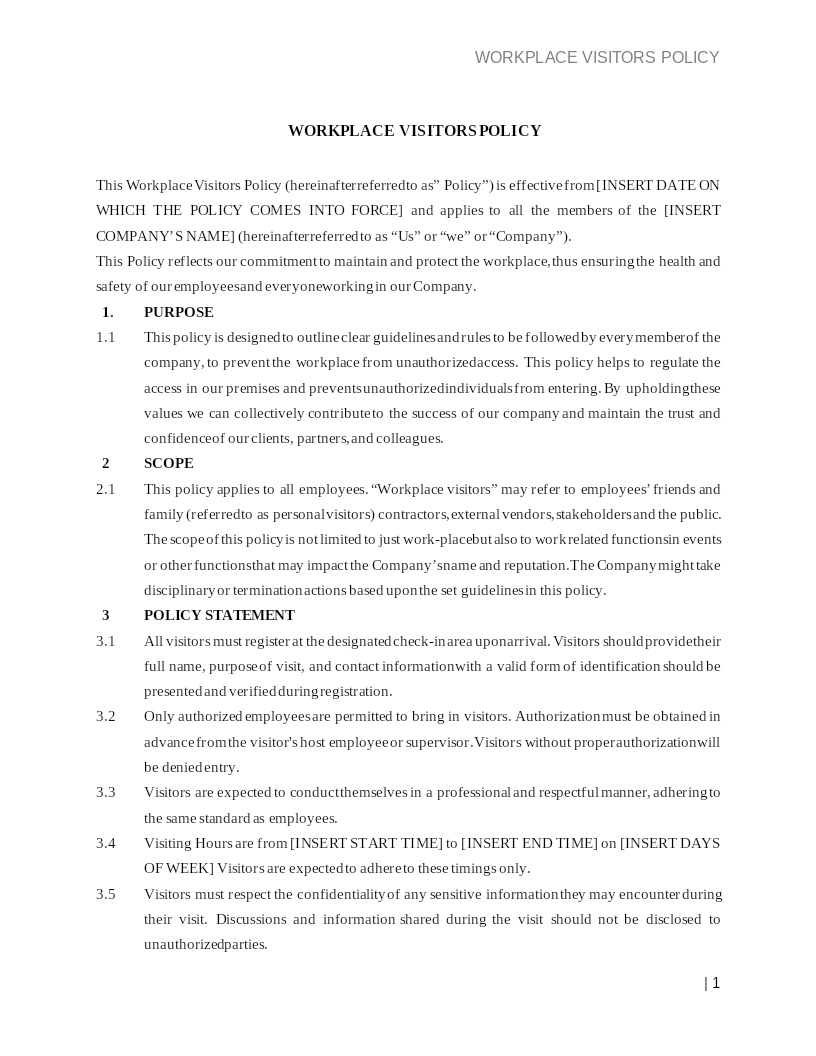
WORKPLACE VISITORS POLICY
How does it work?
1. Choose this template
Start by clicking on "Fill out the template"
2. Complete the document
Answer a few questions and your document is created automatically.
3. Save - Print
Your document is ready! You will receive it in Word and PDF formats. You will be able to modify it.
Managing Visitors Safely in the Workplace
Whether you’re hosting clients, vendors, inspectors, or job applicants, a clear Workplace Visitors Policy helps protect your staff, facilities, and confidential information. This policy explains who may enter the premises, how visitors should be identified, what areas they may access, and the responsibilities employees have when escorting or supervising them.
A well-defined policy promotes workplace safety, protects sensitive company information, and ensures that visitors do not disrupt operations or violate regulatory standards.
Where Workplace Visitor Policies Are Commonly Used
Visitor policies are standard across many professional environments, including:
• Corporate offices and administrative buildings
• Manufacturing facilities, warehouses, and logistics centers
• Schools, healthcare facilities, and institutions
• Technology companies handling sensitive or proprietary information
• Government offices and secure environments
• Retail stores, showrooms, and customer-facing locations
• Remote or hybrid workplaces that occasionally host visitors
Different Types of Visitor Procedures You May Encounter
- General Visitor Protocols: Used for client meetings, interviews, and everyday foot traffic.
- Contractor or Vendor Access Procedures: Applied when external service providers require facility access.
- Restricted Area Access Rules: Used in secure or high-risk areas where sensitive operations occur.
- Emergency Visitor Procedures: Guidelines for handling visitors during drills, incidents, or evacuations.
- After-Hours or Off-Site Visit Regulations: Used when visitors enter the workplace outside standard operating hours.
When Legal Guidance Becomes Helpful
Legal review may be useful when:
• Visitors may have access to confidential information or restricted areas
• The workplace is subject to federal or state safety regulations
• Contractors or vendors require long-term or independent access
• There are workers’ compensation or liability concerns
• The company has obligations under privacy or data protection laws
• Visitors interact with hazardous materials or equipment
• The facility falls under specialized regulations (HIPAA, OSHA, FERPA, etc.)
How to Work with This Template
• Identify who qualifies as a visitor
• Outline check-in procedures and identification requirements
• Define which areas visitors can or cannot access
• Specify escort or supervision responsibilities
• Include safety, security, and confidentiality rules
• Add requirements for vendor/contractor entry
• Select the governing state law for compliance
• Share the policy with employees and train teams as needed
Frequently Asked Questions
Q1. Why is a Workplace Visitors Policy important?
A Workplace Visitors Policy protects employees, property, and sensitive information by ensuring that all visitors follow proper entry, identification, and safety procedures. It sets clear expectations and reduces risks associated with unauthorized access.
Q2. Who is considered a “visitor”?
Visitors include clients, vendors, delivery personnel, job applicants, temporary contractors, inspectors, or anyone not directly employed by the organization. The policy helps clarify how each type of visitor should be handled.
Q3. Do all visitors need to check in at reception?
Yes, most workplaces require visitors to check in, provide identification, and receive a visitor badge. This ensures that the organization maintains an accurate record of who is on-site at any time.
Q4. Can visitors access all areas of the workplace?
No. Access is usually limited to designated areas. Sensitive zones—such as server rooms, labs, storage areas, or executive offices require authorization and may mandate employee escorting at all times.
Q5. Are employees responsible for supervising their guests?
Typically, yes. Employees hosting visitors must accompany them during their stay, ensure they follow safety rules, and notify security or HR when the visitor leaves.
Q6. What if a visitor refuses to follow safety or security procedures?
The organization may deny entry or request that the visitor leave the premises. The policy allows staff to enforce rules to maintain safety and compliance with internal and legal requirements.
Q7. Are contractors considered visitors?
Contractors are usually treated as a specific category of visitors. They may require badges, compliance documentation, or proof of insurance before being granted access to the workplace.
Q8. Does the policy apply to remote or hybrid workplaces?
Yes. Even in hybrid environments, occasional in-office visitors must follow established entry, security, and confidentiality procedures to ensure workplace safety.
Q9. How does the policy help during emergencies?
Visitor logs help track who is in the building during evacuations or safety incidents, ensuring that all non-employees are accounted for and assisted if necessary.
Q10. Are digital or electronic visitor logs acceptable?
Absolutely. Many workplaces use electronic check-in systems or QR code visitor passes. These systems comply with modern security standards and improve recordkeeping efficiency.