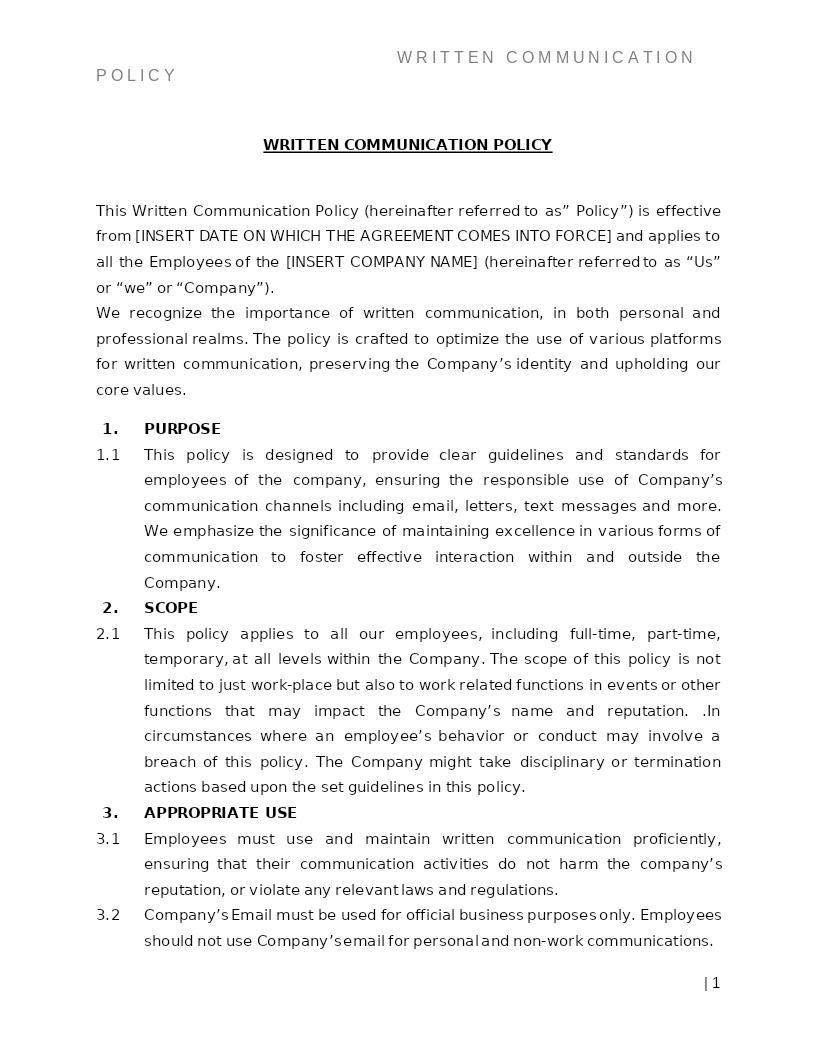
WRITTEN COMMUNICATION POLICY
How does it work?
1. Choose this template
Start by clicking on "Fill out the template"
2. Complete the document
Answer a few questions and your document is created automatically.
3. Save - Print
Your document is ready! You will receive it in Word and PDF formats. You will be able to modify it.
Understanding Written Communication Policy in U.S.
A Written Communication Policy establishes clear standards for creating, sharing, and managing written communication within an organization. It sets expectations for tone, clarity, professionalism, confidentiality, and accuracy across all written formats, including emails, memos, reports, letters, digital messages, and official documents. In the United States, this policy supports compliance with professional conduct rules, data protection standards, recordkeeping regulations, and industry-specific communication requirements. A well-implemented Written Communication Policy reduces misunderstandings, protects organizational integrity, and ensures consistent and effective communication both internally and externally.
Where a Written Communication Policy Is Commonly Used
- Corporate offices and professional firms
- Educational institutions and government agencies
- Healthcare organizations and regulated industries
- Customer support and client-facing teams
- Remote and hybrid work environments
- Organizations handling confidential or legal documentation
Different Types of Written Communication Covered Under This Policy
- Internal Written Communication: Emails, memos, meeting notes, internal chats, and reports.
- External Written Communication: Client emails, proposals, letters, and vendor communication.
- Formal Business Documentation: Policies, contracts, manuals, and compliance documents.
- Digital Communication: Messaging apps, CRM notes, project management platforms, and cloud-shared documents.
- Marketing and Public Communication: Newsletters, social media posts, website content, and promotional materials.
- Confidential and Sensitive Communication: Legal notices, HR correspondence, and documents containing personal or regulated data.
When Legal Guidance becomes Helpful
Consulting real-time lawyers or in-house counsel ensures the policy meets U.S. legal standards, including recordkeeping laws, confidentiality requirements, anti-harassment rules, data privacy obligations, and industry-specific regulations. Legal experts help:
- Define rights, responsibilities, and restrictions for both employees and the employer
- Ensure compliance with communication-related federal and state laws
- Clarify confidentiality, intellectual property, and data protection requirements
- Prevent miscommunication that could result in liability, contract disputes, or legal claims
- Create enforceable disciplinary procedures for policy violations
- Tailor communication frameworks to reflect industry norms and organizational needs
A lawyer-reviewed policy minimizes risk, enhances compliance, and supports a professional communication culture.
How to Use This Policy
- Include in employee handbooks and onboarding materials
- Train employees on communication standards and expectations
- Use structured templates for reports, emails, and formal documents
- Implement compliance checks for confidential and regulated communication
- Review the policy annually for updates in technology and legal standards
Frequently Asked Questions
Q1. What is the purpose of a Written Communication Policy?
A Written Communication Policy ensures that all written communication, internal and external, is clear, professional, and consistent. It helps employees understand expectations for tone, structure, formatting, and accuracy. By following this policy, organizations can reduce miscommunication, improve productivity, and maintain a polished professional image.
Q2. Does this policy apply to digital communication tools like Slack or Teams?
Yes. The policy applies to emails, chat platforms, messaging apps, project management tools, and any written communication created using digital systems. It ensures that even informal digital messages meet workplace standards for professionalism, clarity, and confidentiality.
Q3. How does a Written Communication Policy protect confidential information?
The policy establishes rules for handling sensitive or regulated information in writing. It includes guidelines for encryption, access controls, secure document sharing, and proper labeling of confidential materials. This helps prevent data breaches and ensures compliance with U.S. privacy laws such as HIPAA, GLBA, or state data protection acts.
Q4. What tone and style should employees use in written communication?
Employees are expected to use a professional, respectful, and clear tone. The policy encourages concise writing, proper grammar, and avoidance of slang or overly casual language. Consistent tone ensures that communications reflect positively on the organization and reduce the risk of misunderstanding.
Q5. Are employees allowed to use personal devices for work communication?
Personal device use is permitted only if authorized under the company’s security and BYOD policies. The Written Communication Policy outlines rules for accessing company email, sharing documents, and sending messages through approved channels. This reduces security vulnerabilities and maintains data integrity.
Q6. What happens if an employee violates the Written Communication Policy?
Policy violations may lead to corrective action, training, or disciplinary measures depending on the severity of the breach. Issues such as inappropriate tone, unauthorized disclosures, or failure to follow documentation procedures can have legal or compliance consequences. The policy helps clearly define consequences and corrective steps.
Q7. Does the policy cover communication with clients and external partners?
Yes. All external written communication must reflect the organization’s standards for professionalism, accuracy, and legal compliance. This includes proposals, contracts, emails, newsletters, marketing materials, and customer support messages. Maintaining consistency strengthens brand image and trust.
Q8. How often should a Written Communication Policy be reviewed?
It is recommended to review the policy at least once a year or whenever technology platforms, legal requirements, or organizational needs change. Regular updates ensure alignment with modern communication practices, cybersecurity standards, and evolving regulations.