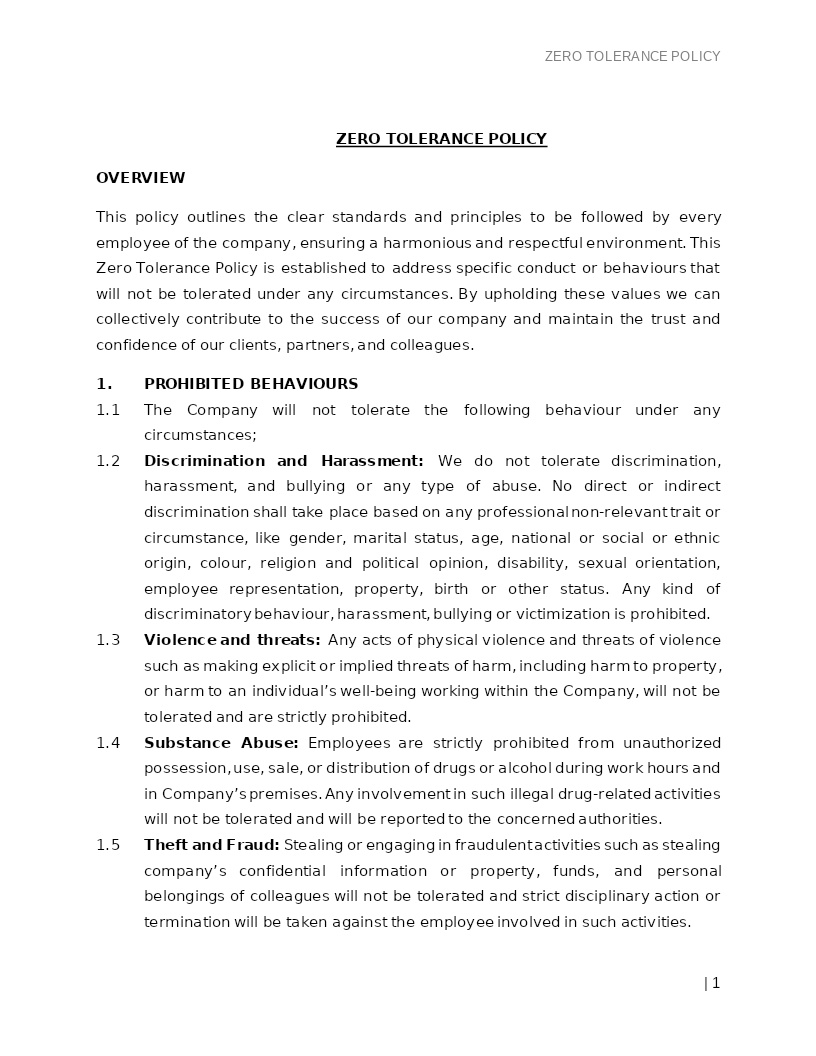
ZERO TOLERANCE POLICY
How does it work?
1. Choose this template
Start by clicking on "Fill out the template"
2. Complete the document
Answer a few questions and your document is created automatically.
3. Save - Print
Your document is ready! You will receive it in Word and PDF formats. You will be able to modify it.
Understanding Zero Tolerance Policy In U.S.
A Zero Tolerance Policy establishes a strict and uncompromising approach to addressing misconduct within an organization. It clearly defines prohibited behaviors, such as harassment, discrimination, violence, threats, theft, bullying, substance abuse, and retaliation, and outlines immediate and serious consequences for violations. This policy reinforces a safe, inclusive, and respectful workplace in compliance with U.S. federal and state laws.
By setting clear boundaries and non-negotiable behavioral expectations, the policy protects employee well-being, promotes accountability, and demonstrates the organization’s commitment to ethical conduct. Implementing a Zero Tolerance Policy ensures consistency, fairness, and legal protection across all levels of the organization.
Where Zero Tolerance Policies Are Commonly Used
Zero Tolerance Policies are widely adopted across organizations that prioritize safety, compliance, and employee well-being, including:
• Corporate offices, government agencies, and educational institutions
• Healthcare facilities, social services, and high-risk industries
• Retail, hospitality, and customer-service environments
• Manufacturing, logistics, and field operations
• Technology, financial services, and regulated sectors
• Workplaces managing confidential data, vulnerable populations, or sensitive environments
Any organization committed to maintaining a secure and professional atmosphere benefits from a clear Zero Tolerance framework.
Different Types of Zero Tolerance Rules You May Encounter
- Anti-Harassment and Anti-Discrimination Rules: Prohibit all forms of unlawful harassment or discrimination under U.S. laws such as Title VII, ADA, ADEA, and state civil rights statutes. Violations result in immediate action.
- Workplace Violence and Threat Prevention: Strictly bans acts or threats of violence, intimidation, and aggressive behavior to ensure employee safety and OSHA compliance.
- Drug- and Alcohol-Free Workplace Requirements: Prohibit the possession, use, or distribution of illegal drugs or unauthorized substances in alignment with federal Drug-Free Workplace regulations.
- Theft, Fraud, and Property Misuse: Addresses integrity-related violations, including theft, fraud, data misuse, or sabotage of company assets or digital systems.
- Retaliation Prevention: Strictly forbids retaliation against employees who report concerns, ensuring compliance with whistleblower protection laws.
When Legal Guidance Becomes Helpful
Legal counsel is essential when defining and implementing Zero Tolerance Policies because:
• U.S. laws such as Title VII, OSHA, ADA, FMLA, and state civil rights laws require consistent enforcement of anti-harassment and safety standards.
• Policies must be carefully worded to ensure fairness while remaining legally enforceable.
• Lawyers ensure procedures comply with due process requirements and do not violate employee rights.
• Real-time counsel helps incorporate industry-specific compliance obligations.
• Multi-state employers must adapt policies to local laws, including varying definitions of harassment, protected classes, and disciplinary requirements.
In-house and external lawyers ensure the policy is legally sound, enforceable, and aligned with organizational values.
How to Work With This Policy Template
• Specify behaviors that fall under zero tolerance, supported by legal definitions.
• Clearly outline reporting procedures, disciplinary actions, and investigation steps.
• Align the policy with federal laws (e.g., Title VII, OSHA, ADA) and state-specific regulations.
• Train managers and employees to understand expectations and compliance responsibilities.
• Establish confidential reporting channels and anti-retaliation protections.
• Review and update the policy regularly to reflect changing legal requirements.
• Ensure equal enforcement across all organizational levels without exception.
Frequently Asked Questions
Q1. Why is a Zero Tolerance Policy important in the workplace?
A Zero Tolerance Policy helps maintain a safe, respectful, and inclusive work environment by prohibiting harmful behaviors such as harassment, discrimination, or violence. It clearly communicates unacceptable conduct and the consequences of violating those standards. This supports employee well-being, minimizes legal risks, and promotes a strong ethical culture.
Q2. Does a Zero Tolerance Policy comply with U.S. laws?
Yes. Zero Tolerance Policies are designed to align with federal and state regulations, including Title VII, ADA, OSHA, and EEOC guidelines. Properly drafted, they reinforce legal obligations related to safety, anti-discrimination, and workplace conduct. Legal review ensures the policy remains compliant and enforceable.
Q3. What types of behaviors are typically covered under a Zero Tolerance Policy?
The policy usually covers harassment, discrimination, bullying, workplace violence, threats, theft, fraud, retaliation, and drug or alcohol misuse. These behaviors undermine safety and morale and may violate U.S. labor and civil rights laws. Zero tolerance ensures they are addressed immediately with appropriate disciplinary action.
Q4. How does the policy ensure fairness and consistency?
A Zero Tolerance Policy applies equally to all employees, regardless of their seniority or role. It outlines clear procedures for reporting, investigating, and addressing violations. This reduces favoritism, ensures uniform enforcement, and supports an unbiased approach to disciplinary action.
Q5. What happens when an employee reports misconduct?
Reports are handled confidentially and reviewed promptly. The organization conducts a fair, thorough investigation, ensuring all parties are heard. If a violation is confirmed, disciplinary action—up to and including termination, is taken. Anti-retaliation protections safeguard the reporting employee throughout the process.
Q6. Does a Zero Tolerance Policy help reduce workplace conflicts?
Yes. By setting strict boundaries and defining acceptable behavior, the policy reduces the likelihood of conflicts, misconduct, and unsafe interactions. Employees feel more secure knowing the organization takes misconduct seriously, which promotes trust, cooperation, and productivity.
Q7. How does this policy protect the organization legally?
Zero Tolerance Policies help organizations demonstrate proactive compliance with employment laws such as Title VII, OSHA, state civil rights acts, and workplace safety regulations. Clear guidelines reduce the risk of lawsuits, investigations, and reputational damage by showing that the company acts decisively on misconduct.
Q8. Is a Zero Tolerance Policy suitable for all types of businesses?
Yes. Zero Tolerance Policies are highly adaptable and can be customized to any workplace, regardless of industry or size. Whether the business involves office work, customer interaction, healthcare, education, or high-risk operations, the policy enhances safety and accountability across all environments.